Cómo funciona un panel fotovoltaico: de la luz solar a la electricidad
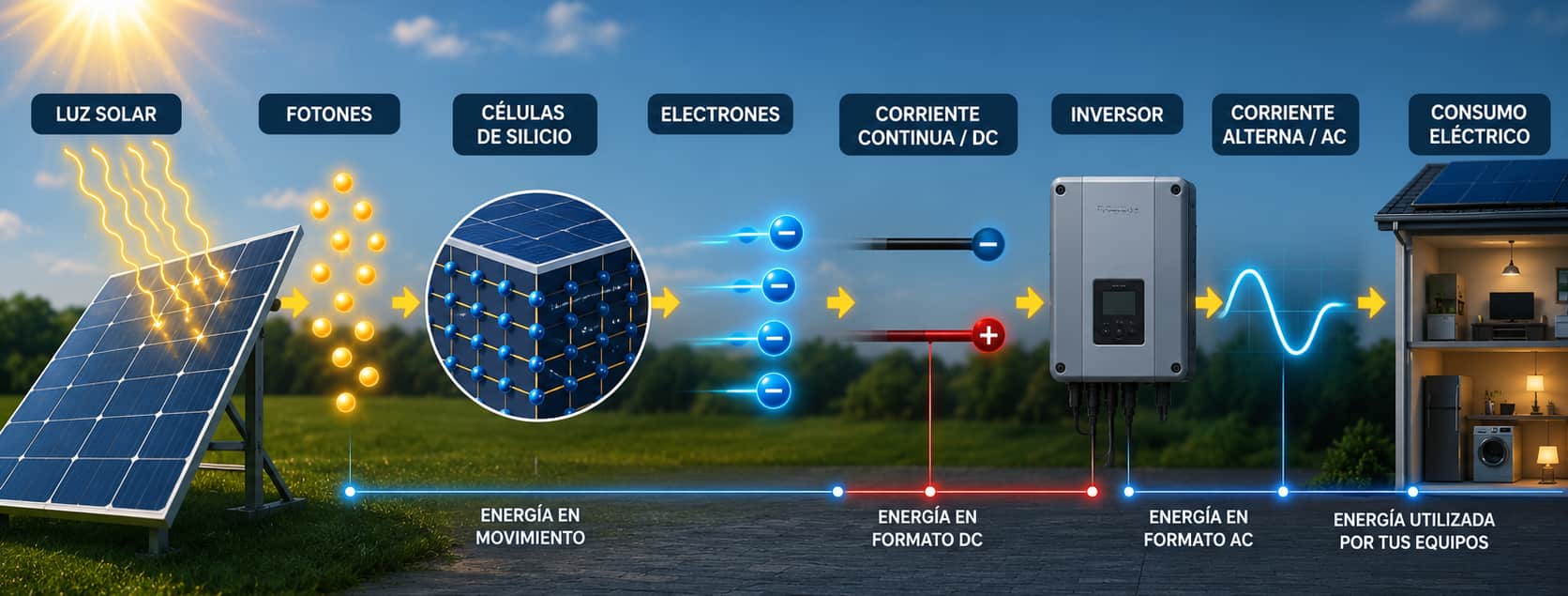
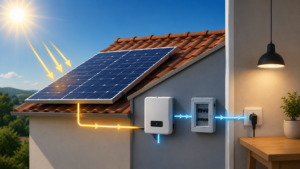
Un panel fotovoltaico funciona transformando la luz solar directamente en electricidad mediante el efecto fotovoltaico. La explicación rápida sería esta: los fotones de la luz del sol impactan en las células de silicio del panel, liberan electrones y generan una corriente continua, también llamada DC. Después, un inversor convierte esa corriente continua en corriente alterna, o AC, que es la que se utiliza normalmente en hogares, empresas y negocios.
Dicho de forma sencilla y más visual, el recorrido es:
luz solar → fotones → células de silicio → electrones → corriente continua/DC → inversor → corriente alterna/AC → consumo eléctrico
En mi caso, esta es la forma más clara de entenderlo: el panel fotovoltaico no “crea” energía de la nada ni funciona simplemente porque haga calor. Lo que hace es aprovechar la luz solar. Esa luz activa las células fotovoltaicas, provoca movimiento de electrones y genera electricidad.
Ahora bien, un panel por sí solo es solo una parte del sistema. Para que esa energía llegue de forma útil a una vivienda, una empresa o una instalación aislada, hacen falta otros elementos: inversor, cableado, protecciones, contador, baterías si se quiere almacenar energía y, en algunos casos, soluciones de respaldo.
Qué es un panel fotovoltaico y para qué sirve
Un panel fotovoltaico es un módulo diseñado para convertir la luz del sol en electricidad. Está formado por varias células solares, normalmente de silicio, conectadas entre sí y protegidas por diferentes capas de vidrio, encapsulante, marco y materiales aislantes.
Su función principal es captar radiación solar y transformarla en energía eléctrica aprovechable. Esa electricidad puede utilizarse para alimentar luces, electrodomésticos, equipos informáticos, maquinaria, sistemas de climatización o cualquier consumo eléctrico compatible con la instalación.
La clave está en que el panel fotovoltaico produce electricidad en forma de corriente continua. Esa corriente no es la que utilizan directamente la mayoría de instalaciones eléctricas domésticas o empresariales. Por eso se necesita un inversor, que la transforma en corriente alterna.
En una instalación de autoconsumo, los paneles pueden reducir la dependencia de la red eléctrica durante las horas de sol. En una vivienda, ayudan a cubrir parte del consumo diario. En una empresa, pueden reducir costes eléctricos en horario laboral. En instalaciones aisladas, combinados con baterías, pueden aportar energía donde no llega la red.
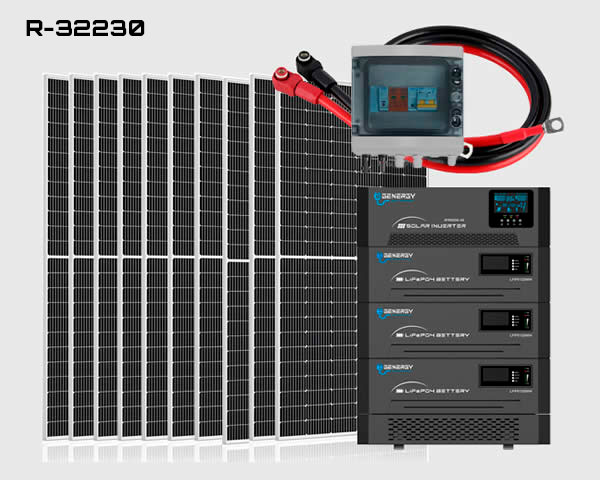
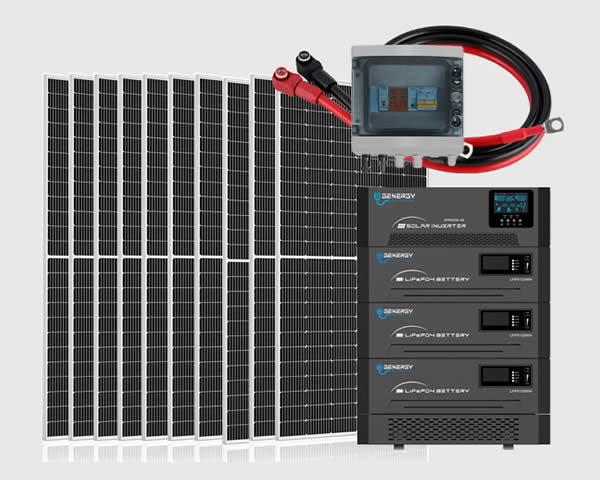
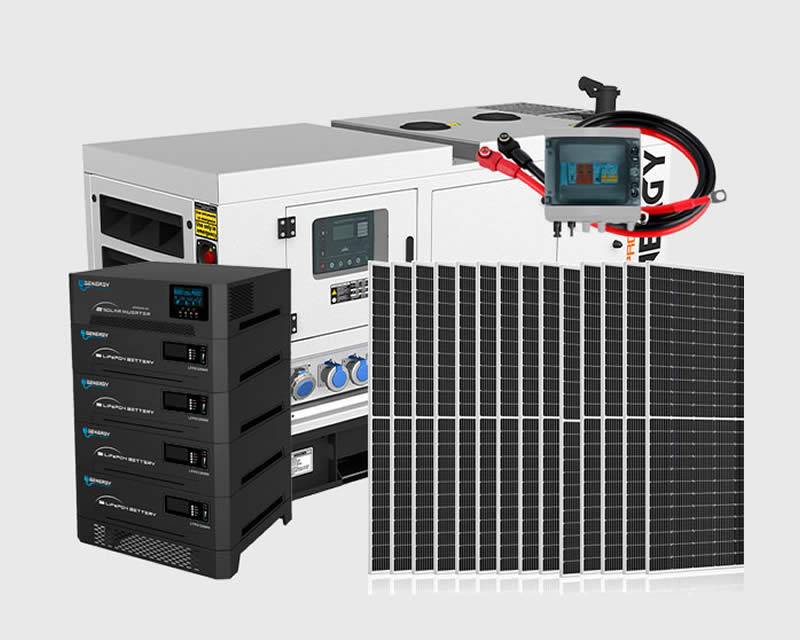
Cuando se busca una solución ya preparada para producir y aprovechar energía solar, tiene sentido valorar un Kit Solar Autoconsumo, porque no se trata solo de colocar paneles: el sistema debe estar pensado como un conjunto completo.
Diferencia entre panel fotovoltaico, panel solar y sistema fotovoltaico
Aunque muchas veces se usan como sinónimos, estos términos no significan exactamente lo mismo.
Término | Qué significa |
Panel fotovoltaico | Módulo que convierte luz solar en electricidad |
Panel solar | Término general; puede referirse a fotovoltaico o térmico |
Placa solar | Forma común de llamar a un panel solar |
Módulo fotovoltaico | Nombre técnico del panel fotovoltaico |
Sistema fotovoltaico | Conjunto completo: paneles, inversor, cableado, protecciones, contador y baterías si las hay |
Instalación fotovoltaica | Sistema instalado y preparado para producir electricidad |
Por eso, cuando alguien pregunta cómo funciona un panel fotovoltaico, la respuesta se centra en el panel que convierte luz en electricidad. Pero cuando hablamos de aprovechar esa electricidad en casa o en una empresa, ya estamos hablando de todo el sistema fotovoltaico.
Panel fotovoltaico vs panel solar térmico
Aquí hay una confusión bastante común. No todos los paneles solares generan electricidad.
Un panel fotovoltaico convierte la luz solar en electricidad. Es el que se usa en instalaciones de autoconsumo eléctrico.
Un panel solar térmico, en cambio, aprovecha el calor del sol para calentar agua u otros fluidos. Se usa, por ejemplo, para agua caliente sanitaria o apoyo a calefacción.
La diferencia básica es esta:
- Panel fotovoltaico: produce electricidad.
- Panel solar térmico: produce calor.
Si tu objetivo es alimentar consumos eléctricos, cargar baterías o reducir el consumo de red, lo que necesitas es un sistema fotovoltaico, no un sistema solar térmico.
Cómo funciona un panel fotovoltaico paso a paso

Para entender bien cómo funciona un panel fotovoltaico, lo mejor es seguir el recorrido de la energía desde que la luz del sol llega al panel hasta que esa electricidad puede usarse en una vivienda o empresa.
El proceso no es complicado si se explica en orden. Primero llega la luz solar. Después, los fotones impactan en las células de silicio. Esa energía libera electrones. El movimiento de esos electrones genera corriente continua. Luego, el inversor convierte esa corriente en alterna. Finalmente, la electricidad se consume, se almacena o se envía a la red si hay excedentes.
1. La luz solar llega al panel
Todo empieza con la radiación solar. La superficie del panel recibe luz del sol, formada por fotones. Estos fotones transportan energía.
Un punto importante: el panel fotovoltaico funciona con luz, no simplemente con calor. Puede generar electricidad aunque el día esté nublado, siempre que llegue radiación solar. Eso sí, producirá menos que en un día despejado.
Por eso, la orientación, la inclinación, las sombras y la ubicación influyen tanto en el rendimiento. Un panel bien instalado puede aprovechar mucho mejor la luz disponible.
2. Los fotones impactan en las células de silicio
Dentro del panel hay células fotovoltaicas. La mayoría están fabricadas con silicio, un material semiconductor. Cuando los fotones de la luz solar impactan en esas células, transfieren energía a los electrones del material.
En mi caso, esta parte me parece la más importante para entender el proceso: los fotones no son electricidad directamente, pero activan el movimiento de electrones dentro de las células de silicio.
Ese movimiento es el punto de partida de la generación eléctrica.
3. Se liberan electrones y se genera corriente continua
Cuando los electrones se liberan y se mueven de forma ordenada, se genera una corriente eléctrica. Esa corriente es corriente continua, también llamada DC o CC.
La corriente continua fluye en una sola dirección. Es el tipo de electricidad que producen los paneles fotovoltaicos y también el tipo de energía que almacenan las baterías.
Sin embargo, la mayoría de hogares y empresas utilizan corriente alterna. Por eso, aunque el panel ya ha generado electricidad, todavía falta una parte clave para que pueda usarse de forma habitual.
4. El inversor convierte la corriente continua en alterna
El inversor solar transforma la corriente continua en corriente alterna, también llamada AC o CA. Esta es la electricidad que utilizan la mayoría de enchufes, electrodomésticos, sistemas de iluminación y equipos eléctricos.
Sin inversor, la energía del panel no estaría lista para la mayoría de consumos cotidianos.
Por eso, cuando hablamos de cómo funciona un panel fotovoltaico en una casa o empresa, el inversor es una pieza imprescindible. El panel genera; el inversor adapta.
5. La electricidad se usa en hogares, empresas o se envía a la red
Una vez convertida en corriente alterna, la electricidad puede utilizarse directamente. Si en ese momento hay consumo, la energía solar alimenta esos equipos.
Si se produce más electricidad de la que se consume, pueden pasar varias cosas:
- Se almacena en baterías solares.
- Se vierte a la red si la instalación está conectada y preparada para ello.
- Se limita la producción, según la configuración del sistema.
Aquí es donde el panel deja de ser una pieza aislada y entra en juego toda la instalación fotovoltaica.
Qué es el efecto fotovoltaico
El efecto fotovoltaico es el fenómeno físico que permite transformar la luz solar en electricidad. Es la base de cualquier panel fotovoltaico.
La idea es sencilla: ciertos materiales, como el silicio, pueden generar electricidad cuando reciben luz. Cuando los fotones impactan en el material semiconductor, entregan energía a los electrones. Esa energía permite que los electrones se liberen y se muevan. Al dirigir ese movimiento, se obtiene corriente eléctrica.
Una forma fácil de verlo es imaginar el panel como una pequeña fábrica:
- La luz solar es la materia prima.
- Las células de silicio son la zona de producción.
- Los electrones en movimiento son la electricidad que se genera.
- El inversor es el equipo que adapta esa electricidad para que pueda usarse.
La explicación técnica puede complicarse mucho, pero para entender el funcionamiento práctico basta con quedarse con esta idea: el panel convierte luz en electricidad gracias al movimiento de electrones provocado por los fotones.
Por qué el silicio es clave en el proceso
El silicio es importante porque es un material semiconductor. Esto significa que puede comportarse de forma intermedia entre un conductor y un aislante. No deja pasar electricidad tan fácilmente como un metal, pero permite controlar el movimiento de los electrones cuando recibe energía.
Esa característica lo hace ideal para fabricar células fotovoltaicas.
En un panel, las células de silicio están preparadas para generar una diferencia eléctrica cuando reciben luz. Así, los electrones liberados no se mueven al azar, sino que se dirigen de forma ordenada para crear corriente.
Por eso, cuando se habla de paneles fotovoltaicos, casi siempre aparecen términos como célula de silicio, semiconductor, electrones, fotones y corriente continua.
Qué papel tienen los fotones y los electrones
Los fotones son partículas de luz. Llegan desde el sol y golpean las células fotovoltaicas. Los electrones forman parte del material semiconductor. Cuando reciben energía de los fotones, pueden liberarse y moverse.
El proceso resumido sería:
- Llega la luz solar.
- Los fotones impactan en la célula.
- Los electrones reciben energía.
- Se liberan y se mueven.
- Ese movimiento genera corriente eléctrica.
Esta explicación ayuda a entender por qué un panel fotovoltaico funciona por luz y no por calor. De hecho, demasiado calor puede reducir el rendimiento de algunos paneles, aunque haya buena radiación solar.
Qué partes forman un sistema fotovoltaico completo
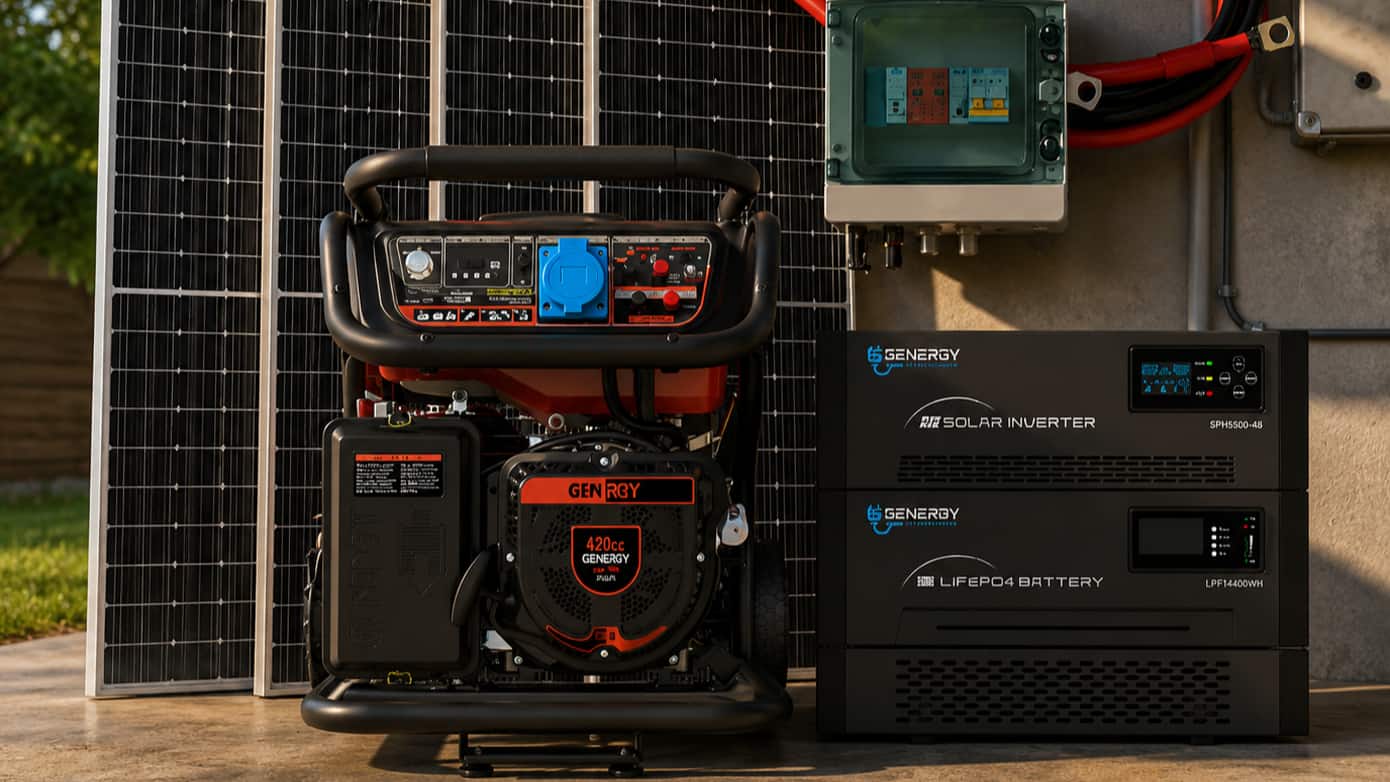
Aunque el panel es la parte más visible, un sistema fotovoltaico completo incluye varios elementos. Todos trabajan juntos para que la electricidad se genere, se transforme, se proteja, se mida y se aproveche correctamente.
Una instalación típica puede incluir paneles, inversor, estructura, cableado, protecciones eléctricas, contador, baterías y conexión a red. En algunos casos, también puede complementarse con soluciones de respaldo para mantener suministro cuando no hay sol o ante cortes eléctricos.
Paneles o módulos fotovoltaicos
Los paneles o módulos fotovoltaicos son los encargados de captar la luz solar y generar corriente continua.
Su rendimiento depende de varios factores:
- Potencia del panel.
- Tipo de célula.
- Orientación.
- Inclinación.
- Sombras.
- Temperatura.
- Limpieza.
- Calidad de instalación.
- Horas de sol disponibles.
Un panel no produce siempre lo mismo. La generación varía según la hora del día, la estación del año y las condiciones meteorológicas.
Inversor solar
El inversor es una pieza central. Convierte la corriente continua de los paneles en corriente alterna apta para el consumo.
Además, muchos inversores modernos permiten monitorizar la producción, detectar errores y gestionar la energía del sistema. En instalaciones con baterías, también pueden ayudar a decidir cuándo cargar, descargar o priorizar el autoconsumo.
La idea simple es esta: sin inversor, la electricidad generada por el panel no sería útil para la mayoría de consumos de hogares y empresas.
Cableado, protecciones y contador
El cableado transporta la energía desde los paneles hasta el inversor y desde el inversor hacia el cuadro eléctrico o punto de consumo.
Las protecciones eléctricas ayudan a evitar problemas por sobrecargas, derivaciones o incidencias en la instalación. No son un detalle menor: una instalación fotovoltaica debe ser segura, estable y estar bien dimensionada.
El contador o medidor permite registrar la energía producida, consumida o vertida a la red. En sistemas de autoconsumo, esta información es fundamental para entender cuánto se aprovecha y cuánta energía sobra.
Baterías solares y almacenamiento
Los paneles fotovoltaicos no almacenan energía por sí solos. Generan electricidad cuando reciben luz. Para guardar esa electricidad y usarla más tarde, hace falta una batería solar.
Las baterías son especialmente útiles cuando se quiere consumir energía solar por la noche, cubrir momentos de baja producción o aumentar la independencia respecto a la red.
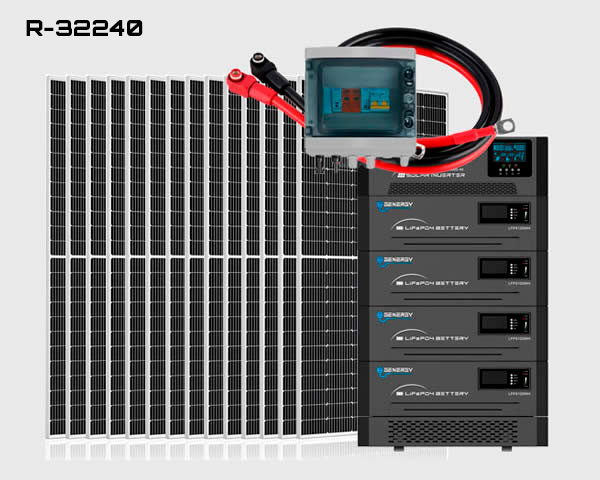
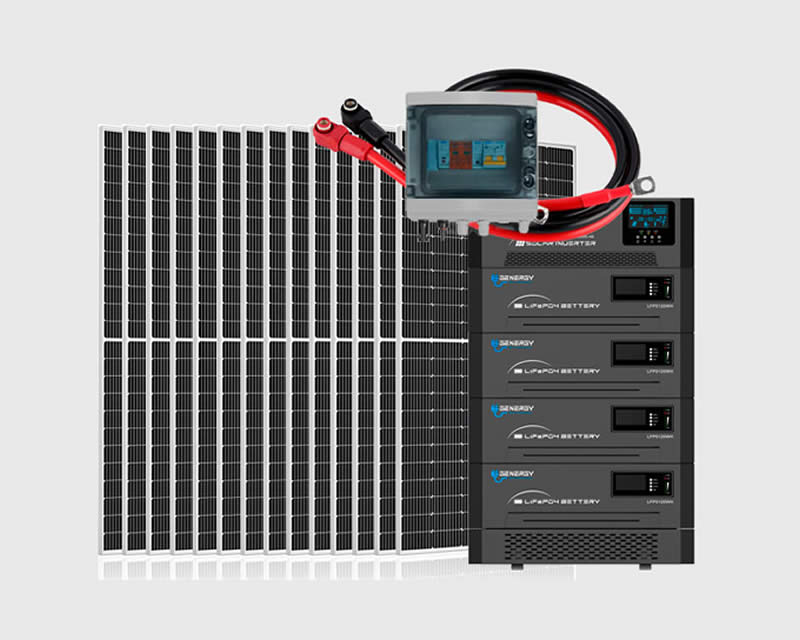
Por ejemplo, un Kit solar con batería puede tener sentido cuando no quieres limitarte a consumir energía solo durante las horas de sol. Y si estás comparando opciones de almacenamiento, una guía sobre las Mejores baterías para placas solares puede ayudarte a entender qué características mirar antes de elegir.
Soluciones de respaldo energético
La energía solar es muy útil, pero no siempre produce cuando la necesitas. Por la noche no hay generación y en días muy nublados la producción baja. Por eso, en algunas instalaciones se añaden soluciones de respaldo.
Una opción portátil puede ser una Estación de Energía Portátil Zero Emission, especialmente útil para disponer de energía almacenada en usos concretos o situaciones donde se valora la movilidad.
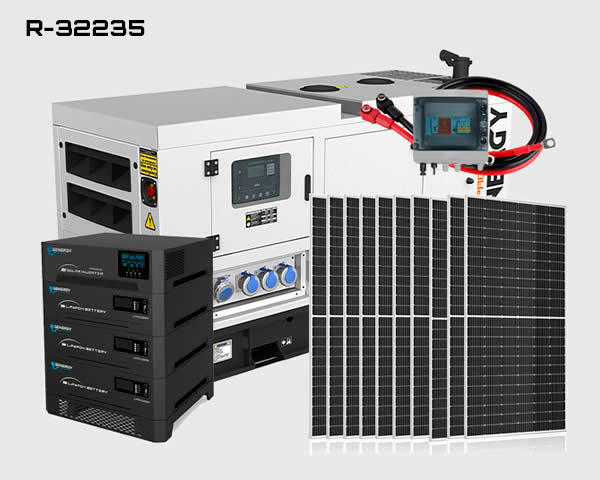
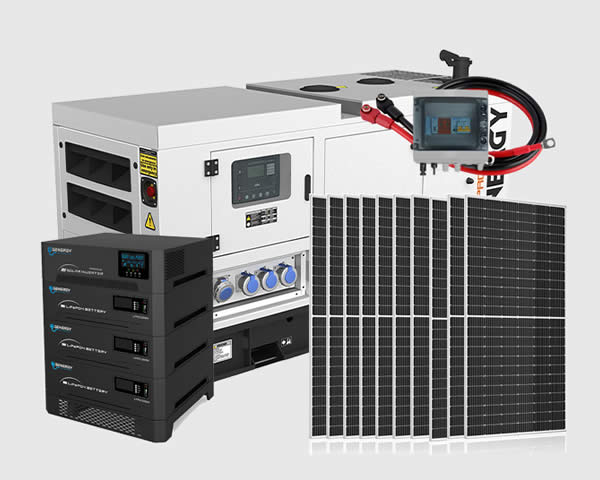
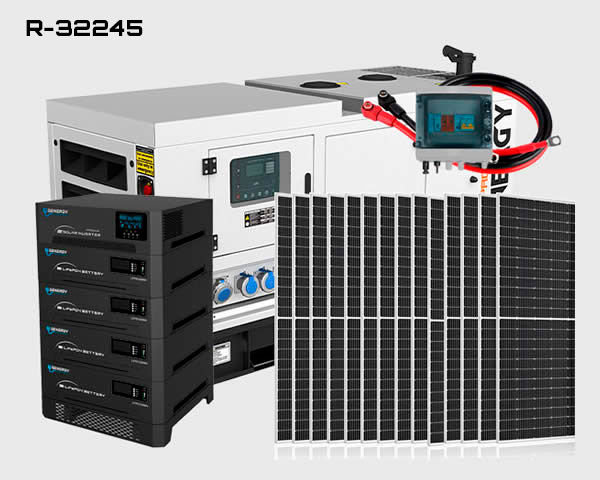
En otros casos, sobre todo cuando se necesita continuidad ante cortes eléctricos, puede tener sentido complementar la instalación con un Generador Eléctrico o un Grupo electrógeno. En empresas o instalaciones con consumos más exigentes, un Generador Trifásico puede encajar mejor si la instalación trabaja con cargas trifásicas.
La idea no es sustituir al panel fotovoltaico, sino entender que el sistema energético puede combinar generación solar, almacenamiento y respaldo según la necesidad real.
¿Qué pasa cuando no hay sol suficiente?
Un panel fotovoltaico depende de la luz solar. Eso significa que su producción cambia a lo largo del día y del año.
Por la mañana empieza a producir cuando hay suficiente radiación. Al mediodía suele alcanzar una generación más alta. Por la tarde baja. Y por la noche no produce electricidad.
Esto no es un problema si el sistema está bien planteado. La clave es saber cómo se gestiona la energía cuando hay poca luz, cuando se produce de más o cuando el consumo no coincide con las horas solares.
Producción en días nublados
Un panel fotovoltaico puede funcionar en días nublados porque sigue recibiendo luz difusa. Sin embargo, produce menos que en un día soleado.
La cantidad exacta depende de la densidad de las nubes, la orientación del panel, la tecnología utilizada y la radiación disponible.
Aquí conviene recordar algo: el panel necesita luz, no calor. Si hay luz, puede haber producción. Si hay menos luz, habrá menos electricidad.
Qué ocurre por la noche
Por la noche, el panel fotovoltaico no produce electricidad porque no hay luz solar. Sin fotones impactando en las células, no se activa el efecto fotovoltaico.
Para tener energía durante la noche, existen tres posibilidades principales:
- Usar electricidad de la red.
- Consumir energía almacenada en baterías.
- Contar con una solución de respaldo si la instalación lo requiere.
Por eso, cuando se diseña una instalación, no basta con calcular cuánta energía produce el panel en las mejores horas. También hay que pensar cuándo se consume esa energía.
Excedentes, baterías y conexión a red
Si el sistema produce más electricidad de la que se consume en ese momento, se generan excedentes. Esos excedentes pueden almacenarse, enviarse a la red o gestionarse según la configuración de la instalación.
En instalaciones con batería, la energía sobrante puede guardarse para más tarde. En instalaciones conectadas a red, los excedentes pueden verterse si el sistema está preparado para ello.
El objetivo de un buen sistema fotovoltaico no es producir mucho sin más, sino aprovechar bien la energía producida.
Tipos de paneles fotovoltaicos
Existen diferentes tipos de paneles fotovoltaicos. Todos comparten el mismo objetivo —convertir luz solar en electricidad—, pero no todos tienen la misma eficiencia, precio, aspecto o comportamiento.
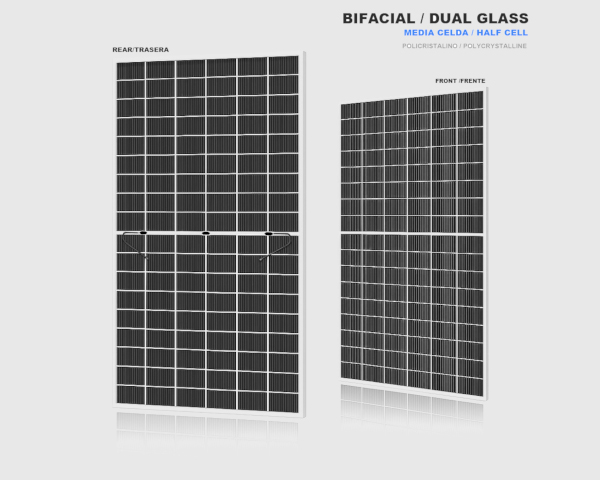
Los más comunes son los paneles monocristalinos, policristalinos y de capa fina.
Paneles monocristalinos
Los paneles monocristalinos suelen estar fabricados con células de silicio de alta pureza. Normalmente tienen un color oscuro uniforme.
Suelen ofrecer buena eficiencia y son muy usados cuando se busca producir más energía en menos espacio. Por eso son frecuentes en viviendas y empresas con superficie limitada.
Paneles policristalinos
Los paneles policristalinos también utilizan silicio, pero su proceso de fabricación es diferente. Suelen tener un tono azulado y una apariencia menos uniforme.
Durante años fueron una opción muy popular por su equilibrio entre coste y rendimiento. Aunque los monocristalinos han ganado protagonismo, los policristalinos siguen siendo una tecnología conocida.
Paneles de capa fina
Los paneles de capa fina utilizan capas muy delgadas de material fotovoltaico. Pueden ser más ligeros y flexibles, aunque normalmente ofrecen menor eficiencia por metro cuadrado que los paneles de silicio cristalino.
Se emplean en aplicaciones específicas donde el peso, la flexibilidad o el tipo de superficie son factores importantes.
Ventajas y límites de un panel fotovoltaico
Los paneles fotovoltaicos tienen muchas ventajas, pero también limitaciones. Entender ambas partes ayuda a tomar mejores decisiones y a evitar expectativas poco realistas.
Un panel fotovoltaico es una tecnología muy útil para producir energía renovable, reducir consumo de red y avanzar hacia un modelo energético más eficiente. Pero no produce de noche, depende de la luz disponible y necesita otros componentes para formar una instalación completa.
Ventajas principales
Entre sus principales ventajas están:
- Transforman luz solar en electricidad.
- Aprovechan una fuente renovable.
- Reducen el consumo de la red.
- Pueden ayudar a bajar la factura eléctrica.
- Tienen una vida útil larga.
- Requieren poco mantenimiento.
- Se pueden combinar con baterías.
- Sirven para viviendas, empresas e instalaciones aisladas.
- Pueden formar parte de un sistema de autoconsumo.
Además, los paneles fotovoltaicos permiten adaptar la generación al consumo. Por ejemplo, una empresa que consume mucha electricidad durante el día puede aprovechar muy bien las horas solares.
Limitaciones que conviene conocer
Las principales limitaciones son:
- No generan electricidad por la noche.
- Producen menos con nubes, sombras o mala orientación.
- Necesitan inversión inicial.
- Requieren espacio disponible.
- Para almacenar energía hace falta batería.
- Para usar la electricidad en AC hace falta inversor.
- Su rendimiento depende de las condiciones de instalación.
La clave es entender que el panel es una parte del sistema. Para obtener buenos resultados, debe combinarse con el inversor adecuado, una instalación segura, una buena orientación y una estrategia clara de consumo o almacenamiento.
Conclusión
Un panel fotovoltaico funciona convirtiendo la luz solar en electricidad mediante el efecto fotovoltaico. Los fotones impactan en las células de silicio, liberan electrones y generan corriente continua. Después, un inversor transforma esa corriente en corriente alterna para que pueda utilizarse en hogares, empresas o instalaciones conectadas a la red.
La explicación más simple es esta: el panel convierte luz en electricidad, pero el sistema completo hace que esa electricidad sea útil.
Por eso, para entender cómo funciona un panel fotovoltaico, no basta con mirar el panel. También hay que entender el papel del inversor, las baterías, el cableado, las protecciones, el contador, los excedentes y las posibles soluciones de respaldo.
Del sol al enchufe, el recorrido es claro: luz, células, electrones, corriente continua, inversor, corriente alterna y consumo.
Productos que podrían interesarte

Preguntas frecuentes sobre cómo funciona un panel fotovoltaico
¿Un panel fotovoltaico funciona con luz o con calor?
Funciona principalmente con luz solar. Lo que activa el proceso son los fotones de la radiación solar al impactar en las células de silicio.
El calor no es lo que genera la electricidad. De hecho, temperaturas demasiado altas pueden reducir el rendimiento de algunos paneles.
¿Qué corriente produce un panel fotovoltaico?
Un panel fotovoltaico produce corriente continua, también llamada DC o CC.
Después, el inversor solar transforma esa corriente continua en corriente alterna, también llamada AC o CA, que es la que se usa normalmente en hogares y empresas.
¿Un panel fotovoltaico puede alimentar una casa?
Sí, una instalación fotovoltaica puede alimentar parte o incluso gran parte del consumo de una casa, dependiendo del número de paneles, la orientación, la radiación solar disponible, el consumo de la vivienda y si hay baterías.
Un solo panel normalmente no alimenta una casa completa. Lo habitual es instalar varios paneles dentro de un sistema diseñado según las necesidades reales.
¿Los paneles fotovoltaicos almacenan energía?
No. Los paneles generan electricidad, pero no la almacenan por sí solos.
Para guardar energía y usarla por la noche o en momentos de baja producción, hace falta una batería solar o un sistema de almacenamiento.
¿Cuánto dura un panel fotovoltaico?
Un panel fotovoltaico puede durar muchos años. Normalmente está diseñado para funcionar durante décadas, aunque su rendimiento puede disminuir poco a poco con el tiempo.
El mantenimiento suele ser bajo, pero conviene revisar la instalación, evitar sombras, limpiar si hay mucha suciedad acumulada y comprobar que el sistema trabaja correctamente.
¿Qué diferencia hay entre corriente continua y corriente alterna?
La corriente continua fluye en una sola dirección. Es la que genera el panel fotovoltaico.
La corriente alterna cambia de dirección periódicamente. Es la que utilizan la mayoría de instalaciones eléctricas en viviendas y empresas.
¿Qué pasa si produzco más energía solar de la que consumo?
Si produces más energía de la que consumes en ese momento, el excedente puede almacenarse en baterías, enviarse a la red o gestionarse según el tipo de instalación.
Por eso es importante dimensionar bien el sistema y adaptar el consumo a las horas de mayor producción siempre que sea posible.
¿Qué otros contenidos pueden ayudarme a entender sistemas energéticos?
Si te interesan otros equipos que también transforman energía en trabajo útil, puedes leer esta guía sobre Cómo funciona una hidrolimpiadora paso a paso, donde se explica el recorrido del agua desde la entrada hasta el chorro a presión.