How to charge a DJI Agras in the field: a complete guide to working without interruption
Quick Index
Agricultural drones such as the DJI Agras T25, T50, T70, and T100 allow large areas to be worked with maximum efficiency. However, their performance depends entirely on the availability of power in the field.
The biggest problem in real operations is not the drone, but battery charging.
Without an adequate energy system, the following occur:
layovers between flights
productivity reduction
operational disruptions
risk of damage to chargers
In this guide, you will learn how to charge a DJI Agras in the field safely, continuously, and professionally.
What does a DJI Agras need to charge batteries in the field?
Power requirements for DJI Agras charging:
Power source: 220-240 V single-phase
Power required: 8 kW to 18 kW depending on model
Current type: stable and regulated
Typical use: continuous charging during the agricultural workday
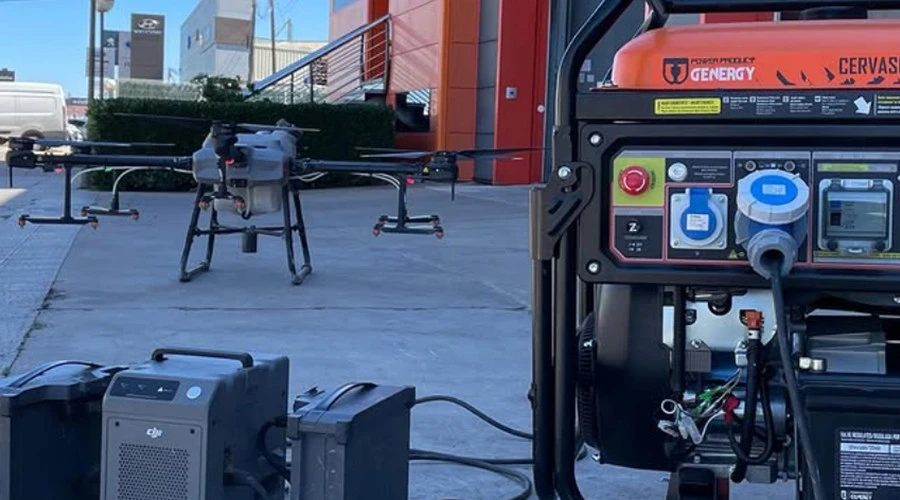
Recommended solution: professional drone generator designed for charging agricultural drones.
This allows for continuous operation without interruptions.
Optimal operating cycle
Recommended system:
1 battery in flight
1 battery charging
1 battery ready
Result: continuous operation throughout the day.
Common mistakes when charging agricultural drones
Using insufficient generators
It may cause:
slow charging
charger failures
electrical damage
Using unstable power
Risks:
permanent damage to chargers
reduction in battery life
Conclusion
Using a professional generator is the only reliable solution for charging DJI Agras drones in the field and ensuring continuous, safe, and efficient operation.
Generators designed specifically for agricultural drones maximize productivity and eliminate interruptions.
Frequently asked questions
What generator do I need to charge a DJI Agras?
It depends on the model:
T25: 10,000 W – 11,000 W
T50 / T70: 15,000 W
T100: 18,000 W
Can a DJI Agras be powered by any generator?
No. It must provide sufficient power and stable voltage.
Is an inverter generator or a conventional generator better?
The important thing is that it is a professional generator with stable regulation and sufficient power.
How many batteries do I need to work continuously?
We use cookies to ensure that we give you the best experience on our website. If you continue to use this site, we'll assume that you are happy with it.

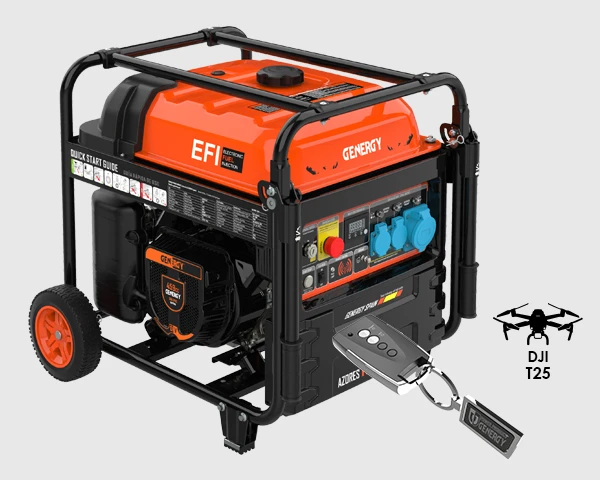 10000W / 230VREMOTE START 50M
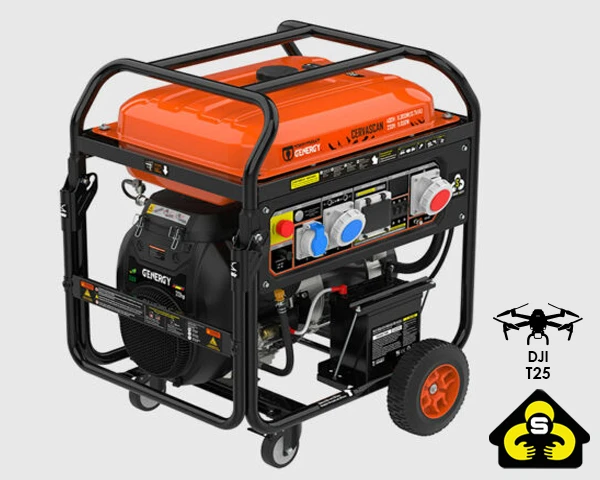 11kW 400V / 11kW 230VELECTRIC START – IP67
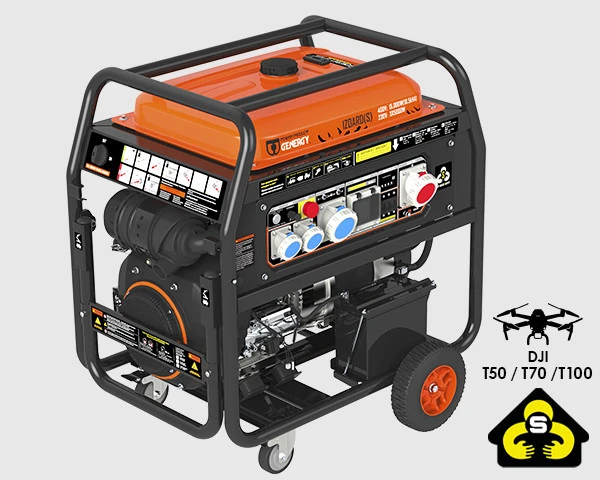 15kW 400V / 3 x 5000W 230VELECTRIC START – IP67
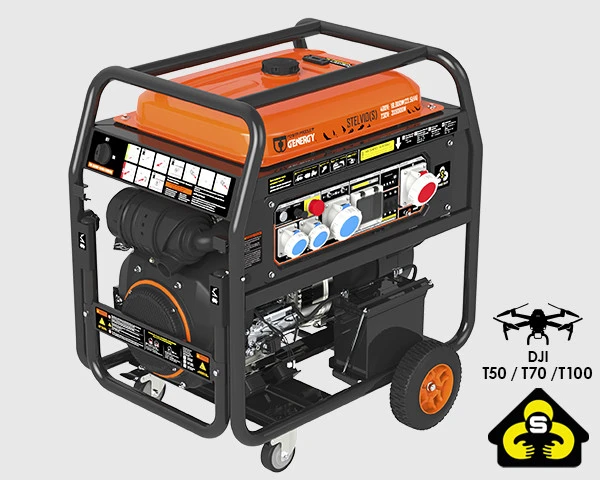 18kW 400V / 3 x 6000W 230VELECTRIC START – IP67