Cómo elegir un generador eléctrico para casa: guía completa y comparativa 2026
Los generadores eléctricos se han convertido en una solución cada vez más utilizada para viviendas.
Pueden utilizarse como respaldo ante apagones, en casas aisladas sin conexión a red eléctrica o como apoyo para sistemas solares.
Sin embargo, elegir el generador para casa adecuado no siempre es fácil. Muchas personas compran un generador con poca potencia que no puede alimentar la vivienda o uno demasiado grande que consume más combustible del necesario.
Un generador eléctrico doméstico permite:
- alimentar electrodomésticos esenciales
- mantener el suministro eléctrico durante apagones
- cargar baterías solares
- garantizar energía en viviendas aisladas
En esta guía explicamos qué generador comprar para una casa, cuánta potencia elegir y qué tipo de generador es el más adecuado según cada situación.
Qué generador eléctrico necesita una casa
La potencia del generador eléctrico para casa depende principalmente del número de electrodomésticos que quieras alimentar y del tamaño de la vivienda.
Como referencia general de un generador eléctrico para casa:
Tipo de vivienda | Potencia recomendada |
casa pequeña | 2000–3000 W |
vivienda media | 4000–6000 W |
casa grande | 7000–10000 W |
Un generador de 5000w-7000 W suele ser suficiente para la mayoría de viviendas, permitiendo alimentar electrodomésticos esenciales.
Estos pueden incluir:
- nevera
- iluminación
- televisión
- microondas
- pequeños electrodomésticos
Si quieres alimentar equipos de mayor consumo como aire acondicionado o bombas de agua, es recomendable utilizar generadores de mayor potencia.
Qué aparatos puede alimentar un generador doméstico
Para calcular correctamente la potencia necesaria, conviene conocer el consumo aproximado de los electrodomésticos.
Electrodoméstico | Potencia aproximada |
nevera | 150-300 W |
televisión | 100-200 W |
microondas | 800-1200 W |
lavadora | 500-1000 W |
bomba de agua | 700-1500 W |
aire acondicionado | 1000-2000 W |
Por ejemplo, un generador de 3000w – 4000 W puede alimentar:
- nevera
- iluminación
- televisión
- pequeños electrodomésticos
Si además quieres utilizar bomba de agua o aire acondicionado, se recomienda subir a 5000-7000 W.
Tipos de generadores eléctricos para casa
Existen diferentes tipos de generadores según el combustible y la tecnología.
Generadores de gasolina
Son los más habituales para uso doméstico.
Ventajas principales:
- menor coste inicial
- mantenimiento sencillo
- ideales para uso ocasional
Son una buena opción para respaldo en apagones o uso puntual.
Generadores diésel
El generador electrico diésel están pensados para uso más intensivo.
Ventajas:
- mayor eficiencia en uso prolongado
- motores más duraderos
- mejor rendimiento con cargas altas
Se utilizan con frecuencia en viviendas aisladas o instalaciones profesionales.
Generadores inverter silenciosos
Los generadores inverter producen energía más estable y con menos ruido.
Ventajas:
- corriente estable segura para electrónica
- menor consumo gracias al modo ECO
- funcionamiento más silencioso
Son la mejor opción si buscas un generador para casa silencioso o si necesitas alimentar equipos electrónicos sensibles.
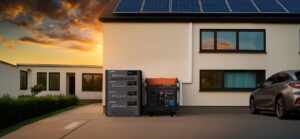
Generador eléctrico para casa con placas solares
Cada vez más viviendas utilizan instalaciones fotovoltaicas.
En estos casos, el generador se utiliza como respaldo cuando la producción solar no es suficiente.
Un generador permite:
- cargar baterías solares
- mantener el suministro eléctrico en días nublados
- garantizar autonomía energética
Los llamados generadores de respaldo fotovoltaico están diseñados específicamente para trabajar junto a sistemas solares.
Comparativa de generadores Genergy recomendados para vivienda unifamiliar
A continuación se muestran algunos ejemplos de generadores adecuados para diferentes tipos de vivienda.
Modelo | Potencia | Tipo | Uso recomendado | Nivel de ruido |
Creta SOL Silent 7500W | 7500 W | inverter | vivienda media / solar | bajo |
Mulhacén SOL 7000W | 7000 W | respaldo solar | casa con placas solares | medio |
Limited 7000 | 5500 W | gasolina | vivienda pequeña | medio |
Limited 3000 Diesel | 3000 W | diésel | emergencias básicas | medio |
Estos modelos cubren la mayoría de necesidades domésticas.
Generador eléctrico para casa: Comparación rápida
Mejor generador para casa según el tipo de vivienda:
Mejor generador casa pequeña
→ Limited 3000 Diesel
Mejor generador vivienda media
→ Limited 7000
Mejor generador casa con placas solares
→ Mulhacén SOL 7000W
Mejor generador doméstico avanzado
→ Creta SOL Silent 7500W
Mejor generador para casa completa según ruido:
más silencioso → Creta SOL Silent
mejor equilibrio potencia / ruido → Mulhacén SOL
Qué generador elegir según el tipo de vivienda
Casa pequeña
Generador para vivienda unifamiliar recomendado:
Limited 3000 Diesel
Permite:
- alimentar electrodomésticos básicos
- uso en apagones
- bajo consumo
Vivienda media
Generador recomendado:
Limited 7000
Permite:
- alimentar varios electrodomésticos
- uso doméstico completo
- potencia suficiente para la mayoría de hogares
Vivienda con placas solares
Generador recomendado:
Mulhacén SOL 7000W
Permite:
- respaldo de sistema fotovoltaico
- carga de baterías solares
- mantener suministro energético
Vivienda de alto consumo
Generador recomendado:
Creta SOL Silent 7500W
Ideal para:
- viviendas grandes
- sistemas solares completos
- respaldo energético avanzado
Consumo real de un generador doméstico
El consumo depende principalmente de la potencia y de la carga del generador.
Potencia | Consumo medio |
3000 W | 0.8–1.5 L/h |
5000 W | 1–2 L/h |
7000 W | 1.5–3 L/h |
7500 W | 2–3.5 L/h |
El modo ECO automático reduce el consumo cuando la demanda energética es baja.
Nivel de ruido de un generador doméstico
El nivel de ruido depende del tipo de generador.
Generadores inverter Genergy:
59 dB → muy silencioso
65 dB → silencioso
74 dB → nivel estándar
Los generadores inverter son mucho más silenciosos que los generadores convencionales.
Generador inverter vs generador convencional
Ventajas de los generadores inverter:
- corriente estable
- seguros para electrónica
- menor consumo
- menor ruido
- mayor eficiencia energética
Por estas razones, los generadores inverter son los más recomendados para uso doméstico
Generador como respaldo energético
Uno de los usos más habituales es como respaldo en caso de apagón.
Permite:
- mantener la electricidad en casa
- alimentar electrodomésticos esenciales
- garantizar autonomía energética
También es muy útil para viviendas aisladas o sistemas solares autónomos.
Conclusión
Un generador eléctrico doméstico es una solución eficaz para garantizar suministro energético en viviendas.
Permite afrontar apagones, alimentar electrodomésticos esenciales o apoyar sistemas solares.
Elegir correctamente la potencia y el tipo de generador es fundamental para obtener el mejor rendimiento.
Los generadores Genergy ofrecen soluciones adaptadas a diferentes necesidades, desde viviendas pequeñas hasta instalaciones solares completas.
Preguntas frecuentes
Qué generador eléctrico necesita una casa
Para la mayoría de viviendas se recomienda un generador entre 5000 y 7000 W dependiendo del consumo.
Cuánto consume un generador doméstico
Un generador de 5000 W suele consumir entre 1 y 2 litros de combustible por hora.
Se puede usar un generador con placas solares
Sí. Muchos generadores se utilizan como respaldo para cargar baterías solares cuando no hay suficiente producción.
Qué generador es más silencioso
Los generadores inverter son los más silenciosos y adecuados para zonas residenciales.
Qué generador es mejor para una casa
Para una casa, lo mejor suele ser un generador inverter de gasolina de 3.000–5.000 W nominales, con modo ECO y THD bajo (<3% si vas a usar electrónica sensible): te da energía estable para heladera + luces + router + TV/PC sin tanto ruido ni consumo.