How long does an electric generator last: hours of continuous use and actual lifespan
When someone searches for how long an electric generator lasts, they’re almost always mixing up two different questions. And I get it, because at first glance they seem the same, but they’re not.
The first question is: How many hours in a row can a generator run without stopping?. The second is: how many hours or years of service life can it provide before it really wears out. In my experience, this is the most common mistake when discussing the topic. Many people think that “lasting” means just one thing, when in reality a generator can withstand many total hours over its lifetime and, at the same time, not be designed to run for extremely long stretches without a break.
That’s why there isn’t a single correct answer. It depends on the type of equipment, the fuel, the quality of the engine, the RPM, maintenance, and how it’s actually used. A small portable generator for household emergencies is not the same as an industrial generator designed to run for long periods of time.
In my experience, I always find it more helpful to explain it this way: a small generator can provide a few hours of continuous operation, but that doesn’t mean it has a service life comparable to that of a 10 kVA industrial diesel generator. The reverse is also true: a sturdy unit can last for many hours in total, but only if it is used and maintained properly.
So, to properly address this topic, you need to distinguish between the two concepts from the start. This prevents confusion and helps you make a better decision if you’re thinking about buying one, using it at home, or assessing how long your current equipment will last.
The short answer: battery life isn't the same thing as service life
If you want a quick answer, here it is: An electric generator can run continuously for between 4 and 24 hours, and have a total service life of between 1,000 and over 30,000 hours, depending on the type of equipment.
I know the range is huge, but it makes sense. With a small portable generator, it’s normal to expect limited runtime—often around 4 or 5 hours straight, especially when operating at medium or high load. In contrast, with an industrial diesel generator, we can indeed talk about 24-hour continuous operation, provided it has adequate fuel, maintenance, and inspection breaks.
The same applies to service life. A basic portable model, such as a home electric generator, typically has a service life of 1,000 to 2,000 hours. That’s not bad for occasional use, emergencies, or sporadic jobs, but it’s not designed for heavy-duty use. An industrial diesel generator is in a league of its own: it can reach 10,000, 20,000, or even 30,000 hours or more, depending on the model and maintenance.
Here’s the key: when people ask me how long a generator lasts, I would never give a definitive answer without first asking what kind of equipment we’re talking about. That’s because a gasoline-powered portable generator isn’t bought, used, or wears out the same way as an industrial diesel generator. That difference is what completely changes the answer.
Furthermore, it’s important not to confuse “can run” with “should run.” Just because a generator is capable of running for many hours doesn’t mean it should always be pushed to its limits, operated in poorly ventilated conditions, or run without regular check-ups. That’s when both its actual runtime and overall lifespan start to be compromised.
How many hours in a row can an electric generator run?
Battery life or continuous operating time depends primarily on five factors: battery capacity, fuel type, connected load, engine design and cooling system. There’s no other way. If two electric generators have different power ratings, different fuel tanks, and different engines, they won’t last anywhere near as long.
With a small, portable unit, it’s more common to see battery life measured in hours rather than full days. When I tested this type of comparative approach, the clearest way to explain it was this: a home or portable generator is designed to handle occasional power outages, power a few tools, or keep a few basic appliances running—not to act as a makeshift power plant for days on end.
That’s why, if you overload it or run it under poor conditions, its lifespan decreases. And if the equipment isn’t properly ventilated, wear and tear accelerates. Often, people focus only on the advertised power rating and overlook something basic: actual runtime depends heavily on the load percentage at which it operates. A generator operating at 50% of its capacity usually runs much more smoothly than one forced to operate near maximum capacity all the time.
It also matters whether the equipment is designed for occasional use or for continuous operation. Industrial models are built with more robust components, more advanced cooling systems, and a much higher tolerance for continuous use. That’s where the difference between portable and industrial models becomes stark.
Small portable generators: How long do they really last?
With a small portable generator, you can reasonably expect about 4 to 5 hours of continuous use as a practical benchmark in many usage scenarios. It may be a little more or a little less, but that range aligns fairly well with what typically happens with compact units intended for occasional use.
Here’s how I see it: if you use it to get you out of a pinch at home—to power a few lights, a fridge, a router, or specific tools—that price makes sense. What doesn’t make sense is expecting a small laptop to work a full day nonstop, as if it were a professional-grade continuous backup system.
This type of generator typically uses simpler engines and smaller fuel tanks. This makes it more economical, easier to move, and more affordable, but it also means it has a shorter continuous runtime. Furthermore, the closer you operate it to its maximum load, the worse it gets. At that point, fuel consumption increases, the temperature rises, and the mechanical strain multiplies.
Another important point: many users believe that if they just fill up the fuel tank, they can keep going indefinitely. In reality, that’s not the case. Although you can technically extend its runtime with refueling and maintenance, a portable generator isn’t usually designed to handle very demanding workloads for many hours at a time. That eventually takes its toll.
Industrial diesel generators: when they can run 24 hours a day
Here, the situation is completely different. An industrial diesel generator can indeed be set up to run 24 hours a day, and that is one of the major differences compared to portable models. But it’s important to understand exactly what that means.
This doesn't mean that all diesel generators can run indefinitely without supervision. It means that many industrial units are built for prolonged or continuous use, with more robust engines, better cooling, larger fuel tanks, or even systems designed for refueling and scheduled maintenance.
In my experience, when people say that an industrial generator “can run all day,” what matters isn’t the phrase itself, but the context: that kind of performance is only sustainable if the generator operates under the right conditions—with the proper load, up-to-date oil, clean filters, and adequate ventilation. A top-of-the-line unit that’s poorly maintained will last less than a standard unit that’s well cared for.
In addition, diesel engines typically have an advantage in long-duration operations because they are better suited for sustained effort. That is why, in professional, agricultural, industrial, or critical backup applications, diesel generators are often preferred over lighter gasoline-powered solutions.
What changes depending on the engine, RPM, and load
This point is more important than it seems. Not all engines operate the same way or experience the same wear and tear. A generator that runs at a higher RPM is typically subject to greater wear than a slower, more robust one, especially if it is used for many hours.
The connected load also plays a huge role. A generator doesn’t “last” as long when powering moderate loads as it does when handling constant peaks or running at 90% or 100% of its capacity all the time. When that happens, fuel consumption, temperature, and overall wear and tear increase.
So, if you want your generator to run for longer stretches and last for more years, you shouldn't size it down to the last detail. Leaving some leeway almost always works in your favor.
What is the service life of an electric generator?
Service life is the other key aspect of this keyword. And here we’re talking about cumulative wear and tear, maintenance, hours of operation, and build quality. In other words: not how long it lasts today, but how long it will remain useful over time.
Generally speaking, generators don't last "forever," but some do last a very long time. A small portable unit typically lasts between 1,000 to 2,000 hours of service life. In contrast, an industrial diesel generator can reach 10,000 to 30,000 hours or more.
This difference is no accident. It has to do with the purpose for which each type of generator was designed. A portable generator is intended to meet specific, occasional needs. An industrial generator, on the other hand, is built to work, withstand heavy use, and remain operational for much longer periods.
I think it’s helpful to explain this in terms of realistic expectations. If someone buys a small generator for occasional emergencies, its lifespan may be sufficient for years. But if they plan to use it frequently, that generator will fall short long before they expected. Not because it’s a bad product, but because it wasn’t the right equipment for that usage pattern.
Approximate service life of portable generators
Small portable generators typically range from 1,000 and 2,000 hours. In some cases, they may exceed that figure, and in others, they may fall short if they have been used heavily or poorly maintained.
Several factors come into play here. The first is build quality. Not all laptops are created equal, even if they have similar specs on paper. The second is actual usage: a device that’s only used during occasional power outages doesn’t wear out as quickly as one that’s used for several hours every week. And the third, of course, is maintenance.
In my experience, I always emphasize this: many people judge a portable generator solely on price or power output, and forget that its lifespan also depends on how you treat it. Changing the oil on time, keeping the filter clean, and not overloading it can make a huge difference in its total operating hours.
Approximate service life of industrial generators
With an industrial generator, the situation is quite different. In this case, we can talk about 10,000 to 30,000 hours or even more, especially in well-designed and well-maintained equipment.
This doesn't mean that every unit automatically reaches that figure. It means that the equipment is built with a different design philosophy: more durable materials, tighter tolerances, more robust cooling, and a much greater capacity to withstand sustained operation.
Furthermore, when used in professional settings, maintenance is typically much more rigorous. And that makes all the difference. Two identical generators can end up with opposite outcomes if one undergoes regular maintenance while the other is left unattended until it breaks down.
Gasoline vs. Diesel: Which One Lasts Longer?
When it comes to lifespan, in general diesel tends to last longer than gasoline in demanding or continuous-duty applications. It’s not a hard-and-fast rule that applies in every case, but it is a fairly clear trend.
The reason is simple: diesel engines are generally better suited to handle sustained loads and prolonged use. That’s why, when someone needs equipment for long hours of operation, reliable backup, or professional use, diesel is usually the most logical choice.
Gasoline generators, on the other hand, are well-suited for portable equipment, occasional use, and tighter budgets. But when the goal is to maximize service life in harsh environments, diesel has the edge.
Factors that affect a generator's lifespan
Here’s the part that really sets an “average” generator apart from one that’s worth the investment. Because beyond the type of equipment, its actual lifespan is determined by day-to-day use.
Maintenance and Oil Change
Preventive maintenance is probably the most important factor. A generator that isn't maintained not only has a shorter lifespan—it also performs worse, consumes more fuel, and breaks down sooner.
Changing the oil on schedule, checking fluid levels, monitoring the cooling system, and addressing minor issues as they arise are essential. Many people only think about their generator when they need it, and that’s when the problems start. If the equipment sits idle for months without maintenance, it might start up when needed, but the accumulated wear and tear will be greater.
Fuel quality and filter condition
Not all fuel behaves the same way, and not all filters last forever. Fuel that is in poor condition, contaminated, or has been stored for too long can affect engine performance. The same is true for dirty or clogged filters.
This affects both battery life and overall durability. An engine that receives a clean fuel supply runs more smoothly, more reliably, and with less strain. It may seem like a minor detail, but it isn't.
Maximum performance, ventilation, and weather resistance
A generator that runs at full capacity all the time wears out faster. That goes without saying. And if it’s poorly ventilated, in a very hot or humid environment, or exposed to the elements, the problem is compounded.
This is where I see the most conceptual mistakes in usage: thinking that as long as it’s running, everything is fine. No. A generator can be running and still be rapidly shortening its lifespan if the environment isn’t right.
How to tell how long your current generator—or the one you're thinking of buying—will last
If you want to estimate how long a generator will last, don't just look at the power output or the price. That's not nearly enough. What you should consider is the type of engine, the fuel, the intended use, the overall quality of the equipment, and the maintenance you'll be able to provide.
I think it's very helpful to ask yourself this question before buying: Do I want it for occasional emergencies or for actually working long hours? That single answer completely changes the choice.
What to look for in the technical specifications
In the technical specifications, you should check whether the equipment is intended for occasional use, backup, heavy-duty use, or continuous operation. You should also note the rated power, maximum power, motor type, and any information regarding maintenance or runtime.
Not all manufacturers communicate this information equally well, but when the product description is clear, it usually gives you a good idea of what to expect.
Signs that the device is not designed for continuous use
There are several clear indications: compact size, domestic use, a small fuel tank, a simple engine, and no mention of extended or continuous use. That doesn't mean it's a bad generator. It just means it's designed for a different scenario.
And here I return to an idea that I believe is essential: in my experience, the mistake isn't usually buying a bad generator, but buying the right generator for the wrong purpose. That's where the disappointment with its lifespan comes in.
Conclusion: How Long Does a Generator Last, Depending on Its Type and Actual Use?
The best answer to how long an electric generator lasts is this: it depends on whether you're talking about continuous operating hours or total service life.
A small portable generator can run for about 4 or 5 hours straight and has an approximate service life of 1,000 to 2,000 hours. In contrast, an industrial diesel generator can be set up for 24 hours of operation and reach 10,000 to 30,000 hours or more over its lifetime.
The difference isn't just in the fuel or the power output, but in the equipment's intended purpose. If you choose the right generator for the job and maintain it properly, its lifespan will improve significantly. If you try to use a small generator for industrial-scale applications, it won't last as long as you'd expect.
That’s why, to get it right, I wouldn’t rely on a single figure. I’d go with this idea: the actual lifespan of a generator depends on its design, load, maintenance, and how hard you push it.
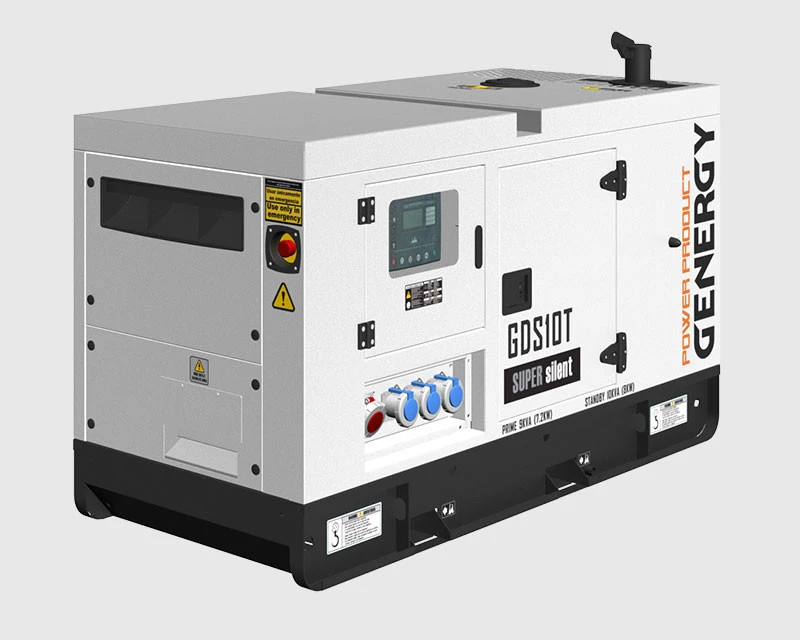
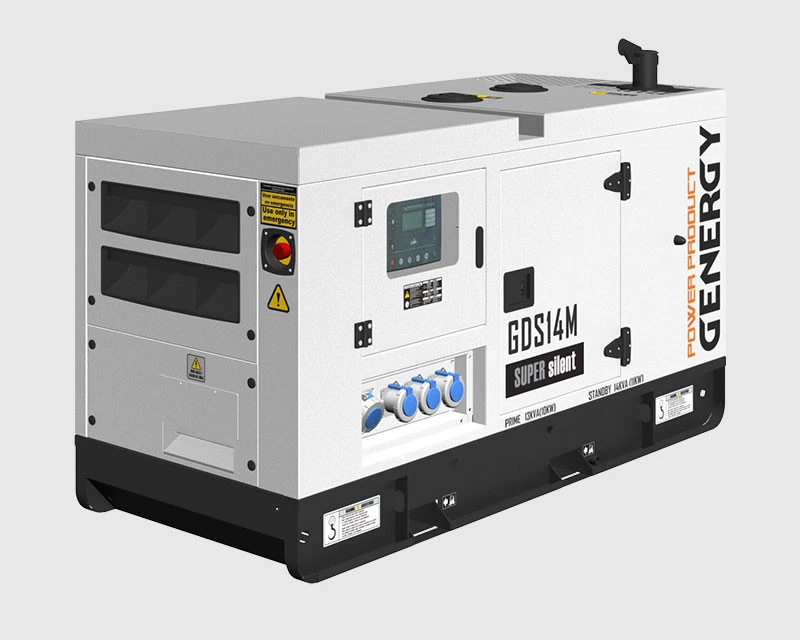
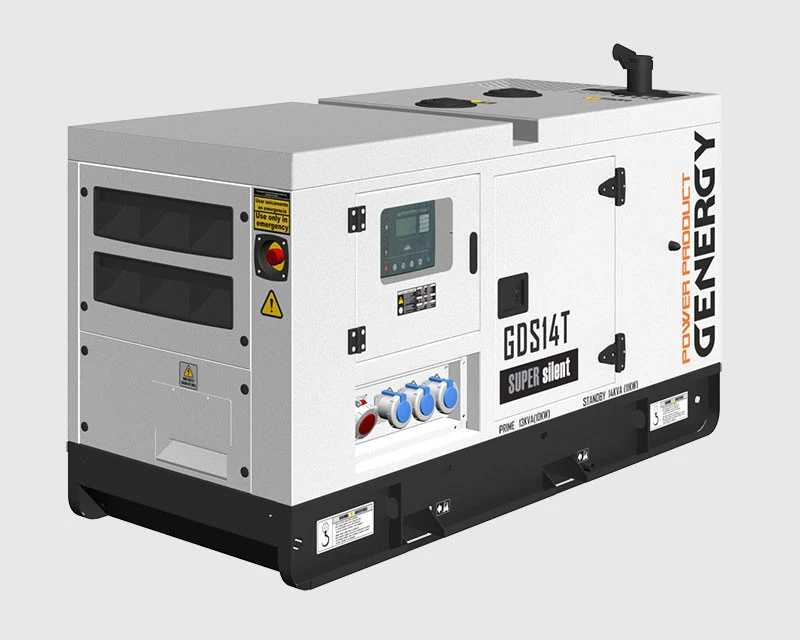
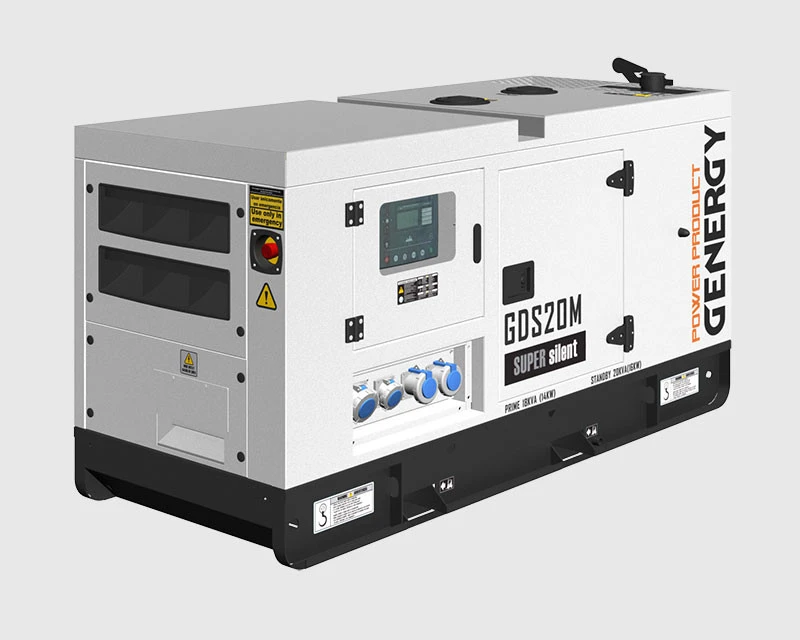
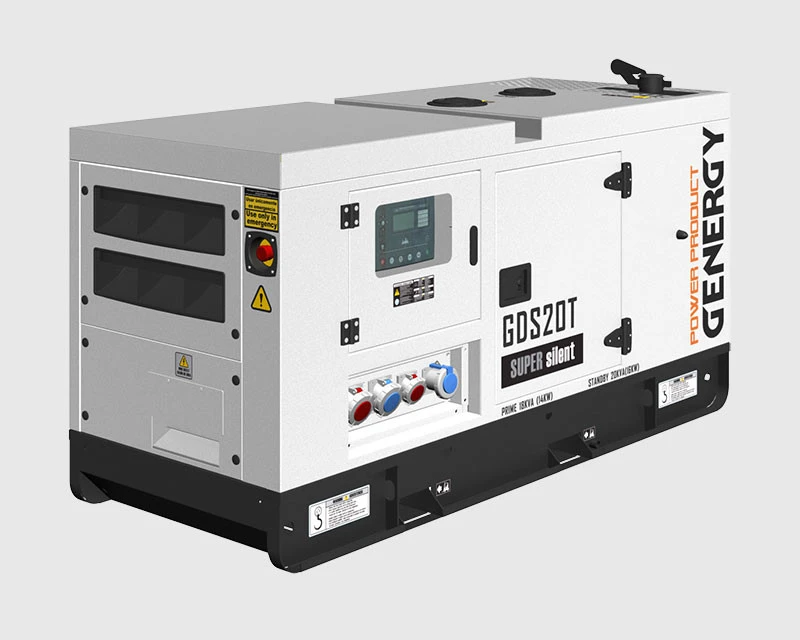
You might be interested in these long-lasting Genergy products
Frequently Asked Questions
How many hours in a row can an electric generator run?
It depends on the type. A small laptop typically lasts for several hours at a time, often around 4 or 5, while an industrial diesel generator can be set up for 24 hours of continuous operation.
How long does a portable electric generator last?
As a general rule of thumb, a small portable generator can last between 1,000 and 2,000 hours, although this depends largely on maintenance and usage.
How long does an industrial diesel generator last?
An industrial diesel generator can operate for between 10,000 and 30,000 hours, or even longer, under the right conditions.
Which type of generator lasts longer, gasoline or diesel?
In demanding or prolonged use, diesel fuel generally lasts longer. Gasoline is better suited for lighter equipment and occasional use.
What causes a generator to wear out faster?
Always running the engine at full throttle, using poor-quality fuel, not changing the oil, having dirty filters, and leaving it in a poorly ventilated area or exposed to harsh conditions.
Can you leave a generator running all night?
Only a few units are built to handle that level of use. In general, an industrial generator designed for continuous operation can handle it better than a small portable one.