Diferencia entre generador y grupo electrógeno: qué cambia realmente
The question regarding the difference between a generator and a generator set is much more common than it seems, especially since in everyday language many people use both terms as if they were synonyms. And it’s not surprising: in practice, both are related to electricity generation. However, technically they do not mean exactly the same thing.
The most important difference isn't just in size, fuel, or power, although all of those factors play a role. The real key is this: a generator is the device that produces electricity, whereas a generator set is a complete, self-contained unit that integrates an engine, a generator, and other systems necessary to supply power.
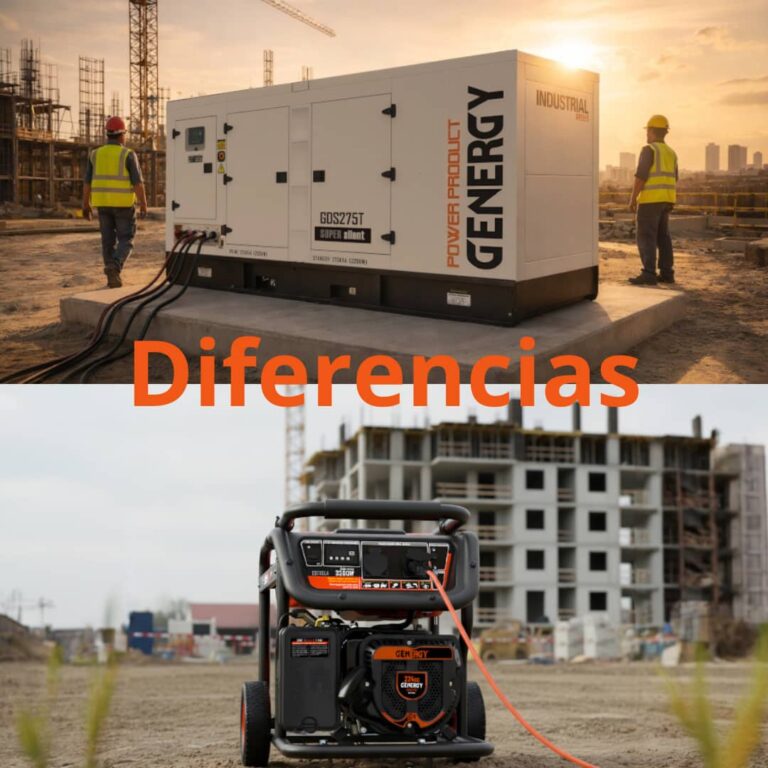
In practice, this technical difference often translates into a practical one. Small, portable units designed for low- or medium-power applications are often referred to as “generators,” whereas the generator set is usually associated with more robust equipment, typically diesel-powered, designed to supply greater power, operate for longer periods, or serve as a backup in critical situations. But it’s best not to limit oneself to that idea alone, because oversimplifying can lead to confusion.
In my experience, this is the most effective way to explain it: first, you need to understand the technical difference, and then apply it to real-world use. Otherwise, it might seem like a power generator is simply “a big generator,” but the key distinction is that we’re actually talking about a complete, self-contained system.
Are a generator and a power generator the same thing?
No, they aren't exactly the same.
A generator is, in technical terms, the component that converts mechanical energy into electrical energy. A generator set, on the other hand, is the complete unit that allows for the autonomous production of electricity, as it integrates the generator with an internal combustion engine, control systems, fuel, cooling, and other auxiliary components.
However, in everyday language, it is common to refer to equipment that is actually compact generator sets as simply “generators.” That is where much of the confusion stems from.
That’s why, when someone asks what the difference is between a generator and a power generator set, the best answer is twofold:
- Technically, they're not the same thing;
- In everyday usage, they are often confused.
What is an electric generator?
An electric generator is the device responsible for converting mechanical energy into electricity. To do so, it must receive rotational motion from an external source, such as an internal combustion engine, a turbine, or another mechanical system.
How it converts mechanical energy into electrical energy
The generator operates on the principle of electromagnetic induction. Simply put, when certain internal parts rotate within a magnetic field, an electric current is generated. That is the generator’s essential function: to convert motion into electricity.
This means that the generator, on its own, does not necessarily function as a complete system. It requires another component to supply the mechanical energy that it will convert.
Why it is a component and not always a standalone device
Here is one of the key points of the entire comparison. Technically speaking, a generator is not always a standalone unit. It can be part of a larger system, and in fact, that is exactly what happens within a generator set.
In practice, many people refer to a small portable gasoline-powered unit as a “generator.” However, if that unit includes an engine, an alternator, and auxiliary components that allow it to operate independently, it actually resembles a compact power set more than a generator in the sense of a standalone component.
What is a generator set?
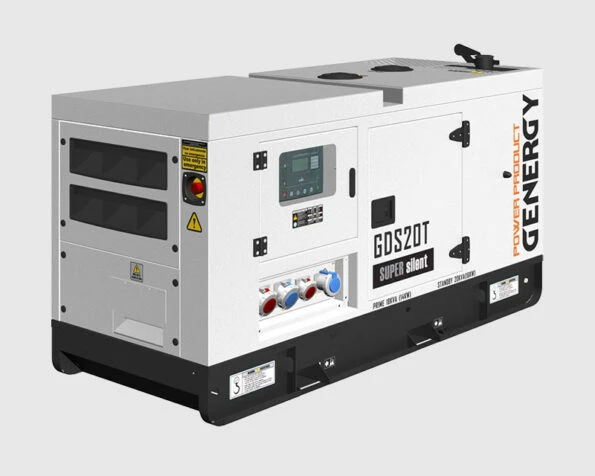
A power generator set is a complete unit designed to generate electricity independently. Unlike a standalone generator—which is merely a technical component—this refers to an entire system ready to operate under real-world conditions.
Internal combustion engine + generator in a single unit
A generator set consists of at least one internal combustion engine and a generator or alternator. The engine burns fuel, generates mechanical motion, and transmits that motion to the generator, which converts it into electricity.
In addition to these, there are other important components such as the control panel, fuel tank or fuel system, cooling system, exhaust system, starter battery, and, in many cases, automatic monitoring and response systems for power outages.
How it generates electricity independently
The key word here is autonomy. The generator set does not need to rely on any external system to generate the power required by the generator. It has its own built-in engine and everything necessary to function as a complete unit.
In my experience, this is the distinction that best clarifies the concept: a generator set is not just the component that generates electricity, but the entire unit capable of doing so on its own and in a controlled manner.
Diferencia entre generador y grupo electrógeno
| Appearance | Electric generator | Generator set |
|---|---|---|
| Definition | A device that converts mechanical energy into electricity | Complete system including motor and generator |
| Components | Just the generator (alternator) | Engine (gasoline/diesel) + alternator + control system |
| How it works | It requires an external power source to operate (motor, turbine, etc.) | It operates independently with its own motor |
| Autonomy | It is not self-contained | Fully autonomous |
| Common use | Components of more complex systems (power plants, machinery) | For direct use in homes, construction sites, and industrial settings |
| Practical application | Technical or industrial power generation | Portable or backup power generation |
| Example | Alternator at a power plant | Diesel generator for a construction site or emergency |
| Terminology | More general term | A more comprehensive and technical term |
| Commercial use | It is often used as a synonym | It is the correct term in a professional context |
Once you understand what each one is, the comparison becomes much clearer.
Technical difference
The main technical difference is very clear:
- the generator is the component that converts mechanical energy into electricity;
- the generator set is a complete system that integrates a generator, an engine, and auxiliary components to produce electricity independently.
This is the real basis for the comparison. Everything else—such as power, size, or fuel—often stems from this structural difference.
Difference in power and capacity
In practice, a generator is typically used for low- to medium-power applications, whereas a power set is generally designed for higher power outputs and to supply more demanding loads.
This doesn't mean the difference is always absolute, but it is a very common trend. Power generators are designed to operate in tougher, more continuous, or more critical environments, while the equipment people usually refer to as "generators" tends to be better suited for lighter or temporary uses.
Difference in fuel consumption and range
Another common difference lies in the fuel type and operating range. In many cases, smaller units classified as portable generators run on gasoline, while more robust generators typically run on diesel or even natural gas in certain settings.
There is also usually a clear difference in runtime. A generator set is typically designed to operate for longer periods, with greater stability, and with a design better suited for prolonged use or as a reliable backup.
Differences in size, portability, and noise
In general, the standard generator is typically more compact, portable, and easy to handle. A generator set, on the other hand, is usually larger, heavier, and designed for fixed or semi-permanent installations.
In addition, the more powerful and robust the equipment is, the more common it is to encounter factors such as higher noise levels, soundproofing systems, sturdier bases, or configurations designed for continuous operation.
When to Choose a Generator and When to Choose a Power Set
The best way to decide between the two is to think about how you'll actually use them.
Residential use or low demand
If your power needs are low, occasional, or mobile, a smaller, simpler unit is often the better choice. For example, to power tools, small appliances, or for occasional household use, what is commonly referred to as a “generator” is usually sufficient.
This type of solution typically prioritizes portability, ease of startup, and moderate power requirements.
Industrial use, continuous operation, or critical emergency use
When it comes to more demanding applications, uninterrupted service, backup power during major power outages, or powering high-demand loads, a generator set is usually the logical choice. In these situations, factors such as runtime, durability, supply stability, and the ability to operate under harsh conditions become more important.
In my experience, this is the easiest practical distinction to remember: for small or medium-sized needs, people usually consider portable generators; for high power requirements, continuous operation, or critical backup, a generator set is a much better fit.
Common mistake: why many people use them as synonyms
The main reason is that both concepts are linked to the same general function: generating electricity when needed. Since end users tend to focus more on the end result than on the internal architecture of the equipment, it is common for the terms to be used interchangeably.
In addition, the term “generators” is often used in the market to refer to equipment that, technically speaking, consists of small generator sets. This only adds to the confusion.
That’s why it’s perfectly fine if someone uses them interchangeably in casual conversation. The problem arises when technical precision is required or when you need to choose the right equipment for a specific installation. That’s when it really matters to understand the actual difference.
Conclusion
The difference between a generator and a generator set is not simply that one is small and the other is large. The fundamental difference is that the generator is the component that converts mechanical energy into electricity, while the inverter generator set is the complete, self-contained unit that integrates that generator with an engine and other systems necessary to produce power.
From there on, however, there are very clear practical differences. In everyday use, the term “generator” is typically associated with portable units designed for lower power demands, while “power generator set” is associated with higher power output, longer runtime, greater durability, and critical or continuous applications.
For me, the best way to understand this is as follows: the generator generates; the generator set generates and is also capable of doing so on its own as a complete system.
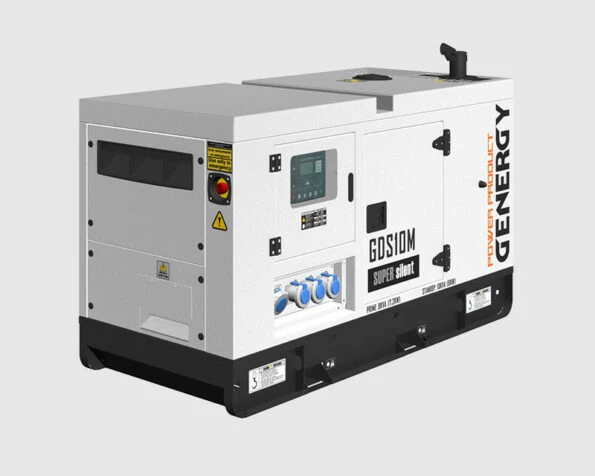
Generators that might interest you


Frequently Asked Questions About the Difference Between a Generator and a Power Set
Are a generator and a power generator the same thing?
Not exactly. Although they are often used interchangeably, technically they are not the same thing.
What is the main technical difference?
The generator is the component that converts mechanical energy into electrical energy. The generator set is the complete system that includes the engine, generator, and auxiliary components.
So a portable generator isn't a power generator?
In many cases, what is referred to as a portable generator is actually a compact power generator. It depends on how the term is used and the technical context.
Which one is usually more powerful?
Generally, a generator set is used with more powerful equipment designed to handle high or continuous demand.
Which one is used more often in critical emergencies?
The generator set, because it is designed as a self-contained, robust solution for backup or continuous power supply.
Which one is best for home use or light use?
For low- to medium-level power needs, a smaller, portable unit—often marketed as a generator—is usually the better choice.