How to Connect a Generator to a Solar Inverter: A Practical Guide for Hybrid and Off-Grid Systems
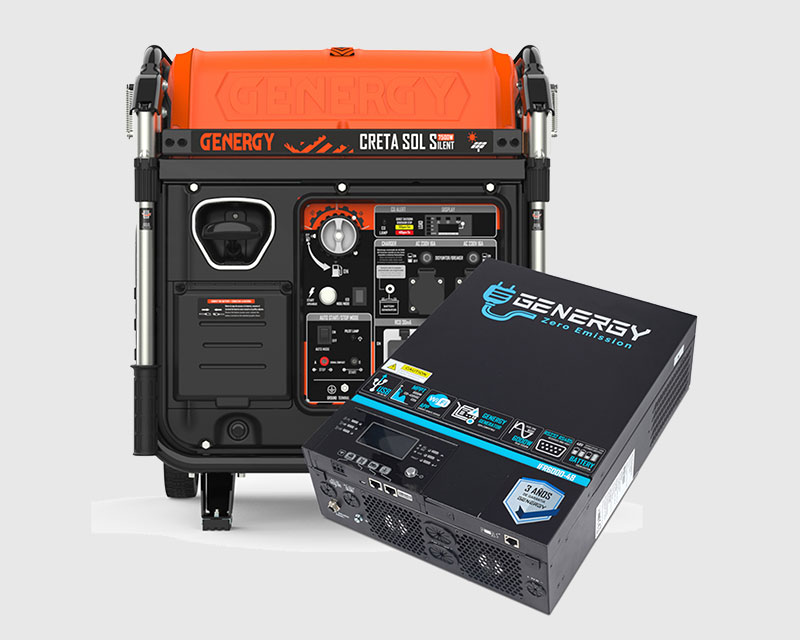
Connecting a generator to a solar inverter can be a very useful solution when a system needs additional backup, whether due to a lack of solar power generation, several cloudy days, a temporary spike in consumption, or excessive battery discharge. However, there is one key point that should be made clear from the outset: it is not a matter of connecting the generator “any old way” to the system, but rather to do so in a way that is compatible with the inverter and with the correct configuration.
In practical terms, the standard way to do this in a hybrid or off-grid system is to connect the AC output of the generator to the AC-In port of the inverter. That is the important point. You do not connect it to just any output or directly to an uncontrolled part of the system, because the off grid inverter must be able to handle that input, use it to power loads, and, if applicable, charge batteries.
In my experience, this is the key point that prevents the most errors: understanding that the inverter is in charge. The generator should not act as a “standalone” source, but rather as a backup controlled by equipment designed for that purpose. Furthermore, simply making the physical connection is not enough. You must also configure the inverter to limit the input current according to the generator’s actual capacity, because if the inverter tries to draw more than the generator can supply, faults, outages, or unstable operation will occur.
Another key factor is sizing. For everything to work properly, the generator must have enough power not only to cover the current direct consumption but also to allow for battery charging if the inverter is using that energy to recharge them. Simply put: if you size the generator too tightly, the system may fall short even if, on paper, “it seems to be enough.”
Quick Answer: Where and How to Connect a Generator to a Solar Inverter
The short answer is this: if you have a compatible hybrid or off-grid solar system, the generator is connected to its AC output to the AC-In input of the inverter. The inverter is then configured to accept that power source, limit the input current, and determine how to distribute it between loads and batteries.
That said, this brief explanation requires a few important clarifications. The first is that not all solar inverters are compatible with generators. Some models operate solely on panels and batteries, while others do include an AC input specifically to accommodate the utility grid or a generator. Therefore, before planning the wiring, you must verify the equipment’s actual compatibility.
The second point to note is that the quality of the generator’s output matters. If it delivers an unstable current, a frequency outside the specified range, or a poor-quality waveform, some inverters may reject it or operate erratically. And the third point, which is just as important, is that the inverter’s internal charger settings must be adjusted to match the generator set’s capacity.
In practice, I would summarize the process as follows: compatibility, connection to the AC-In, input current adjustment, and verification of sizing. If any one of these four elements fails, the installation may not perform as expected.
When does it make sense to use a generator as a backup for a solar system?
A generator should not be viewed as a makeshift solution, but rather as a useful backup source in very specific situations. In off-grid systems, for example, it is common to rely on a generator to cover periods when solar power generation is insufficient or when battery levels drop too low.
Low solar output and cloudy days
One of the most common scenarios is a spell of bad weather or a period with very little sunlight. In such cases, the panels may not be able to meet energy demand and recharge the batteries at the same time. That’s when the generator acts as a backup, preventing the system from running out of usable power.
Peak demand and battery support
It also makes sense when there are occasional spikes in power consumption. Sometimes the system operates normally under standard conditions, but certain appliances or times of day can cause a sudden surge in demand. If the batteries are also low, the generator can help maintain both the instantaneous load and the battery bank’s recovery.
In my experience, it’s best to think of the generator as a strategic backup, not as the backbone of the system. If the system has to rely on it too often, the real problem may lie in the size of the solar array, the batteries, or the consumption pattern.
What you need before connecting a generator to the inverter
Before making any connections, you should check three things: the type of inverter, the generator’s compatibility, and the required power.
Hybrid inverter or inverter/charger with AC-In input
First, make sure the inverter has an AC-In input or an equivalent feature to accept an external AC power source. This is what allows the unit to recognize the generator’s power, manage it, and, in many cases, use its internal charger to charge batteries.
If the inverter does not have that feature, attempting to integrate a generator could result in ill-advised solutions or an unstable installation. This issue must be resolved before anything else.
Frequency-stable generator
The generator must produce a signal that is compatible with the inverter. It is not enough for it simply to “supply power.” The frequency must be stable, the voltage must be reasonably accurate, and the waveform quality must be adequate for the inverter to accept it without any problems.
This is one of those details that are sometimes overlooked. In theory, it all seems simple, but in practice, some inverters are quite sensitive to dirty AC input. That’s why you shouldn’t choose a generator based solely on price or rated power.
Enough power for household use and charging batteries
Here is one of the key elements of the entire system. The generator must be able to power the loads that are active at any given moment and, in addition, handle the power that the inverter needs to dedicate to recharging the batteries. If the generator is overtaxed, the system may become overloaded or malfunction.
In my case, I have always considered this criterion to be essential: the generator must be sized with direct consumption + battery charging in mind, not just one of the two separately.
How to Connect a Generator to a Solar Inverter, Step by Step
Although each manufacturer has its own specific features, the general approach is usually quite similar.
Connecting the generator to the AC-In input
The basic step involves connecting the generator's AC output to the input AC-In of the inverter. This is the correct way for the equipment to recognize the generator as a valid external power source.
You should not improvise connections outside of this setup or bypass the inverter's functions, because the inverter is specifically designed to coordinate power consumption, transfer, and charging.
Configuring the inverter's input current
Once the connection is made, it’s time to configure the inverter. This step is just as important as the wiring. The inverter must know how much current it can draw from the generator without overloading it. If this limit isn’t set, the system may draw more power than the generator can supply.
In my experience, this is one of the most common mistakes. Everything is connected correctly, but the settings are left at their factory defaults or set too high, and that’s when the problems start. Limiting the input current to match the generator’s actual capacity is what makes the difference between a stable installation and a problematic one.
Prioritizing: loads, batteries, and backup
Many inverters allow you to set priorities. For example, you can specify whether to power loads first, charge the battery next, or have the generator kick in only under certain conditions. Setting this logic up properly helps ensure that the system operates in an orderly manner rather than chaotically.
Checks to perform before starting up
Before confirming the connection, you should check:
- that the inverter correctly detects the AC input,
- that the frequency and voltage are within range,
- that the input current is limited,
- that the generator can handle the actual load without breaking down,
- and that charging the batteries does not cause excessive demand.
How to calculate the required generator capacity
Choosing the right power rating isn't just about looking at a number on the spec sheet. You have to consider how the system will actually be used.
Direct household consumption or expenses
First, you need to estimate which loads might be active when the generator is running. Occasional backup for light loads is not the same as having appliances, motor pumps, tools, or various pieces of equipment running at the same time.
Battery charging capacity
Next, you need to factor in the amount of power the inverter will use to charge the batteries. This point is often overlooked, but it’s essential. A generator that seems sufficient for the house may fall short once the solar inverter adds the load from the battery bank.
Why a cheap generator often causes problems
A generator that is sized too tightly tends to operate under strain, resulting in more noise, poorer stability, and a higher risk of tripping when load conditions change. For this reason, rather than choosing the absolute minimum, it is usually wiser to allow for a reasonable margin.
For me, this is a simple but very useful rule: if the generator only just barely covers the expected consumption, it will likely fall short in a real-life situation.
Common mistakes when connecting a generator to a solar inverter
There are several common mistakes that you should avoid from the start.
Using an inverter without a suitable AC input
This is the most basic mistake. Not all inverters are designed to work with a generator. If the equipment doesn't have an AC input or doesn't support that feature, forcing the integration usually doesn't end well.
Do not limit the input current
I’ve already mentioned this, but it’s worth repeating because it’s a critical point. If the inverter draws too much current from the generator, the system can fail even if the wiring is done correctly. The input limit must be set to match the generator set’s actual capacity.
Ignore frequency, waveform quality, or automatic functions
Another common mistake is forgetting that some generators do not provide a stable enough signal for certain inverters. Automation is also often underestimated: some users want automatic startup when the battery is low, but not all equipment supports this feature in the same way or with the same accessories.
Can the generator be set to start automatically?
Yes, in many cases it is possible, but it depends on the inverter, the generator, and the type of automation system available.
Starting with a low battery
In more comprehensive systems, the inverter can detect a drop in battery status and trigger the generator to start up if that feature is supported. This is particularly useful in off-grid installations where manual monitoring is not always available.
Dry contact, ATS, and actual limits
Automation typically involves components such as dry contacts, relays, or transfer systems. But caution is warranted here as well: just because a system can be automated doesn’t mean that all generators or inverters will perform equally well. It’s important to thoroughly assess the equipment’s actual capabilities before assuming it will function as expected.
Conclusion
If you're wondering how to connect a generator to a solar inverter, the correct answer isn’t just “plug it in,” but rather to integrate it in a compatible and controlled manner. In a hybrid or off-grid system, the standard practice is to connect the generator’s AC output to the AC-In input of the inverter, configure the equipment to limit the input current, and ensure that the generator has sufficient power to supply loads and charge batteries.
In my experience, the three most important points are very clear: use a suitable inverter, properly configure the AC input, and make sure the generator has enough power. When these three elements are properly addressed, the system tends to operate much more stably and reliably.
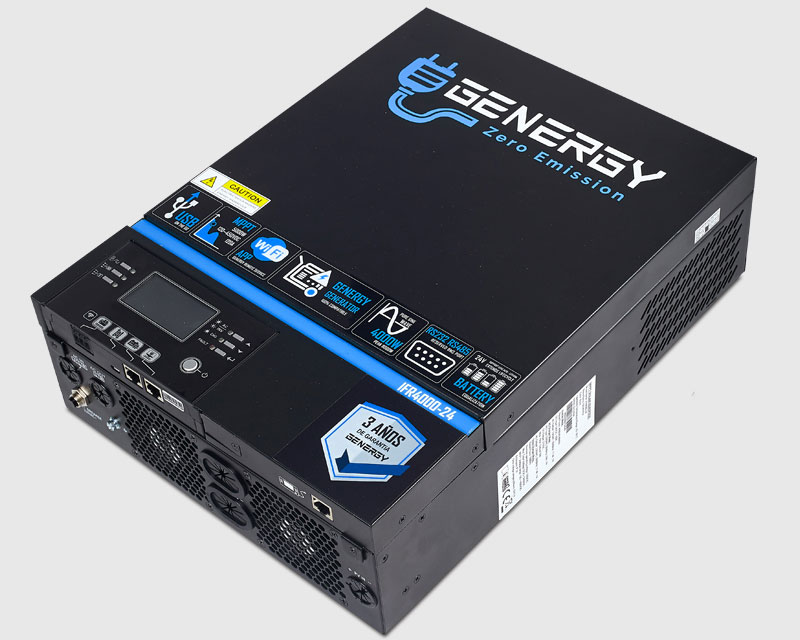
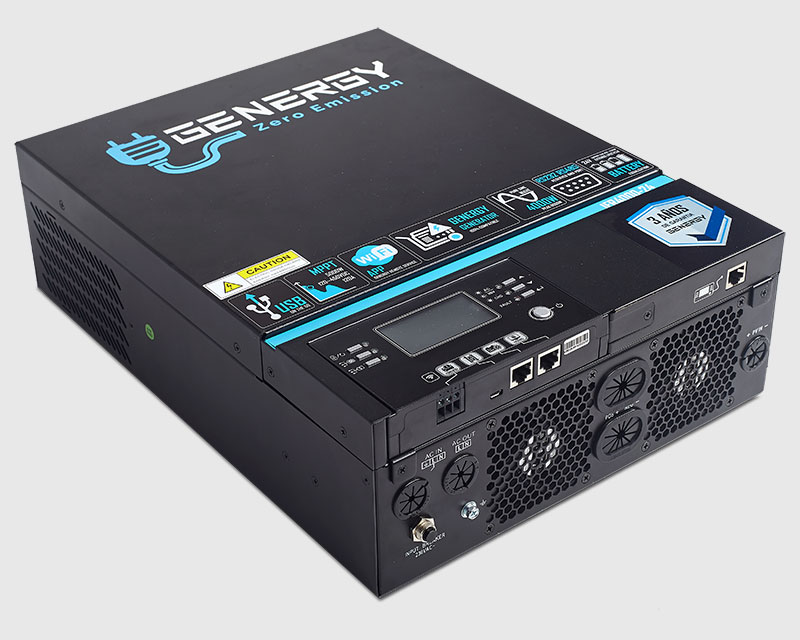
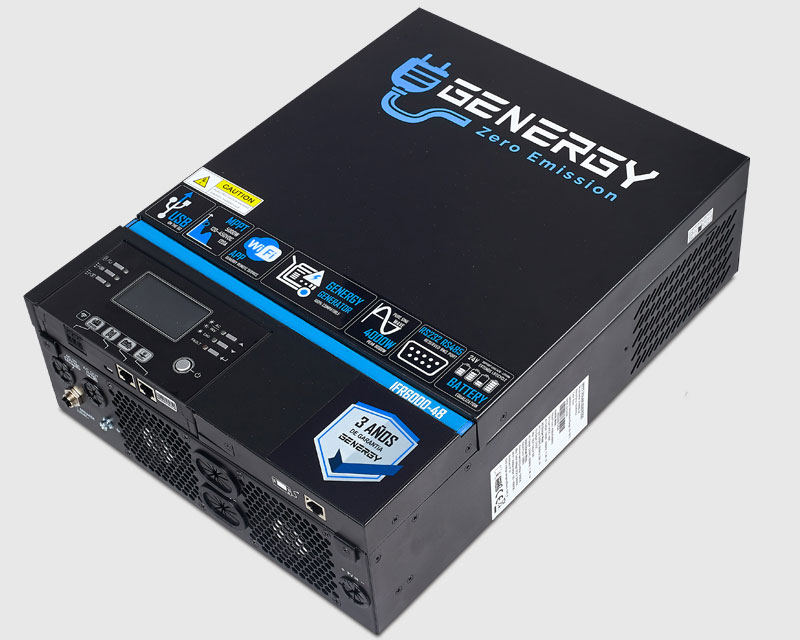
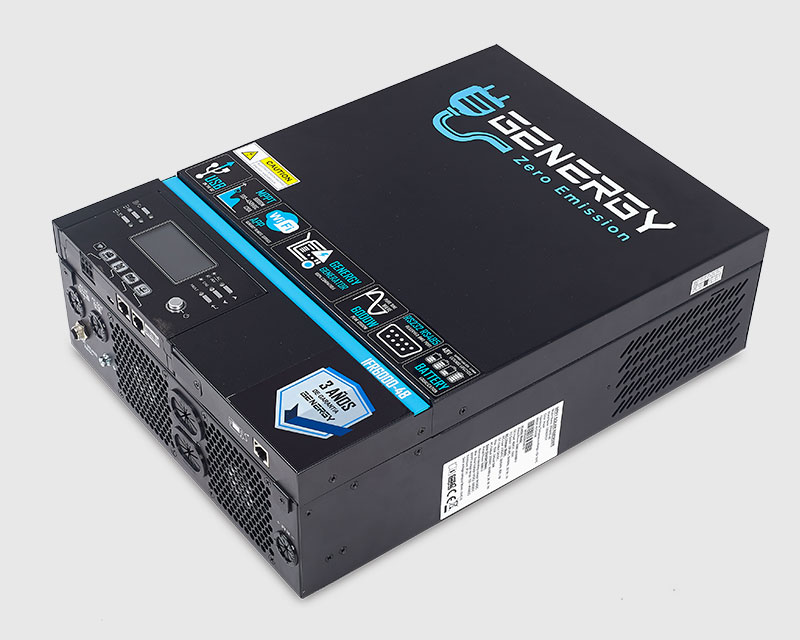
Genergy solar inverters that might interest you
Frequently Asked Questions About Connecting a Generator to a Solar Inverter
Do all solar inverters support a generator?
No. Only certain models—usually hybrids or inverters/chargers with an AC input—are capable of doing so.
Where exactly does the generator connect?
The standard procedure is to connect the generator's AC output to the input AC-In input of the inverter.
Can the batteries be charged using the generator?
Yes, if the inverter has an AC charger and is configured to use that input correctly.
How do I know how much power the generator should have?
You should calculate it by taking into account the direct power consumption while it is running and the power the inverter will use to charge the batteries.
What happens if the generator has an unstable frequency?
Some inverters may reject the AC input or malfunction if the generator signal is not stable enough.
Can it start automatically?
In many systems, yes, but it depends on the compatibility between the inverter, the generator, and the available automation systems.