How a Solar Inverter Works: From Direct Current to Usable Energy
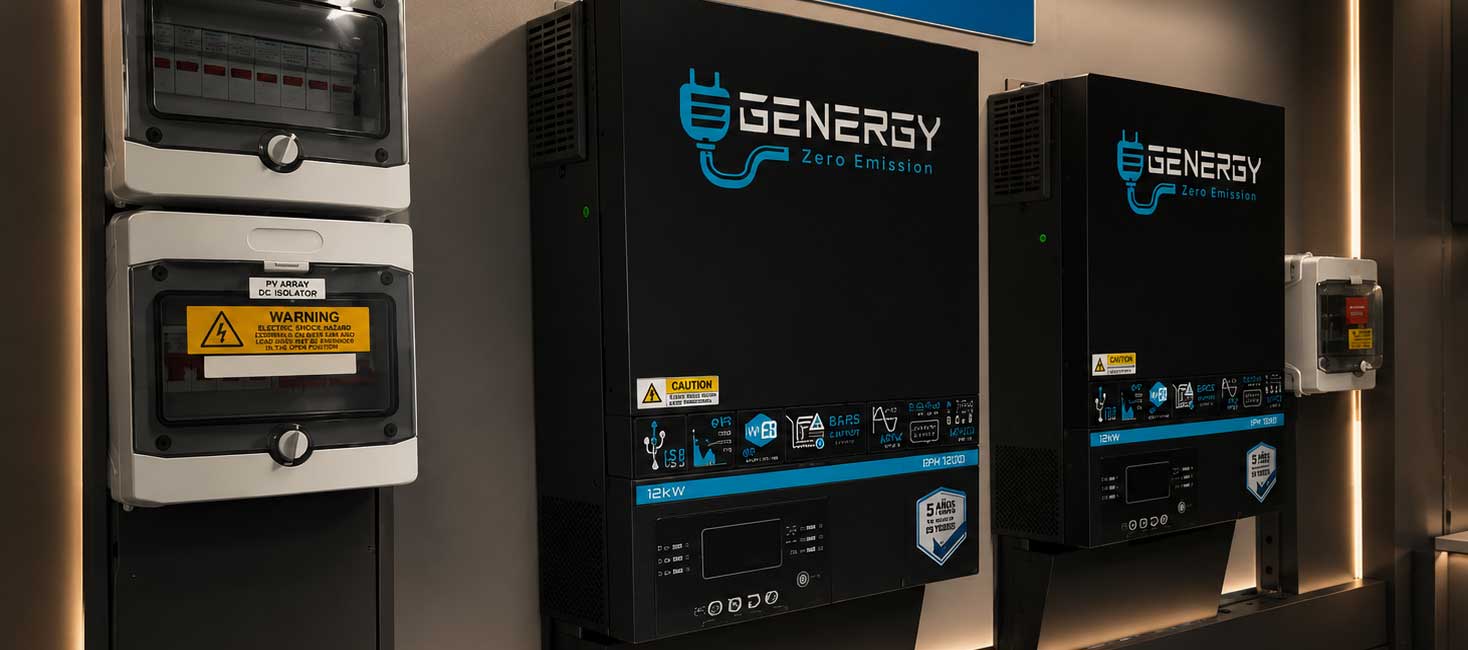
A solar inverter works by converting direct current produced by the solar panels into 230V alternating current, which is the electricity used by most household appliances, outlets, and installations connected to the power grid.
Simply put: solar panels generate electricity, but not in the form typically used in a home. That’s why an inverter is needed. The inverter takes that direct current, converts it into alternating current, and allows it to be used in the home, stored in batteries, or fed into the grid, depending on the type of system.
In my case, the clearest way to understand it is to think of the inverter as the brain of the photovoltaic system. It doesn’t just convert electricity: it also optimizes production through MPPT, manages the energy flow, monitors the system, and applies safeguards to ensure everything operates safely.
The route would be as follows:
solar panels → direct current → MPPT → inverter → 230V alternating current → home / battery / grid
What is a solar inverter and what is it used for?
A solar inverter is one of the most important components of a photovoltaic system. Its main function is to convert the direct current generated by the solar panels into alternating current, which is the type of electricity used by most homes, businesses, and electrical appliances.
Without an inverter, solar panels would generate electricity, but that energy couldn't directly power most household appliances. That's why the inverter acts as a bridge between the panels and the actual power consumption.
In a self-consumption system, the inverter allows you to use solar energy during the day. In a system with batteries, it can also manage the charging and discharging of the storage system. In a grid-connected system, it can coordinate consumption, surplus energy, and interaction with the power grid.
If you're looking for a complete solution, a Self-Consumption Solar Kit usually includes the necessary components so that solar energy isn’t just generated, but can also be put to practical use.
Why solar panels need an inverter
Solar panels generate electricity in direct current, also known as DC. This current flows in only one direction.
However, most homes and businesses use alternating current, also known as AC. This current changes direction periodically and is what typically flows through electrical outlets.
That is why a solar inverter is essential: it converts the energy produced by the panels into the format required by electrical appliances.
What does it mean to convert DC to 230V AC?
Converting DC to 230V AC means transforming the electricity generated by the solar panels into a signal compatible with the home's electrical system.
In Spain and much of Europe, households use alternating current of approximately 230V. Therefore, the inverter must provide a stable output with the correct voltage and frequency.
It’s not just a matter of “switching from one type of current to another.” A good inverter must also maintain signal quality, stability, efficiency, and safety.
How a Solar Inverter Works, Step by Step
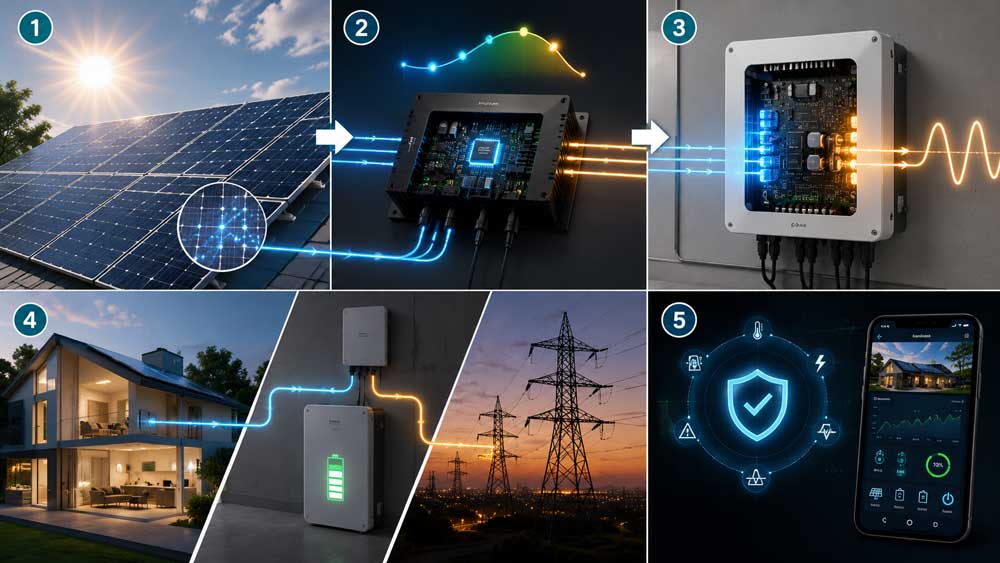
To understand how a solar inverter works, it’s helpful to follow the path of the energy from the moment it’s generated by the panels until it’s used in the home or managed within the system.
First, the solar panels capture light and generate direct current. Next, the inverter uses MPPT to find the maximum power point. It then converts that direct current into alternating current. Finally, the energy can power appliances, charge batteries, or be fed into the grid.
1. The panels generate direct current
Photovoltaic solar panels convert sunlight into electricity through the photovoltaic effect. This electricity is produced as direct current.
Production varies throughout the day. It’s not the same in the morning as it is at noon, nor on a clear day as it is on a cloudy one. Temperature, orientation, shadows, and the condition of the panels also play a role.
That is why the inverter must constantly adapt to the power it receives.
2. MPPT optimizes solar power generation
MPPT, or maximum power point tracking, is a key function of the inverter. Its job is to find the optimal combination of voltage and current so that the panels produce as much energy as possible at all times.
In short: MPPT adjusts the system's operation to make better use of the available solar radiation.
This matters because panel output fluctuates constantly. If a cloud passes by, the temperature changes, or partial shade appears, the MPPT adjusts the operating point to keep output as efficient as possible.
3. The inverter converts direct current to alternating current
Once the power has been optimized, the inverter performs its primary function: converting direct current into alternating current.
This conversion is performed using power electronics. The inverter transforms the electrical signal to generate an output suitable for typical household appliances.
The electricity generated can power lights, a refrigerator, a washing machine, a router, an air conditioner, tools, electronic devices, or machinery, provided the system is properly sized.
4. Energy is used at home, stored, or fed into the grid
Once converted to alternating current, the energy can take several paths.
If electricity is being used at that time, it is consumed directly. If the system has batteries, some of it can be stored. If the system is connected to the grid and there is a surplus, electricity can be fed back into the grid, depending on the configuration and applicable regulations.
In systems with storage, a solar kit with a battery allows you to store some of the energy for later use, for example at night or during periods of lower solar output.
5. The inverter monitors and protects the system
In addition to converting and managing energy, many modern inverters allow users to monitor production, consumption, battery status, errors, and overall performance.
They also include protections against situations such as overloads, power grid issues, excessive temperatures, insulation failures, or unsafe operation.
That is why the inverter is often referred to as the "brain" of the system: it converts, optimizes, makes decisions, protects, and communicates.
What is MPPT and why is it so important?
MPPT is one of the most important features of a solar inverter. The acronym stands for Maximum Power Point Tracking, which in Spanish means "seguimiento del punto de máxima potencia."
The goal is for the panels to operate at the point where they produce the most energy possible at any given moment.
Solar power output is not constant. It varies depending on solar radiation, temperature, shading, and the connected load. If the inverter did not continuously adjust the operating point, some of the available energy would be lost.
How to find the point of maximum power
The MPPT analyzes the relationship between the voltage and current output by the panels. Based on that, it adjusts the system to find the point where power output is highest.
Power is calculated by multiplying voltage by current. The inverter determines the most efficient combination at any given moment.
Here's a simple example: if there's more sunlight, the panels can generate more power. If a cloud appears, the inverter adjusts the operating point to continue getting the most out of the system.
Difference between MPPT and PWM
In solar systems, people sometimes talk about MPPT and PWM. Both are related to energy management, but they are not the same thing.
System | How it works | Common use |
MPPT | Adjust voltage and current to maximize production | More efficient solar systems |
PWM | It makes load control easier | Small or basic systems |
In general, MPPT is more efficient because it better adapts the panels' operation to actual conditions.
Types of Solar Inverters
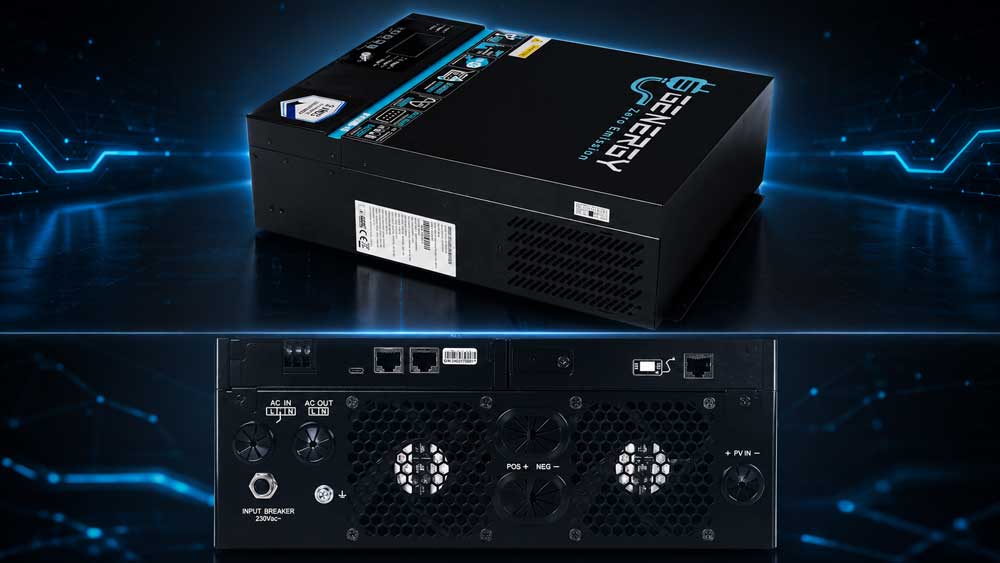
Not all solar inverters work the same way or are suitable for the same installations. The choice between them depends on the type of system, whether there is a utility grid, whether batteries are used, the installed capacity, and the user’s goals.
String inverter or grid-tied inverter
The string inverter connects several panels in series, forming a string. It is a common solution in grid-connected residential and commercial installations.
It is usually efficient and cost-effective when the panels are oriented similarly and there is little shading.
Its main function is to convert the direct current from the panels into alternating current that is synchronized with the power grid.
Microinverters
Microinverters are installed at the panel or module level. Each panel operates more independently.
They can be useful in situations involving partial shading, different orientations, or more complex roof structures. If one panel produces less power, it doesn't significantly affect the performance of the others.
Hybrid inverter
A hybrid inverter can operate using solar panels, the utility grid, and batteries. It is an attractive option for those seeking self-consumption with storage.
This type of inverter can determine whether the energy goes to the home, the battery, or the grid. It can also draw power from the battery when there isn't enough solar energy being generated.
off grid solar inverter
An off grid inverter off grid designed for off-grid installations—that is, systems that do not rely on the power grid. It converts energy from solar panels and batteries to power appliances in locations without a grid connection.
A off grid solar inverter can be useful in isolated homes, farms, remote facilities, RVs, workshops, or off-grid systems where electricity is needed without relying on the grid.
Type of investor | Ideal for | Batteries | Power grid |
String | Grid-connected self-consumption | Optional depending on the model | Yes |
Microinverter | Roofs with varying shades or orientations | It depends on the system | Yes |
Hybrid | Self-consumption with batteries | Yes | Yes |
Off grid | Off-grid systems | Yes | Not necessarily |
How a solar inverter with batteries works
When a system has batteries, the inverter does more than just convert electricity. It also plays a role in managing the storage.
Solar energy can be used directly during the day, and any excess can be stored in the battery. Later, when there is no sunlight or production drops, the system can use that stored energy.
Charging and discharging batteries
During daylight hours, if the panels generate more energy than is being consumed, the inverter can direct some of that energy to the batteries.
When solar power generation is insufficient, the inverter can draw power from the battery and convert it into alternating current to power the loads.
This process depends on the type of inverter, the battery, the configuration, and compatibility between devices. Not every battery is compatible with every inverter. That’s why it’s a good idea to consult guides such as Best Batteries for Solar Panels before choosing a storage system.
What happens when the sun isn't out?
When there is no sunlight, the panels do not generate electricity. If the system has batteries, the inverter can use the stored energy. If it does not have batteries, the home will draw electricity from the grid, if it is connected.
In off-grid systems, the battery is essential. Without a battery, there would be no power available when the panels aren't generating electricity.
What happens if the battery is fully charged?
If the battery is fully charged and the panels are still generating power, the system can respond in several ways:
- use energy for active consumption;
- send excess power to the grid, if permitted and configured;
- limit production;
- prioritize specific loads, according to the system.
Here it is clear that the inverter is not just a converter. It also manages energy decisions.
What happens if the power goes out?
A common misconception is that if you have solar panels, you’ll always have electricity even if the power goes out. That’s not always the case.
In many grid-connected systems, if there is a power outage, the inverter automatically shuts down for safety reasons. This is known as anti-islanding protection. It prevents the system from continuing to feed power into the grid while technicians may be working on it.
Why many grid-connected inverters shut down
Grid-connected inverters must be synchronized with the power grid. If the grid goes down, the inverter detects the failure and disconnects.
This does not mean that the panels cannot generate power, but rather that the system cannot continue to supply power to the grid or the home without a proper backup configuration.
When can you use battery backup?
To have electricity during a power outage, you usually need:
- hybrid inverter compatible with backup;
- solar batteries;
- critical load circuit;
- proper configuration;
- specific safeguards.
This way, the system can power essential appliances such as lights, a refrigerator, a router, or a few outlets, depending on the available power.
Energy backup options
In addition to solar batteries, there are portable and backup solutions. For example, a portable solar generator can be useful for mobile applications, camping, emergencies, or powering small devices.
You can also use a Portable Power Station be a good fit when you're looking for stored energy in a portable format with no direct emissions during use.
In situations where extended backup power is needed or more demanding loads must be powered, options such as an Electric Generator, a generator set or a Three-Phase Generator for commercial or three-phase installations.
How to Choose a Solar Inverter
Choosing a solar inverter isn't just about looking at the price. You need to consider the panels' power output, energy consumption, whether batteries will be used, whether the installation is single-phase or three-phase, whether you want a backup system, and whether monitoring is needed.
Power, efficiency, and compatibility
The inverter must be properly sized based on the power output of the solar panels and the energy consumption requirements.
If it's too small, it may limit production. If it's too large, it may not operate within its optimal range.
Efficiency is also an important factor to consider. A more efficient inverter loses less energy during the conversion process.
Single-phase or three-phase
Homes typically have single-phase electrical systems, although some large homes, businesses, or facilities with machinery may have three-phase systems.
The inverter must be compatible with the type of electrical system. Powering a standard home is not the same as powering a warehouse, workshop, or business with three-phase loads.
Battery compatibility and monitoring
If you want to install batteries now or in the future, you should choose a compatible inverter. Not all grid-tied inverters can handle batteries.
It’s also helpful for the investor to have monitoring via an app or platform. That way, you can view production, consumption, system status, and any errors.
Common Problems and Basic Maintenance
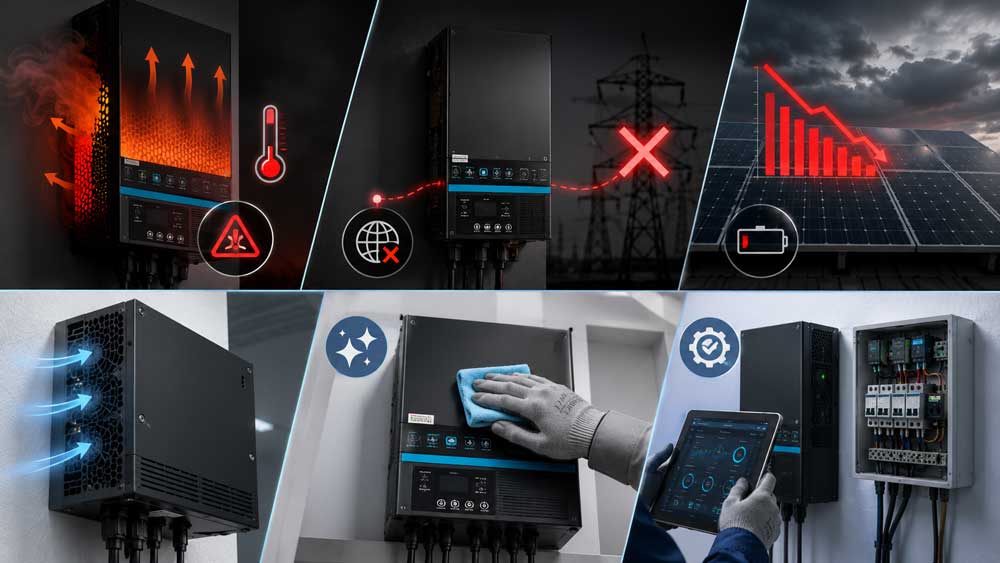
A solar inverter typically requires little maintenance, but that doesn't mean you should ignore it. It is an electronic device that operates under high power, heat, and variable conditions.
Overheating, network errors, and low production
Some common problems may include:
- overheating due to poor ventilation;
- network errors;
- low production due to shadows or dirt on the panels;
- communication errors with batteries;
- trips caused by protective devices;
- configuration errors;
- wiring issues;
- incompatibility between devices.
If the inverter shuts down or displays error messages, you should consult the manual and the monitoring app, and contact a technician if the problem persists.
Ventilation, cleaning, and system inspection
The inverter must be installed in a well-ventilated and protected location, in accordance with the manufacturer's instructions. Excessive heat can reduce performance and service life.
You should also check the following on a regular basis:
- inverter status;
- error codes;
- ventilation;
- connections;
- expected production;
- battery operation;
- overall condition of the facility.
For users interested in how other devices work on the inside, this guide on How a Pressure Washer Works, Step by Step.
Conclusion
A solar inverter works by converting the direct current produced by solar panels into 230V alternating current, which is suitable for household appliances, homes, businesses, and the power grid. But its function doesn't end there.
It also optimizes production using MPPT, manages the flow of energy between panels, loads, batteries, and the grid, monitors the system, and implements electrical protections.
The simplest explanation is this: The panels generate energy, but the inverter converts it into usable electricity and determines how best to utilize it.
That’s why choosing the right inverter is key. A grid-connected system, a battery-based system, a hybrid inverter, and an off grid system are all different. The inverter must be compatible with the system’s energy consumption, the solar panels, the battery (if present), and the intended use of the system.
Products you might be interested in
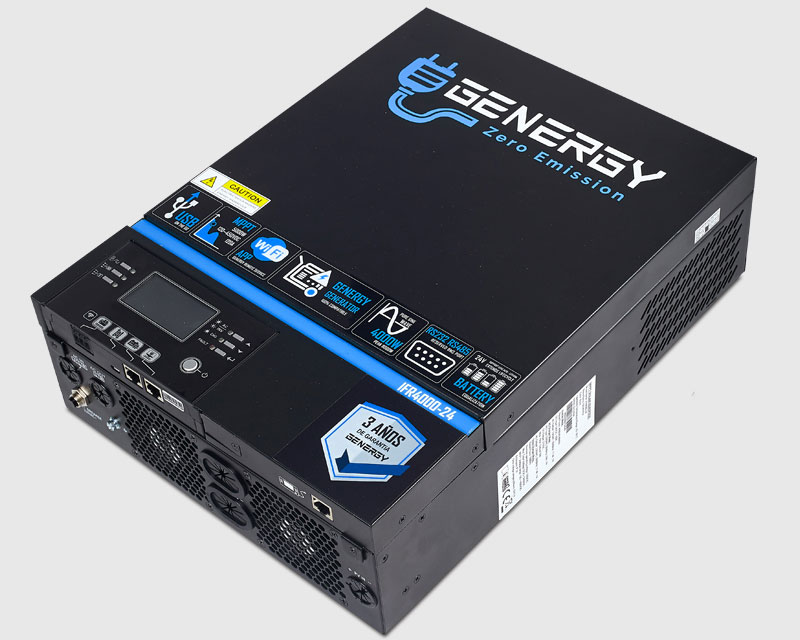
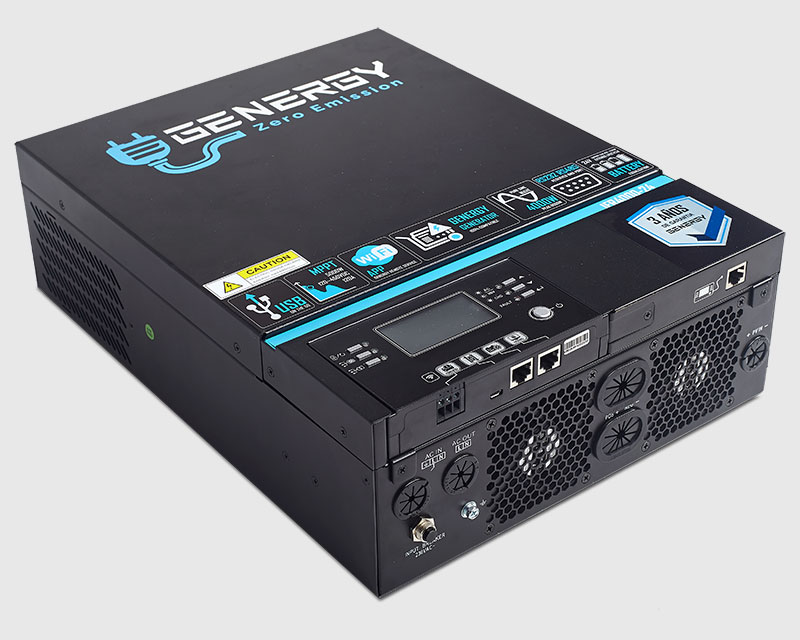
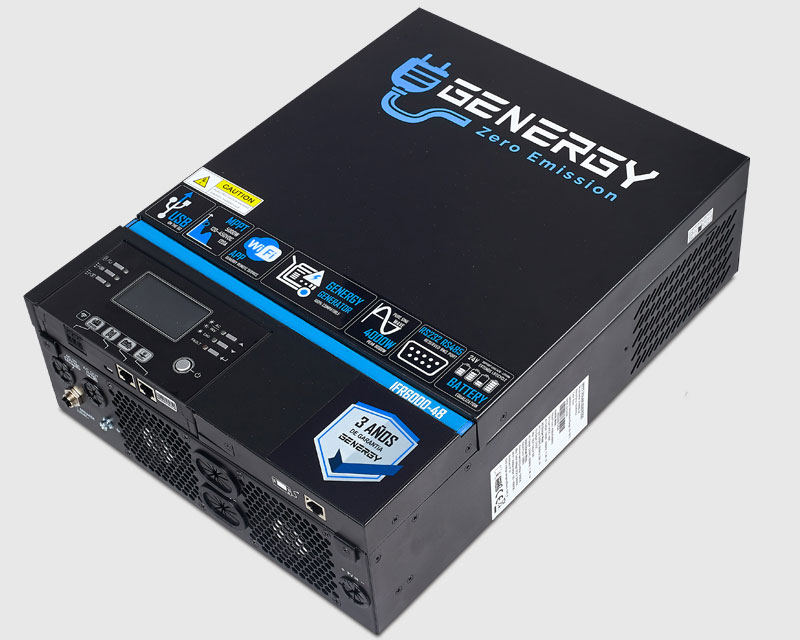
Frequently Asked Questions About How a Solar Inverter Works
Can a solar inverter operate without batteries?
Yes. A solar inverter can operate without batteries in grid-connected systems. In that case, solar energy is used directly during the day, and if there is a power shortage, electricity is drawn from the grid.
If you want to use solar power when the sun isn't shining, you'll need compatible batteries.
What happens to the surplus?
Surplus energy is the solar power you aren't using at that moment. Depending on the system, it can be fed into the grid, stored in batteries, or curtailed.
Can it operate without a power supply?
Yes, but the system has to be designed for that. To operate without a grid connection, you usually need an off grid hybrid inverter with batteries and a system configured as an off-grid or backup system.
How long does a solar inverter last?
It depends on the quality of the equipment, temperature, ventilation, usage, and maintenance. In general, inverters tend to last for many years, although they typically have a shorter lifespan than solar panels.
What kind of water heater do I need for my home?
It depends on the power output of your panels, your energy consumption, whether you want batteries, the type of grid, the available space, and whether you need backup power during outages. The best approach is to work with a technician to determine the right size or choose a pre-configured system.
What does it mean for an inverter to have a pure sine wave?
This means that the alternating current it generates has a waveform similar to that of the power grid. This is important for properly powering appliances, electronics, and sensitive equipment.
What is the difference between a hybrid inverter and an off grid inverter?
A hybrid inverter can operate using solar panels, the grid, and batteries. An off grid inverter off grid designed for stand-alone systems that are not connected to the utility grid.
Does the inverter consume energy?
Yes, just like any electronic device. It uses a small amount of power to operate, monitor, and manage the system. That power consumption is usually low, but it does exist.

- genergy