How a submersible pump works: suction, discharge, and centrifugal force
A motor pump works by converting the mechanical energy from a motor into hydraulic energy to move water or other liquids from one place to another. Simply put: the motor generates motion, that motion spins an impeller inside the pump, and centrifugal force pushes the water from the inlet to the outlet.
Here is the basic itinerary:
water source → suction hose → primed pump → impeller → centrifugal force → discharge hose → destination
In my case, the easiest way to understand this is to imagine the submersible pump as a device that “draws” water from a source—a well, a pool, a ditch, a tank, or a flooded area—and pushes it to another location through a discharge hose. To do this, it needs three things: a motor to generate motion, a pump to convert that motion into hydraulic energy, and hoses to draw in and discharge the water.
What is a motor pump and what is it used for?
A motor pump is a water pump powered by an engine. Its function is to move liquids from a source to a destination, typically when gravity cannot do the job or when flow rate, pressure, or autonomy is required.
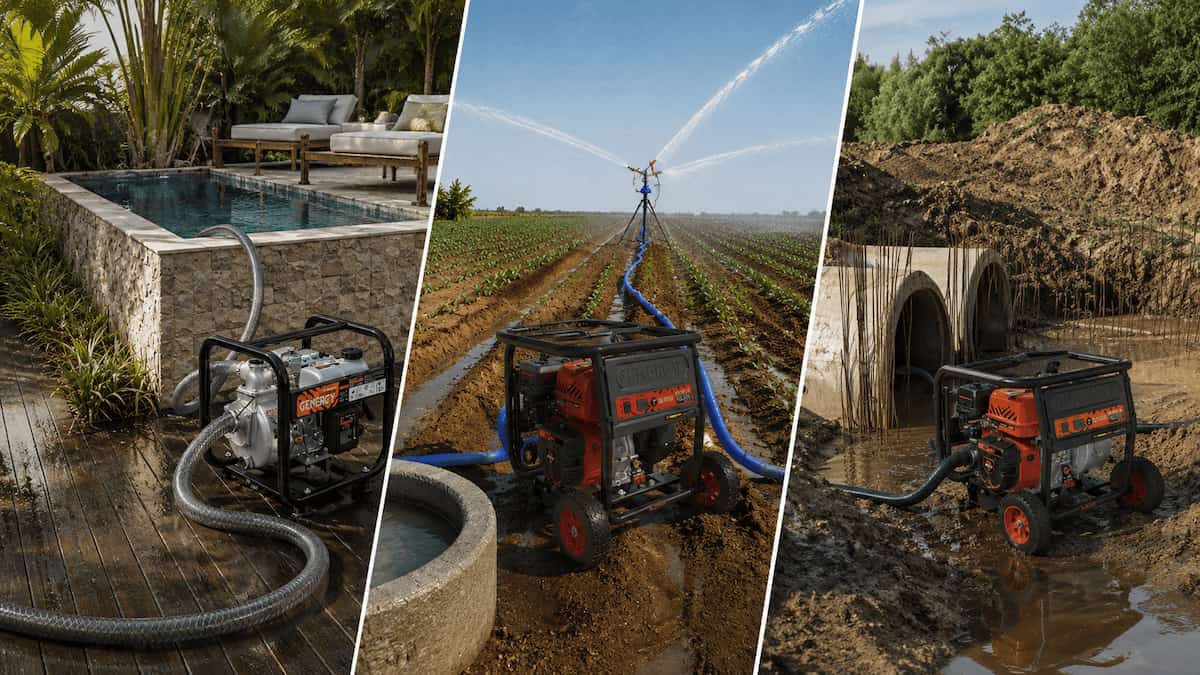
It can be used for irrigation, water removal, draining swimming pools, filling tanks, draining flooded areas, agricultural work, construction, emergencies, or transporting water on farms and properties without convenient access to electricity.
Unlike an electric pump, a water motor pump can operate independently if it is equipped with a gasoline engine or other internal combustion engine. This makes it useful in places where there is no nearby power grid.
Difference between a gas-powered pump and an electric pump
The main difference lies in the energy source.
Team | How it feeds | Common use |
Motor pump | Gasoline, diesel, or other engine | Farming, irrigation, drainage, construction, emergencies |
Electric pump | Mains power or generator | Homes, permanent structures, wells, swimming pools |
Submersible pump | Electricity works underwater | Drainage, wells, standing water |
The motor pump stands out for its portability. It doesn't need to be plugged in, making it ideal for outdoor use, farms, crops, or remote areas.
Common uses: irrigation, drainage, swimming pools, and emergencies
A motor pump can be used for:
- agricultural irrigation;
- transfer of water between tanks;
- pool draining;
- flood pumping;
- drainage of ditches or basements;
- pumping from wells, ponds, or irrigation ditches;
- on-site water supply;
- cleaning or assistance with outdoor work;
- emergencies caused by water accumulation.
The key is to choose the right motor pump based on the fluid, the required flow rate, the suction head, the discharge distance, and the required pressure.
How a motor pump works, step by step
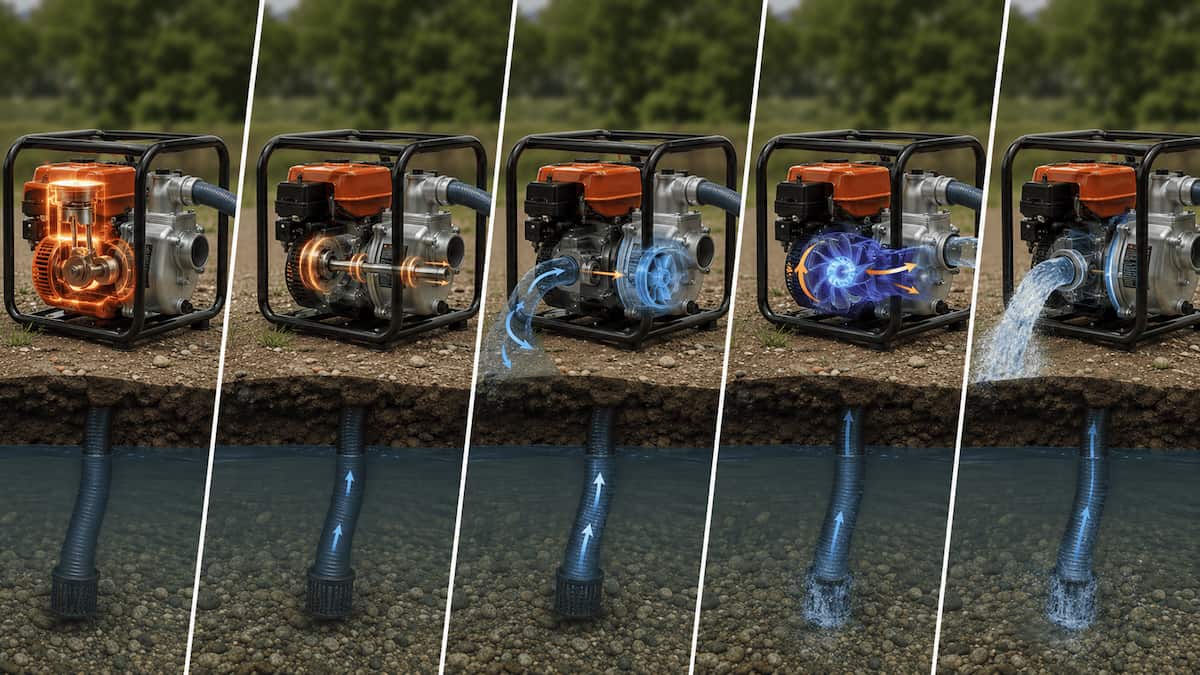
The operation of a motor pump is best understood by following the path of the water. First, the motor starts up. Then the motor drives a shaft connected to the impeller. That impeller rotates inside the pump housing, creating suction at the inlet and forcing the water toward the outlet through centrifugal force.
1. The engine generates mechanical energy
It all starts with the engine. In a gasoline-powered motor pump, the engine burns fuel to generate mechanical motion. That motion is transmitted to the pump shaft.
The motor does not move the water directly. Instead, it provides the power needed for the pump's internal mechanism to rotate and move the liquid.
2. The shaft drives the impeller
The shaft connects the motor to the impeller. When the motor rotates, the shaft transmits that rotation to the impeller.
The impeller is a component with blades that rotates at high speed inside the pump housing. Its function is to accelerate the water and direct it toward the outlet.
3. The pump creates suction at the inlet
When the impeller rotates, a low-pressure zone is created at the pump inlet. This pressure difference helps draw water in from the suction hose.
The suction hose must be properly installed, free of air leaks, and equipped with a suitable filter to prevent stones, leaves, or debris from entering and damaging the pump.
4. The impeller applies centrifugal force to the water
This is the core of how it works. Water enters near the center of the impeller and, as it spins, is pushed outward by centrifugal force.
Simply put: the impeller “propels” the water outward, increasing its speed and pressure. It is this energy that allows the water to flow out through the discharge and reach its destination.
5. Water flows out through the drain hose
Once pumped, the water flows out of the discharge outlet and travels through the hose to the desired location: an irrigation area, a reservoir, a drainage ditch, or any other area where the water needs to be transported.
If the hose is too long, too narrow, or there is too much of a drop in elevation, the motor pump will need more pressure to maintain the flow rate.
What parts does a motor pump have?
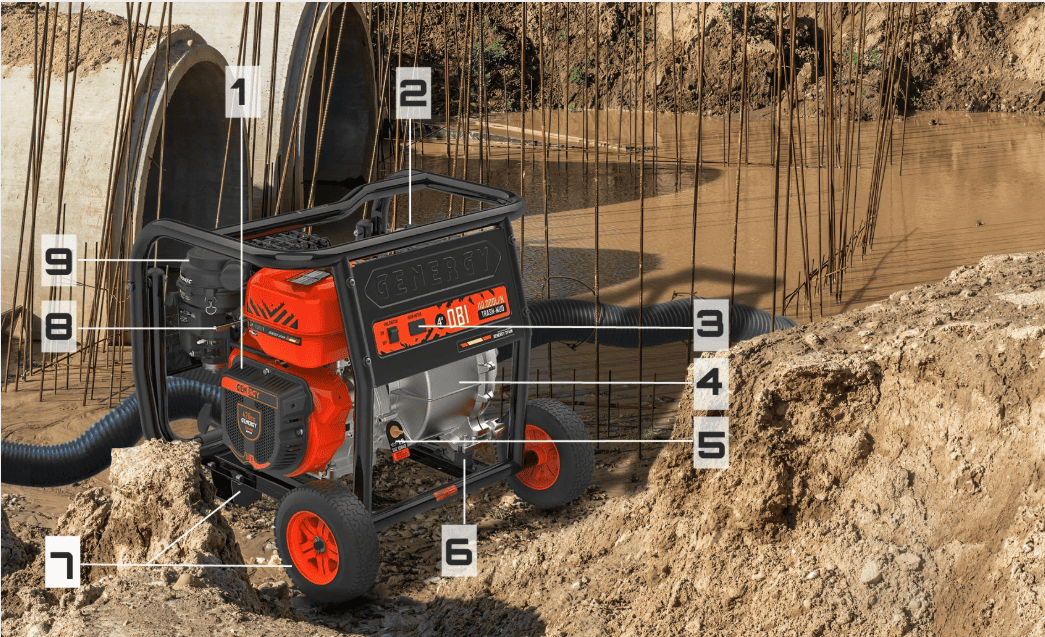
A motor pump combines mechanical and hydraulic components. Each part performs a specific function to draw in, pump, and move water.
Engine
The engine is the power source. It can be gasoline, diesel, or electric, although many portable motor pumps use gasoline engines because of their long runtime.
The motor must have enough power to drive the impeller and maintain the required flow rate.
Shaft and impeller
The shaft transmits the motor's rotation to the impeller. The impeller is the component that moves the water using centrifugal force.
If the impeller is damaged, worn out, or clogged with debris, the motor pump may lose flow, vibrate, or fail to draw in water properly.
Pump housing or body
The housing is the component in which the impeller rotates. Its design helps direct water from the inlet to the outlet.
It must also withstand pressure, vibrations, and the flow of the liquid.
Suction hose
The suction hose draws water from the source. It must be durable, properly sealed, and have the correct diameter.
An air leak in this hose can prevent the motor pump from drawing water properly.
Discharge hose
The discharge hose carries water from the pump outlet to the destination.
The greater the distance, head, or friction loss, the more power the motor pump needs to maintain the flow rate.
Filter, gaskets, and fittings
The intake filter prevents large solids from entering. The seals and connections ensure that there are no water leaks or air leaks.
These elements may seem minor, but they are very important. A poor connection can lead to a loss of suction or poor performance.
What is priming and why is it important?
Priming is one of the most important concepts when using a motor pump. It involves filling the pump and the suction hose with water to remove air and allow suction to be generated.
A centrifugal pump does not work properly if it is filled with air. It needs water inside the pump housing to create suction and discharge.
What happens if there's air in the pump?
If there is air inside the pump or in the suction hose, the submersible pump may not be able to draw in water. The impeller spins, but it cannot move the liquid properly.
This can lead to:
- lack of flow;
- pressure drop;
- irregular operation;
- overheating;
- wear and tear on seals;
- suction failure.
Therefore, before starting the engine, make sure the pump is properly primed.
Why You Shouldn't Work Without Water
A motor pump must not run without water. If it runs dry, the impeller and seals can overheat and become damaged.
Water is not just the fluid that is pumped; it also helps cool and partially lubricate some internal components. Operating without water can significantly shorten the equipment's service life.
Flow rate, pressure, and head: key concepts
To fully understand a submersible pump, there are three basic concepts: flow rate, pressure, and head. These are essential for choosing the right equipment.
Concept | What does it mean? | Why it matters |
Flow rate | Amount of water moved in a given period of time | Irrigation, drainage, rapid filling |
Pressure | The force with which it propels the water | Sprinklers, distance, elevation difference |
Suction height | Vertical distance from the source to the pump | Wells, shallow reservoirs, irrigation ditches |
Discharge height | Vertical distance from the pump to the destination | Elevated tanks, sloped terrain |
Manometric head | Total force that the pump must overcome | Proper sizing |
What does "flow rate" mean?
The flow rate indicates how much water the motor pump can move. It can be expressed in liters per minute, liters per hour, or cubic meters per hour.
If you want to drain a pool or pump out a flooded area, you'll need a high flow rate.
What does pressure mean?
Pressure indicates the force with which the water flows. It is important if you need to power sprinklers, move water over long distances, or overcome elevation changes.
A submersible pump with high flow rate but low pressure can move a lot of water over short distances, but it may not be ideal for lifting water or sending it over long distances.
What is the suction and discharge head?
The suction head is the vertical distance between the water level and the submersible pump. The discharge head is the vertical distance between the submersible pump and the point where you want to deliver the water.
The greater these heights, the more demanding the work will be for the pump.
Types of motor pumps
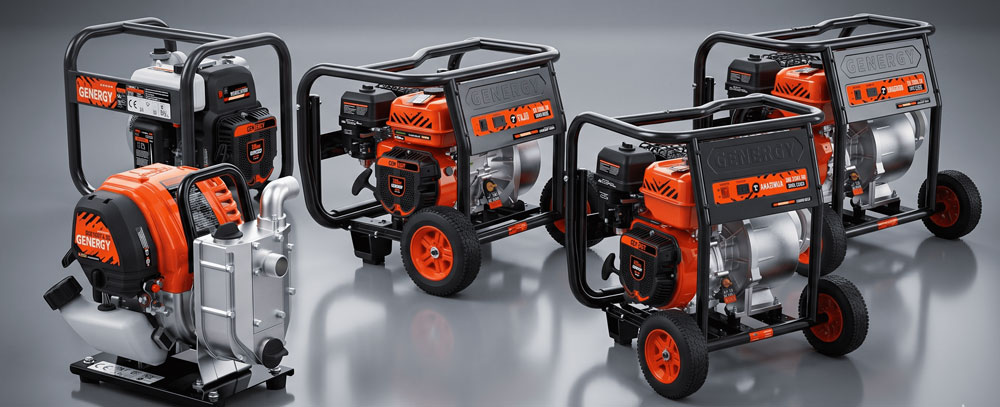
Not all submersible pumps are suitable for the same applications. The choice between them depends on the type of water, intended use, flow rate, pressure, and operating conditions.
Motor pumps for clean water
They are designed to pump water that does not contain significant amounts of solids. They are used for irrigation, water transfer, filling tanks, or draining clean swimming pools.
Submersible pumps for wastewater
They are designed to handle water that may contain particles, light silt, or debris. They are used for dewatering, flood control, construction, or drainage.
Pressure motor pumps
They are designed for applications that require higher pressure, such as sprinkler irrigation or delivering water over a certain distance.
Self-priming motor pumps
Self-priming motor pumps simplify the suction process, although they also require proper operating conditions. They are convenient when easier startup is needed.
Gasoline-powered motor pumps
Gas-powered portable pumps are very common because of their autonomy. They operate without relying on the power grid, making them useful in rural areas, on farms, at construction sites, during emergencies, or for outdoor work.
Motor Pump vs. Other Self-Contained Equipment
The motor pump is part of a broader family of self-contained machinery. Each unit is designed for a different task.
Differences compared to a pressure washer
A motor pump moves large volumes of water from one place to another. A Gas-powered pressure washer uses pressurized water to clean surfaces, machinery, vehicles, or work areas.
The difference lies in the objective:
- motor pump: transfer, draw, or drain water;
- pressure washer: clean with a pressure washer.
Support equipment for construction sites, field operations, and emergencies
For fieldwork, construction, or maintenance, the motor pump can be used in conjunction with other self-contained equipment. A motorized air compressor can be used for jobs that require compressed air; a portable welder is useful when welding is needed in areas without electrical power; and professional lighting can be essential in emergencies, for night work, or in areas with poor visibility.
For auxiliary power, a electric generator can power outdoor tools or equipment. If greater runtime or power is needed, a generator set may be more suitable. And for lighter outdoor use, at a country home, or on getaways, a Portable Camping Generator may be a better fit.
There are also quieter and more portable options, such as a portable solar generator, which is useful when you need a power source that does not burn fuel directly during use.
Common Mistakes and Basic Maintenance
A motor pump can last a long time if used properly, but certain mistakes can shorten its lifespan or cause it to malfunction.
Failure to prime
One of the most common mistakes is trying to start the submersible pump without priming it properly. If there is air in the pump, it may not draw in water.
Before you start, you should check:
- make sure the pump has water;
- make sure the suction hose is full or properly prepared;
- make sure there are no air leaks;
- the filter must be submerged;
- that the suction head is not excessive.
Clogged filter or leaking hose
A dirty filter restricts water flow. A leaky hose allows air to enter. Both of these issues reduce performance.
If the submersible pump isn't drawing water or is losing suction, check these points first.
Check oil, fuel, and connections
For gasoline-powered motor pumps, you should also check:
- oil level;
- clean fuel;
- air filter;
- spark plug;
- hose connections;
- clamps;
- impeller condition;
- Clean after use.
If you've been working with dirty water, be sure to clean it thoroughly before storing it.
Conclusion
A motor pump works by converting the mechanical energy of a motor into hydraulic energy. The motor drives a shaft, the shaft rotates the impeller, and the impeller generates centrifugal force to draw in and discharge water from a source to a destination.
The simplest explanation is this:
The motor generates motion, and the pump uses that motion to move water.
For the motor pump to work properly, it must be properly primed, have leak-free hoses, a clean filter, and operate within its flow, pressure, and head limits. Choosing the right type of motor pump is key depending on its intended use: irrigation, drainage, swimming pools, construction sites, clean water, wastewater, or emergencies.
Products you might be interested in
Frequently Asked Questions About How a Solar Panel Works
Why isn't my submersible pump drawing water?
The most common causes are failure to prime the pump, air entering the suction hose, a clogged filter, excessive suction head, loose connections, or a damaged impeller.
How high can a motor pump lift water?
It depends on the power rating, pump design, and maximum head. You should review the technical specifications and take into account both the suction and discharge heads.
Can it pump dirty water?
Only if it is a submersible pump designed for wastewater. A submersible pump designed for clean water can be damaged if it is used with mud, rocks, or debris.
What happens if it runs out of water?
It can overheat and damage the seals, impeller, and internal components. You should not let a submersible pump run dry.
What kind of motor pump do I need for irrigation?
It depends on the required flow rate, pressure, distance, elevation difference, type of irrigation, and water source. For sprinklers, pressure is usually more important; for flood irrigation or transfer irrigation, flow rate may be more important.
What is the difference between flow rate and pressure?
Flow rate is the amount of water that is moved. Pressure is the force with which it is propelled. A motor pump can have a high flow rate without necessarily having high pressure.
Can a submersible pump be used to drain a pool?
Yes, provided the model is suitable for clean water and has the required flow rate. You must also ensure that the suction and discharge hoses are properly connected.