How a solar panel works: from the sun to the socket
By the Genergy technical team · Spanish manufacturer of generators and photovoltaic backup systems (+15 years) · updated in July 2026 · 9 min read.
Table of contents
- What a solar panel is and what it is for
- Solar panel, solar module and photovoltaic system
- Photovoltaic vs thermal
- How a solar panel works step by step
- What is the photovoltaic effect
- Parts of a solar installation
- Do they always work? Night, clouds and surplus energy
- Types of photovoltaic solar panels
- Advantages and limits
- Equipment for your solar installation
- Conclusion
- Frequently asked questions
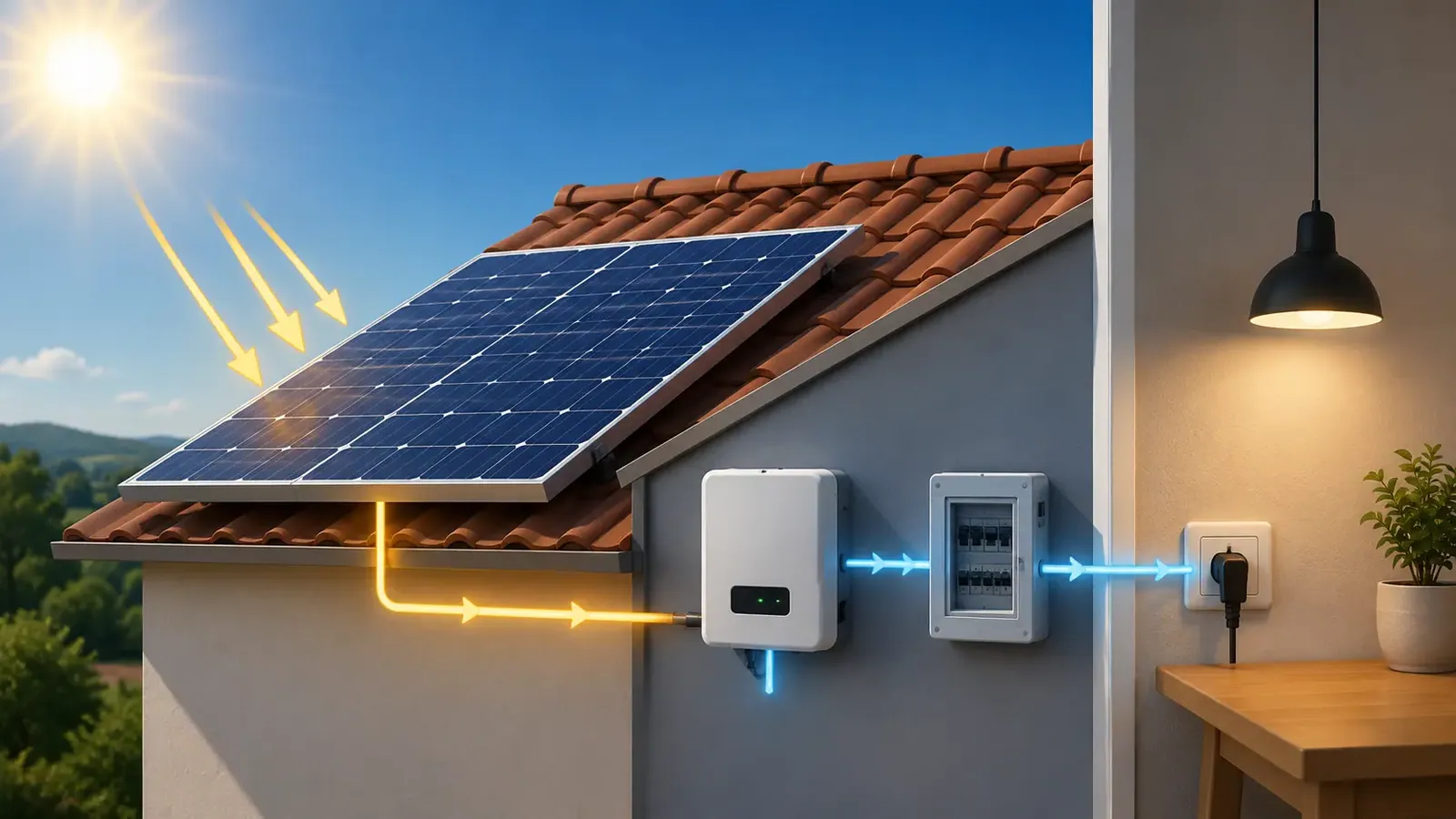
A solar panel works by converting sunlight into electricity. Put that way it sounds almost like magic, but the process is quite logical: light reaches the panel, the photovoltaic cells react, direct current is generated and an inverter converts it into alternating current so it can be used in a home, a business or a grid-connected installation.
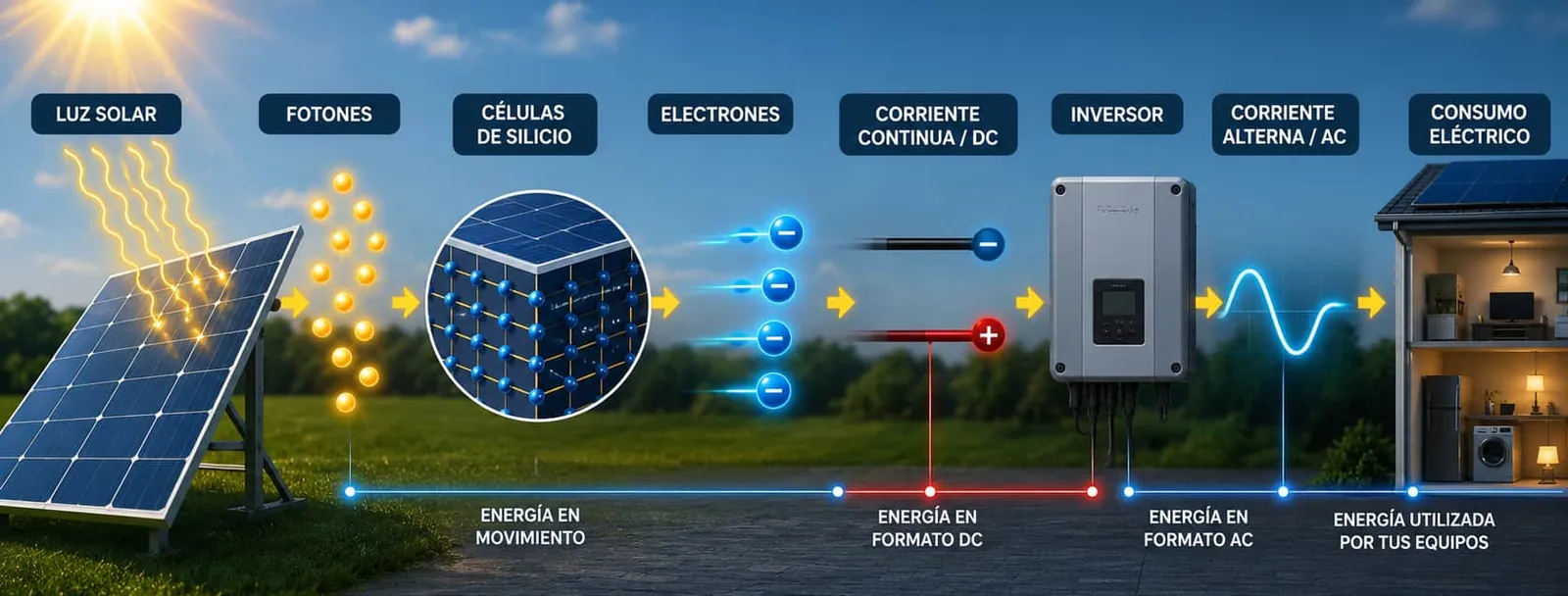
The simplest way to understand it is to picture the complete path of the energy: sun → solar panel → direct current → solar inverter → alternating current → electricity consumption. That path summarizes what happens from the moment light hits the panel until you can switch on a lamp, charge a phone or power a piece of equipment.
The key is the photovoltaic effect: certain materials, such as silicon, generate electricity when they receive light. Silicon cells absorb photons (particles of light) and that energy releases electrons; when those electrons move, an electric current appears. That current first comes out as direct current (DC) and a solar inverter converts it into alternating current (AC), the kind used in homes.
What a solar panel is and what it is for
A solar panel is a device designed to harness the energy of the sun. In the case of photovoltaic panels, its function is to convert sunlight into electricity, which can power a home, reduce grid consumption, charge batteries or supply part of the needs of a business.
It is worth going beyond the idea that "the panel receives sun and generates energy". A photovoltaic solar panel is made up of many cells connected to each other; each one captures light and generates electricity on a small scale, and combined they produce useful energy. In essence, it converts sunlight into electricity through the photovoltaic effect, without creating energy out of nothing.
Solar panels have many uses: in a home they can power lighting, appliances, sockets or air conditioning; in a business they reduce electricity consumption during daylight hours; and in remote areas they work together with batteries where the grid does not reach. Their output depends on orientation, tilt, shading, the type of panel and the consumption of each location, but their function is always the same: to transform solar energy into usable electrical energy.
Difference between solar panel, solar module and photovoltaic system
In everyday use, "solar panel" and "solar module" usually mean the same thing: the unit installed on the roof, terrace or ground to capture light. Even so, it is worth distinguishing the terms:
| Term | What it means |
|---|---|
| Solar panel | Common way of referring to the panel that captures solar energy |
| Solar module | Module made up of connected solar cells |
| Photovoltaic module | More technical name for the solar panel |
| Photovoltaic system | Complete set: panels, inverter, wiring, protections and other elements |
| Solar installation | System installed and ready to produce electricity |
So, anyone asking how a solar panel works usually wants to know how a photovoltaic panel works. When we talk about how that energy reaches a home, we are already looking at how the whole installation works.
Photovoltaic solar panel vs solar thermal panel
Not all panels do the same thing. Photovoltaic panels convert sunlight into electricity; they are the ones used for self-consumption and grid-connected systems. Thermal panels, on the other hand, use the sun's heat to warm water or other fluids (domestic hot water, heating support).
The key difference: photovoltaic produces electricity and thermal produces heat. When people ask "how does a solar panel work", they are usually looking for information about photovoltaic panels.
How a solar panel works step by step
The best way is to follow the path of the energy from the moment light hits the panel. It happens in an orderly chain:
1. Sunlight reaches the photovoltaic cells
The process begins when solar radiation strikes the panel. The panel does not need to heat up: what it needs is light. That is why a panel produces electricity even on cloudy days, although with lower performance. The cells, normally made of silicon, are designed to capture that light energy.
2. Photons release electrons
This is where the photovoltaic effect comes in: photons of light strike the silicon cells and transfer energy to their electrons. Some electrons are released and start to move. This movement is not random: the internal structure of the cell directs it to create a current.
3. Direct current is generated
When the electrons move inside the cell, a direct current (DC) appears, flowing in a single direction. It is the type of electricity produced by panels and batteries, but homes work with alternating current, so it has to be converted.
4. The inverter converts the current into alternating current
The solar inverter converts the direct current from the panels into alternating current (AC), compatible with the electrical installation of a home or business. Without an inverter, the energy from the panels would not be ready to power most sockets and appliances.
5. The electricity is used or sent to the grid
Once in alternating current, the energy directly powers the connected equipment. If more is produced than consumed, depending on the installation, the surplus energy is sent to the grid (surplus), stored in solar batteries or production is limited. That is why the more your consumption coincides with daylight hours, the better you make use of the installation.
The panel captures light and generates direct current; the inverter adapts it for actual consumption. The panel is not connected directly to the sockets: a system is needed to convert, control and distribute the energy safely.
What the photovoltaic effect is
The photovoltaic effect is the phenomenon that allows a solar panel to produce electricity from light, and it is the basis of how the whole panel works. The idea is simple: some materials generate an electric current when they receive light. In a solar panel, that material is usually silicon.
When light reaches the cells, photons transfer energy to the electrons in the silicon, which are released and move; by directing that movement, a current is obtained. A useful comparison: the panel is like a small electricity factory where light is the raw material, the cells are the machines, the moving electrons are the output and the inverter is the equipment that adapts that output for the building.
Why silicon is so important
Silicon is a semiconductor material: it neither conducts electricity like a metal nor blocks it like an insulator, but sits somewhere in between, which makes it possible to control the movement of electrons. That property makes it ideal for photovoltaic cells. Most current panels use silicon cells, organized in monocrystalline or polycrystalline format.
What role photons and electrons play
Photons are particles of light that deliver energy when they reach the cell; electrons are particles of the semiconductor material. The basic operation is: photons arrive from sunlight, the cell absorbs them, that energy releases electrons, the electrons move and that movement generates current. That is why panels work with light and not with heat: a very hot day does not guarantee higher output if there is no good radiation, and excess temperature can even reduce performance.
What parts a photovoltaic solar installation has
Although we tend to look only at the panels, a complete installation has several parts, and each one plays its role so that electricity is produced, converted and used safely.
| Component | Function |
|---|---|
| Panels or modules | Capture light and generate direct current |
| Solar inverter | Converts direct current into alternating current and monitors the system |
| Support structure | Holds and orients the panels (roof, deck, ground) |
| Wiring and protections | Carry the energy and provide safety against overloads and short circuits |
| Batteries (optional) | Store energy for use when there is no sun |
| Bidirectional meter | Measures the energy entering and leaving the grid |
The output of the panels depends on the amount of light, orientation, tilt, shading, panel cleaning, temperature and cell type. The inverter is the bridge between that output and actual consumption; for off-grid installations an off-grid solar inverter may be needed. And one important point: panels do not store energy on their own; a battery is needed to store it.
Do solar panels always work?
Panels work when they receive light, but their output changes throughout the day and the year. In the morning they start producing, at midday they reach their peak, in the afternoon output drops and at night they stop generating. Understanding their limits helps you combine them well with the grid, with batteries or with your consumption habits.
What happens when it is cloudy
With clouds, panels keep producing, but normally less, because diffuse light still arrives even without direct sun. The reduction depends on the thickness of the clouds, the time of day and the panel technology: less light means fewer photons reaching the cells and, therefore, less generation.
What happens at night
At night they do not produce electricity, because without light the photovoltaic effect is not triggered. If you need energy at night, you have two options: draw from the grid or use energy stored in solar batteries. Production and storage should not be confused: the panel produces with light; the battery stores the surplus and delivers it when needed.
What happens if you produce more than you consume
If you generate more than you are consuming at that moment, the surplus energy can be sent to the grid as surplus, stored in batteries or managed by the controller in off-grid installations. That is why a good installation is not sized only by how many panels fit, but by when you consume and how you are going to make use of the energy.
Types of photovoltaic solar panels
There are several types of photovoltaic panels. All of them convert light into electricity, but not with the same efficiency, price or appearance. If you want to go deeper, see the comparison monocrystalline or polycrystalline.
Monocrystalline panels
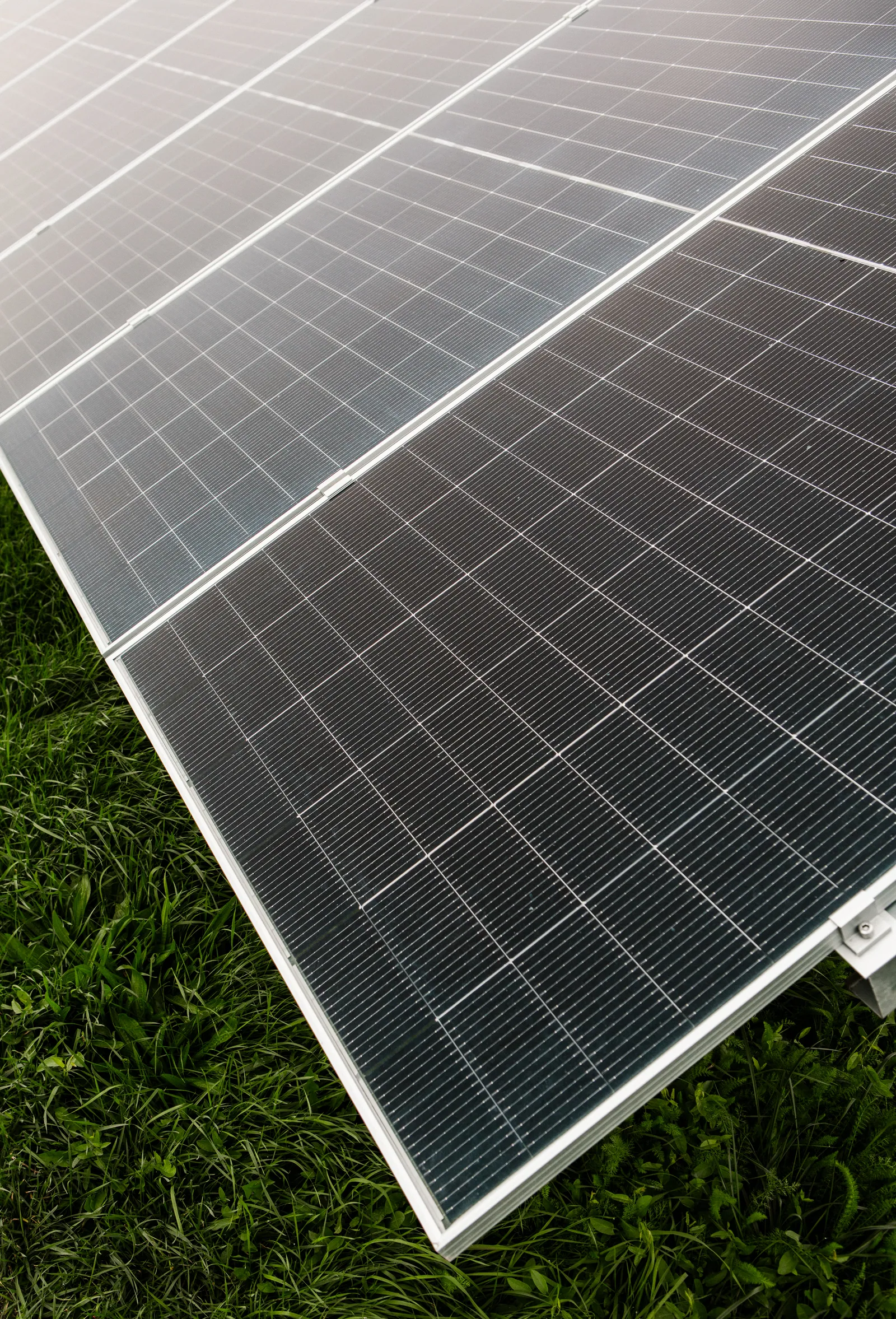
Made with higher-purity silicon and a uniform dark color. They usually offer good efficiency and work well in limited space, because they generate more energy per square meter. Widely used in residential and commercial installations.
Polycrystalline panels
Also made of silicon, with a bluish tone and a less uniform appearance. For years they were popular for their balance between price and performance; today monocrystalline panels have gained ground, but they are still present in many installations.
Thin-film panels
They use very thin layers of photovoltaic material. They are lighter and more flexible, although with lower efficiency per square meter. They are used in applications where weight, flexibility or the type of surface are decisive.
Advantages and limits of a solar panel
Solar panels harness a renewable source and, once installed, generate electricity for many years with little maintenance. But they are not a magic solution: they produce according to the available light and need a properly sized installation.
Main advantages
- They generate electricity from a renewable source.
- They reduce energy consumption from the grid and help lower the bill.
- They have a long service life and require little maintenance.
- They can be combined with batteries.
- They are suitable for homes, businesses and off-grid installations.
Limitations worth knowing
- They do not produce electricity at night.
- They produce less with clouds, shade or poor orientation.
- They require an initial investment and available space.
- They work better if consumption coincides with daylight hours.
- A battery is needed to store energy.
The key is to understand that a solar panel does not work alone: it is part of a system that must be designed according to the location, the consumption and the goal (saving, self-consumption, storing or supplying a remote area).
Equipment for your solar installation
These are the real components involved in the "from sun to socket" path: panels that capture light, complete systems and the inverter that converts the current. Filter by type:
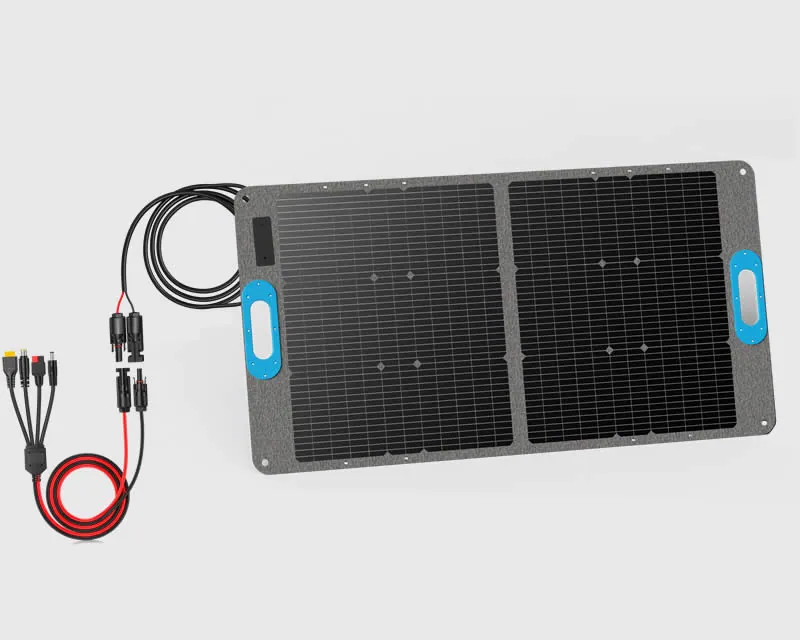
Solar panel SUN100W
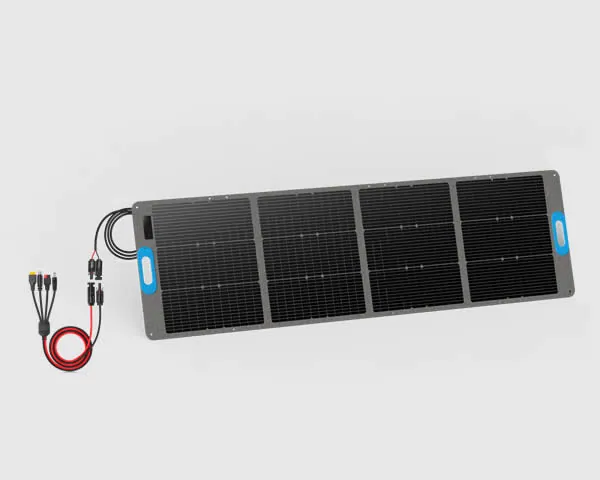
Solar panel SUN200W
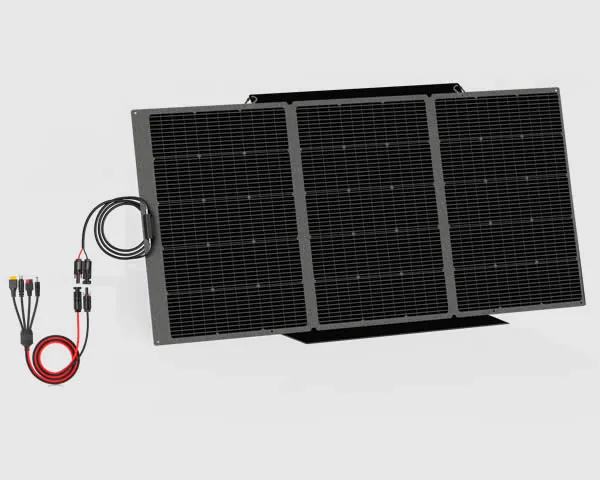
Solar panel SUN300W
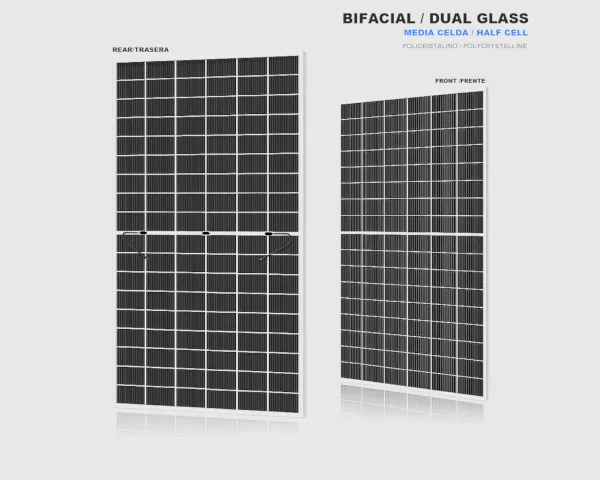
Solar panel HC660W
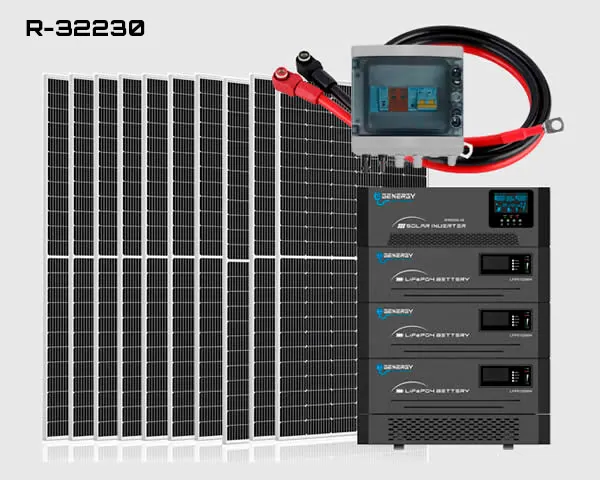
Plan Solar SIGMA
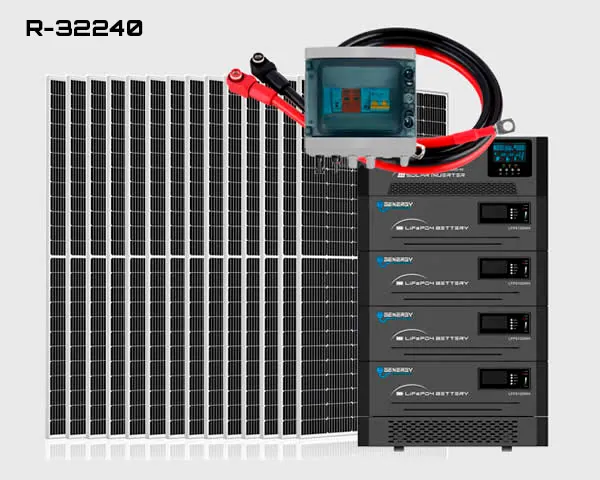
Plan Solar PEGASUS
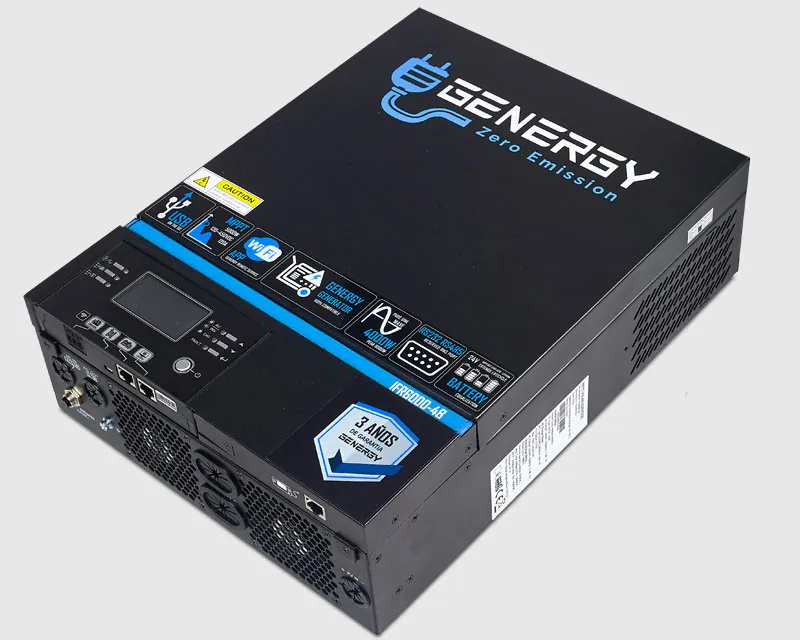
Inversor IFR6000 48V
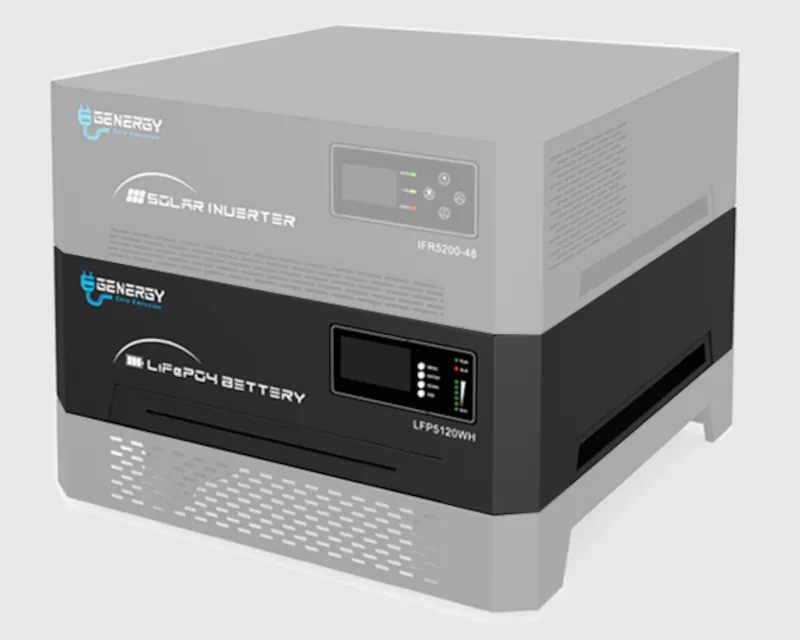
LFP5120WH battery
👉 See the full range: All-inclusive photovoltaic systems · Portable solar panels · Zero Emission batteries and power stations · Questions? talk to a technician.
Thinking about switching to solar energy?
We help you understand which panels, inverter and battery your home needs based on your consumption, with no commitment.
Talk to a Genergy technicianConclusion
A solar panel works thanks to the photovoltaic effect: it receives light, its silicon cells absorb photons, electrons are released and direct current is generated; then, an inverter converts it into alternating current for use in a home, a business or any installation. The panel converts light into electricity, but it is the complete system —inverter, wiring, protections, meter and batteries— that makes that electricity useful. From the sun to the socket, that is the path.
Related categories
Related topics
Frequently asked questions
How does a solar panel work?
A solar panel converts sunlight into electricity through the photovoltaic effect. Its silicon cells absorb the photons of light, release electrons and generate direct current; then, an inverter converts that current into alternating current, which is what is used in homes and businesses.
Does a solar panel work with light or with heat?
It works with light, not heat. What triggers the process is the photons of sunlight reaching the photovoltaic cells. Heat does not generate the electricity; in fact, very high temperatures can slightly reduce the performance of some panels. What matters is the available solar radiation.
What kind of current does a solar panel produce?
A solar panel produces direct current (DC), which is generated when electrons move inside the photovoltaic cells. Then, the solar inverter converts that direct current into alternating current (AC), which is what homes, shops and businesses typically use.
How is sunlight converted into electricity?
Through the photovoltaic effect. Photons of sunlight strike the silicon cells of the panel and transfer their energy to the electrons, which are released and move in an orderly way. That movement of electrons is the electric current, which the inverter then adapts for consumption.
What is a solar panel for?
It is used to convert sunlight into usable electricity. In a home it powers lighting, appliances or air conditioning; in a business it reduces grid consumption during the day; and in remote areas, together with batteries, it provides electricity where the grid does not reach. Its function is always to convert solar energy into electrical energy.
Do solar panels work at night or when it is cloudy?
At night they do not produce, because without light the photovoltaic effect is not triggered. With clouds they do produce, but less, since diffuse light still arrives even without direct sun. To have energy at night, the grid or a battery that stores the surplus generated during the day is used.
Do solar panels store energy?
No. Panels generate electricity when they receive light, but they do not store it on their own. To save energy and use it later, you need a solar battery. Without a battery, the energy is consumed at the moment it is generated or sent to the grid as surplus if the installation is set up for it.
Can a solar panel power an entire house?
A solar installation can cover a good part or even all of a home's consumption, depending on the system size, solar radiation, consumption, orientation and whether batteries are included. A single panel is usually not enough: the usual approach is to install several panels connected within a photovoltaic system.
How long does a solar panel last?
A solar panel can last for decades. Most panels are designed to work for many years, although their performance drops gradually over time. With a good installation and basic maintenance, they keep producing electricity for a long time.
What is the difference between a photovoltaic panel and a thermal panel?
The photovoltaic panel converts sunlight into electricity and is used for electrical self-consumption. The thermal panel uses the sun's heat to warm water or other fluids, for example for domestic hot water. In short: photovoltaic produces electricity and thermal produces heat.
Can a solar panel be connected directly to a socket?
This is not recommended. The panel generates direct current and needs an inverter to convert it into alternating current before use. Plug-in kits ("balcony") with an integrated microinverter do exist for small loads, but a home installation must be connected to the electrical panel with its protections and be properly registered.
What are photovoltaic cells made of?
Most are made of silicon, a semiconductor material that releases and moves electrons when it receives light. This silicon can be arranged into monocrystalline cells (purer and more efficient) or polycrystalline cells. Thin-film technologies using other materials also exist, which are lighter but less efficient per square meter.