Tipos de placas solares: cuáles existen y cuál conviene según el uso
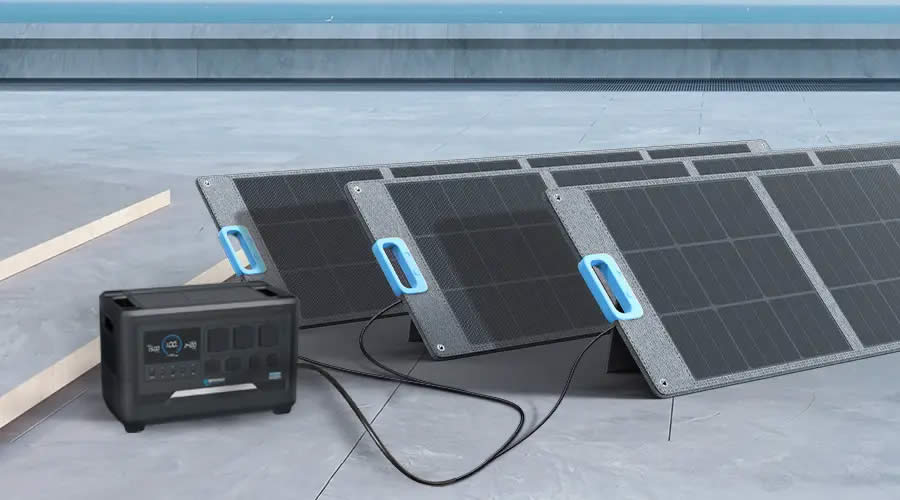
Choosing the right option among the various types of solar panel mounts is much more important than it seems. After all, the mount not only supports the panel—it also determines the tilt, the orientation, stability and, to some extent, the performance the system can deliver.
When I talk about solar panel mounts, the first thing I look at isn’t the specific model, but rather the surface where the panels will be installed. A house with a sloped roof doesn’t need the same mount as one with a flat roof or a ground-mounted system. And if you also want to adjust the angle to maximize solar energy capture, factors like mobility and adjustability also come into play.
Therefore, the most useful way to understand this topic is to categorize the supports based on two criteria: the installation surface and the type of adjustment or tilt they allow. If you’re also considering a complete installation, this type of choice makes sense within a broader energy ecosystem such as that of portable solar generators, where the frame, panel, and backup battery are all part of the same system.
What is a solar panel mount and why is it essential for an installation?
A solar panel mounting system is the structure that secures the panels to a specific surface and keeps them in the correct position. It may seem like a minor detail, but it isn’t. A poor choice here can complicate installation, reduce performance, or limit future expansions.
The mounting system determines how the panel is oriented and at what angle it operates. These two factors directly influence solar energy capture. That’s why it’s not enough to simply choose a good panel—you also need to consider the mounting structure that goes with it.
In residential installations, this point often goes unnoticed at first. But as soon as you compare different roof systems, it becomes clear that there is no one-size-fits-all solution. The right system depends on the type of roof, the available space, the mounting system, and the installation’s energy goals.
How it affects orientation and pitch
The orientation determines which direction the panel faces, and the tilt determines the angle at which it captures solar radiation. A suitable mounting system helps position the modules in an efficient, stable manner that is compatible with the surface.
On roofs that already have a suitable slope, a simple structure may be sufficient. However, on flat surfaces or those with an unfavorable angle, the structure must correct that position so that the panel performs better.
Why not all mounts are suitable for every surface
This is the key point. It doesn't make sense to use the same mounting system on a sloped tile roof as you would on a flat roof or a ground-mounted installation. Each surface requires a different method of fastening, load distribution, and angle adjustment.
So, if someone asked me how to choose a mounting system, my answer would always start the same way: first, figure out where the panels are going to go, and then choose the structure.
Types of solar panel mounts based on surface area
The clearest way to classify mounting systems is to start with the surface where the panel is installed. That’s where the logic of the structure really changes.
Brackets for sloped roofs
On sloped roofs, it is common to use structures that take advantage of the roof’s natural slope. If the roof already has a good angle, a raised structure is not always necessary. Often, a solution that securely fastens the panel and keeps it integrated into the roof is sufficient.
This type of mounting system is very common in single-family homes and residential installations where a clean, stable solution that integrates well with the existing roof is desired.
Brackets for flat roofs
Here, the logic is quite different. On a flat roof, the panel cannot simply be installed on the surface if you want to optimize its energy yield. In these cases, an inclined structure is usually needed to give the module the angle required for optimal performance.
This is one of the scenarios where what you were telling me is most relevant: the choice of mounting system depends entirely on the surface and the adjustments needed to maximize energy efficiency. On a flat roof, the structure doesn’t just provide support—it also corrects the geometry of the installation.
Structures for ground-mounted solar panels
When the panels are installed directly on the ground, the structure takes on an even more prominent role. This approach offers greater flexibility in terms of module orientation and angle, but it’s also important to consider stability, durability, and how the system adapts to the terrain.
Ground-level structures are often a good choice when you don't want to or can't use the roof, or when you're looking for a larger facility that can be easily expanded over time.
Brackets for facades or special installations
There are also structures designed for facades, pergolas, or special installations. While these aren’t the most common options for standard residential self-consumption, they can be suitable for projects with space constraints or specific design requirements.
Types of structures based on the mounting angle
In addition to classifying them by surface area, it is important to understand the supports based on the angle they provide to the panel.
Coplanar supports
Coplanar mounts are those that position the panel in the same plane as the roof. They make a lot of sense when the roof already has a suitable slope and there is no need to adjust the angle.
Their main advantage is integration. They are a logical solution when the roof already contributes to performance and the key is to mount the modules securely and neatly.
Angled brackets
Tilted mounts are used when the surface itself does not provide the proper angle. They are very common on flat roofs, where the structure must raise the panel and give it the necessary tilt to improve solar capture.
Here, the bracket is no longer just a mounting base; it becomes an active component in the system's performance.
Adjustable structures or structures with tilt adjustment
In some cases, the mount allows for some adjustment of the angle. This type of structure can be useful when you want to optimize energy capture or better adapt the system to specific conditions.
An adjustable solution isn't always necessary, but when the goal is to fine-tune performance or work in a more demanding environment, it may be worth considering this option.
Which solar panel mounting system is best for each situation?
The best way to make a decision is to apply all of this to real-life situations.
For homes with sloped roofs
If the house already has a sloped roof that is well-oriented, the standard approach is to choose a structure that takes advantage of that geometry. In this case, a coplanar solution often makes a lot of sense due to its simplicity, integration, and stability.
If you're also setting up a complete home solar system, you might want to consider the Self-Consumption Solar Kit, where the system is designed as a comprehensive package rather than as individual components.
For flat roofs
On flat roofs, it is usually best to use a sloped structure. The key here is to achieve a good angle of incidence without compromising stability or available space.
This type of installation requires careful consideration of the panel layout, load distribution, and the spacing between rows if there are multiple rows of modules.
For off-grid installations
In off-grid systems, the mounting structure should not be considered solely in terms of surface area, but as part of the entire system. If you are looking for self-sufficiency, it is important that the structure facilitates efficient solar collection and fits within a properly sized installation.
In that context, it makes a lot of sense to also considerOFF GRID solar inverters and solutions where the structure, panels, and storage all serve the same goal of self-sufficiency.
For those who want to optimize performance
If the goal is to maximize performance, then mobility or adjustable mounting can add value. It won’t always be the most necessary or cost-effective option, but in certain installations it can make all the difference.
What to Consider Before Choosing a Solar Structure
Before choosing a solar panel mount, I would consider the following points:
Type of roof
This is the number one criterion. The surface matters most. Installation is not the same on roof tiles, metal roofing, flat roofs, or the ground.
Orientation and available space
The mounting system should help you work effectively with the actual space, not the ideal one. Sometimes the problem isn't the panel itself, but how the structure fits into the available space.
Durability, stability, and secure fit
The structure must be able to support the installation properly and adapt to the site conditions. It is important to consider not only the cost of the support but also the safety and durability of the installation.
Potential for future expansion
This point is very important in installations with a long-term outlook. If you think the system might grow over time, it makes sense to assess from the outset how that expansion will fit in. This is where solutions such as scalable systems, which allow you to design the installation with more room for future growth.
Common Mistakes When Choosing Mounting Systems for Solar Panels
There are several mistakes that come up time and again.
Choosing based solely on price
This is one of the most common issues. A cheap mount can end up costing you more if it doesn't fit the roof properly or makes installation difficult.
Do not adjust the structure to fit the surface
Every surface has its own logic. Forcing a structure that doesn't fit usually results in poorer performance or a less comfortable installation.
Ignoring the actual roof pitch
People often assume that any sloped roof is the same, but that’s not the case. The actual angle matters—a lot.
Don't think about the entire system
In some installations, the mounting system should not be chosen in isolation from the rest of the system. When the system requires greater autonomy or uninterrupted power supply, it is also important to consider a backup solution. In such cases, solutions such as Solar Generator or even battery-powered generators as part of a more comprehensive energy strategy.
Conclusion
The types of solar panel mounts are much easier to understand when you consider them in relation to two questions: where the panels will be installed and what angle adjustment you need. From there, everything becomes much clearer.
If the system is installed on a sloped roof, it is common to take advantage of the roof’s slope. If it is installed on a flat roof, it is standard practice to use an inclined structure. If it is installed on the ground, the structure must provide stability and allow for flexible orientation. And if you’re looking to optimize performance, then the ability to adjust or fine-tune the system comes into play.
In my experience, the choice of mounting system varies significantly depending on whether the surface is a flat roof, a pitched roof, or the ground. That is precisely why this topic should not be treated as a set of fixed guidelines, but rather as a technical decision that directly affects the final outcome of the installation.
Frequently Asked Questions About Types of Solar Panels
What types of solar panels are there?
There are three main types based on the use of solar energy: photovoltaic panels, which generate electricity; thermal panels, which produce heat; and hybrid panels, which combine both functions.
What is the difference between photovoltaic, thermal, and hybrid solar panels?
The main difference lies in their function. Photovoltaic systems convert sunlight into electricity, thermal systems use the sun’s heat to heat water or other fluids, and hybrid systems aim to produce both electricity and heat within the same system.
What are monocrystalline solar panels?
These are photovoltaic panels made from monocrystalline silicon. They are typically known for their high efficiency and for making better use of available space.
What is the difference between monocrystalline and polycrystalline solar panels?
Monocrystalline panels typically offer higher efficiency per unit area, while polycrystalline panels are often considered a simpler option in certain situations. The best choice depends on the available space, the budget, and the purpose of the installation.
What are perovskite solar panels?
They are an emerging solar technology based on new materials that has the potential to improve efficiency and open up new possibilities in the photovoltaic sector.
What type of solar panel is best for a home?
For residential homes, the most common choice is solar panels, and among these, monocrystalline panels are often the top choice when seeking a good balance between performance and space.