How to connect a solar panel to the electrical grid step by step
By the technical team at Genergy · Spanish manufacturer of generators and photovoltaic solutions (15+ years) · updated in July 2026 · 11 min read.
Table of contents
- Why you need an inverter
- Required components
- Basic diagram
- 1. Choose the type of installation
- 2. Calculate power and consumption
- 3. Connect the panels to each other
- 4. Connect the panels to the inverter
- 5. Connect the inverter to the electrical panel
- 6. Configure and monitor
- 7. Legalize the installation
- Surplus and zero feed-in
- Genergy solar kits
- Frequently asked questions
Connecting a solar panel to the electrical grid does not mean plugging the panel into the electrical panel at home. Solar panels generate electricity as direct current (DC), whereas the household installation runs on alternating current (AC). The grid-tie inverter converts that direct current into alternating current synchronized with the home's grid: the panels capture the energy, the inverter transforms it and the electrical panel distributes it to the loads. That said, the connection must be made with suitable wiring, protections and legalization: this is not an improvised installation, as there is electrical voltage, regulations and technical requirements to respect.
Why you need a grid-tie inverter
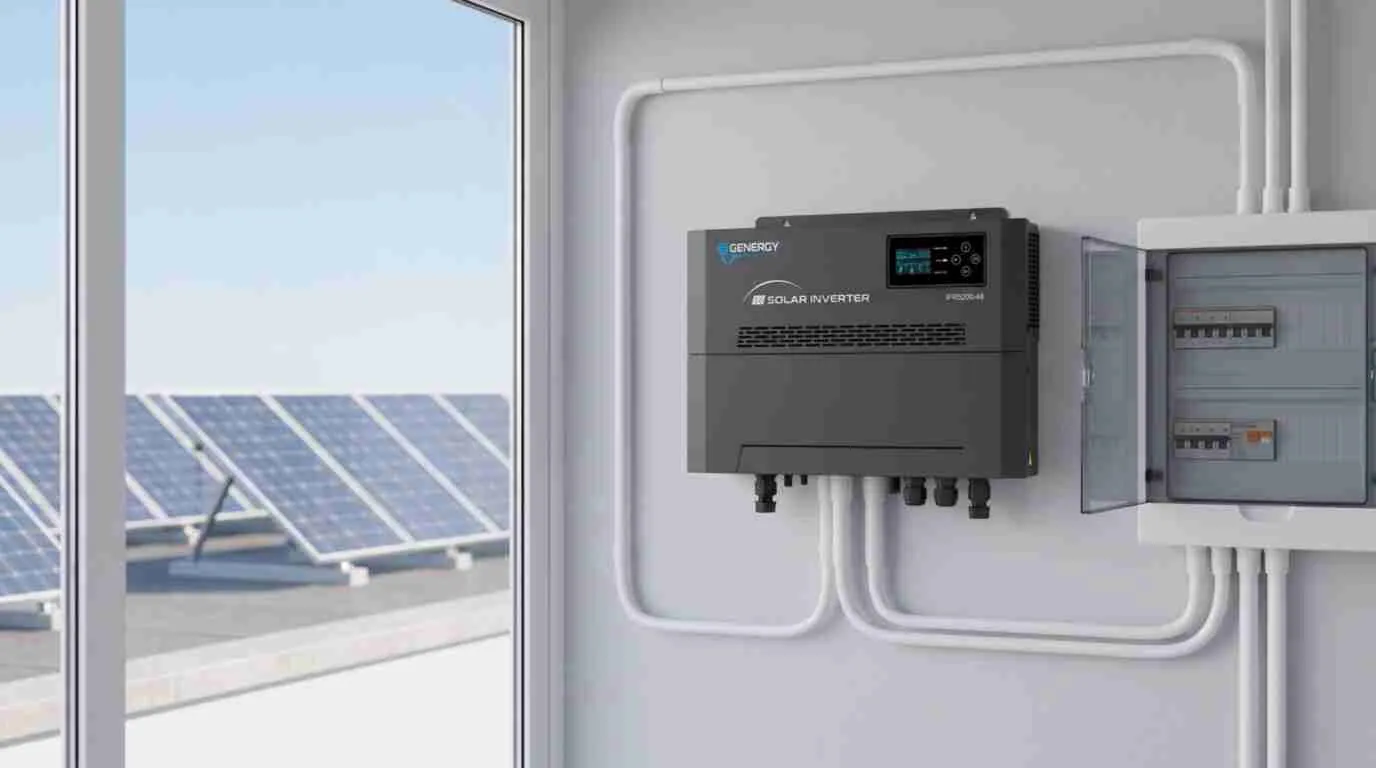
A solar panel must not be connected directly to a socket or to the electrical panel without the necessary equipment: on its own it produces direct current, which is not suitable for supplying a home connected to the grid. The inverter is the device that makes this possible, with these functions: converting DC into AC, synchronizing voltage and frequency with the grid, managing production, protecting the installation against faults, disconnecting if it detects problems on the grid and allowing you to monitor the energy generated. That is why not just any inverter will do: it must be compatible with grid connection and with the installation's configuration.
This guide explains the process so you can understand how the connection works, but the final installation must be carried out by a qualified professional. Handling the electrical panel without the proper knowledge can cause electrocution, fire, equipment damage, protection failures, problems with the distribution company or an installation that cannot be legalized.
Components needed to connect solar panels to the grid
| Component | Function |
|---|---|
| Solar panels | Generate electricity as direct current |
| Mounting structure | Secures the panels at the right orientation and tilt |
| Solar cabling | Carries the energy from the panels |
| DC protections | Protect the direct current section |
| Grid-tie inverter | Converts DC into synchronized AC |
| AC protections | Protect the output to the home |
| Electrical panel | Integrates solar energy with the installation |
| Bidirectional meter | Measures consumption and surplus, where applicable |
| Monitoring | Lets you see production and consumption |
| Batteries | Store energy if the system is prepared for it |
The wiring must be rated for photovoltaic use and sized according to voltage, current and distance (not just any cable will do). On the DC side, fuses, disconnect switches and surge protective devices can be installed; between the inverter and the electrical panel, AC protections (circuit breaker, residual current device and surge protection, depending on the design). Batteries are optional: if you are looking for self-consumption with storage, you can take a look at a solar kit with battery to make more use of your own energy at night or during hours without production.
Basic connection diagram
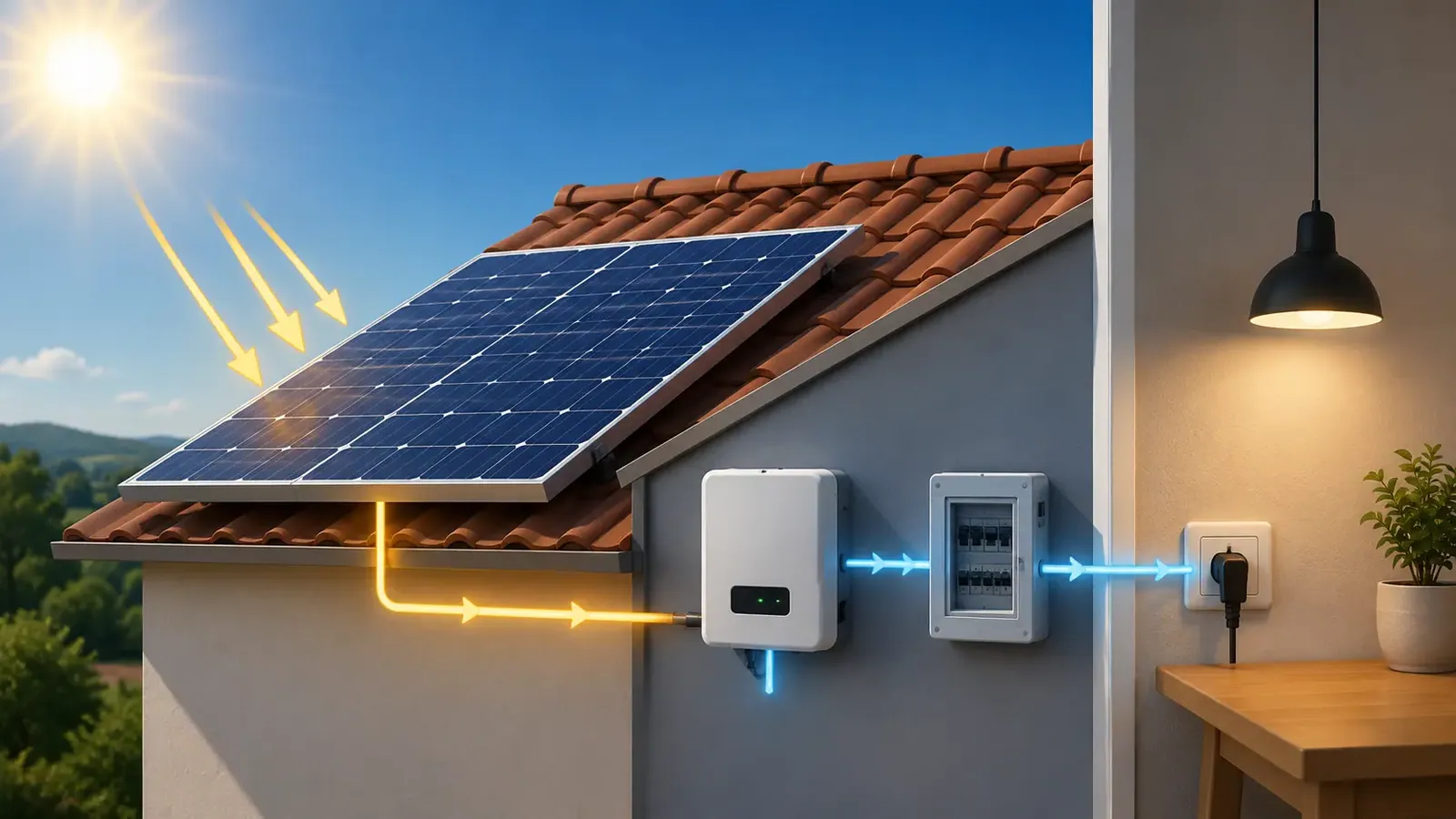
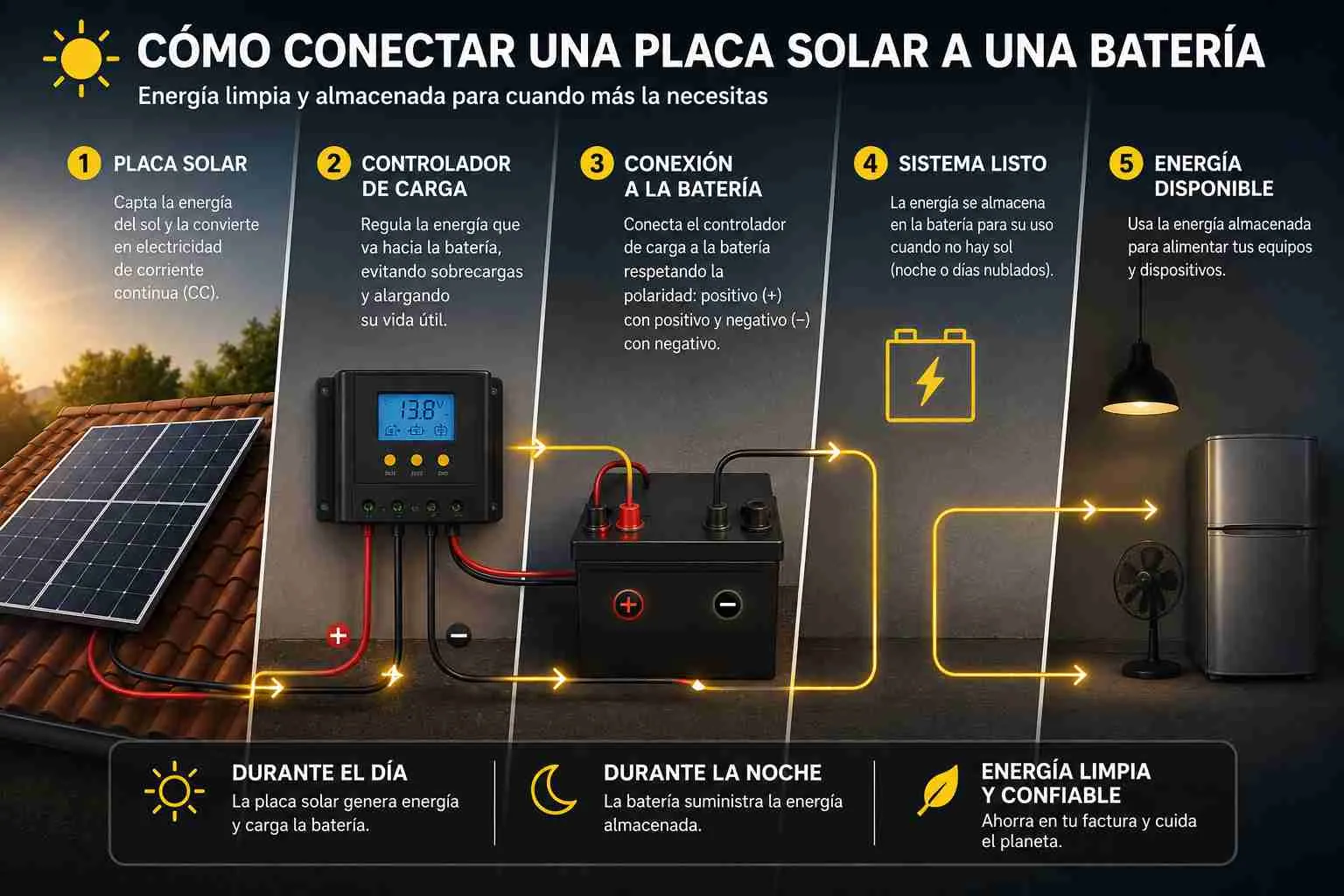
The energy leaves the panels as direct current and passes through protections before reaching the inverter, which operates within a specific voltage and current range. Once converted into alternating current, it passes through the AC protections and is connected to the home's electrical panel. Solar energy is used first by the active loads; if there is any left over and the installation is legalized, it can be fed into the grid, where the bidirectional meter records what you consume and what you export.
Step 1: choose the type of solar installation
Grid-connected self-consumption is the most common: solar energy is used when there is production and, if it is not enough, the rest is drawn from the grid. With surplus, the excess is fed into the grid and can be compensated on your bill if the installation and the contract meet the requirements. With zero feed-in (no surplus), a device prevents excess energy from being injected. With batteries, you store energy to use outside sunlight hours. And the off-grid installation is not connected to the public grid: it works with panels, batteries and, often, backup; this is where an off-grid solar inverter comes in, designed for systems that do not operate synchronized with the grid.
Step 2: calculate power, consumption and number of panels
Don't install panels by eye. Analyze your bills and habits (monthly and annual consumption, peak demand times, contracted power, whether you consume more by day or by night) and match the photovoltaic power to your consumption: a small installation covers little and one that is too large generates surplus that you may not be able to use. Take into account orientation, tilt and shading (a roof with partial shading may require optimizers or microinverters) and plan for daytime and nighttime consumption (if you use a lot at night, consider batteries). For backup uses, there are portable solar panels, although they do not replace a fixed installation connected to the electrical panel. And leave room for future expansions (aerothermal heating, electric vehicle).
Step 3: connect the solar panels to each other
In series the voltage of the panels is added (to reach the inverter's operating voltage); in parallel the current is added (this requires suitable wiring and protections); and in series-parallel both are combined to adjust voltage and current to the inverter's range. It is essential to respect polarity: connecting positive and negative incorrectly can damage equipment or create an electrical hazard. Before connecting to the inverter, check total voltage, maximum current, polarity, connectors, cable cross-sections, protections and compatibility.
Step 4: connect the panels to the inverter
This section operates on direct current. The inverter has one or more DC inputs, each with a voltage and current range: the maximum permitted voltage must never be exceeded (a critical point on cold days, when panel voltage increases) nor the maximum input current (if you connect too many panels in parallel). The protections (DC disconnect switch, fuses, surge protective device, grounding) allow the photovoltaic array to be disconnected safely. One of the most serious mistakes is reversing polarities or handling connectors under load.
Step 5: connect the inverter to the electrical panel
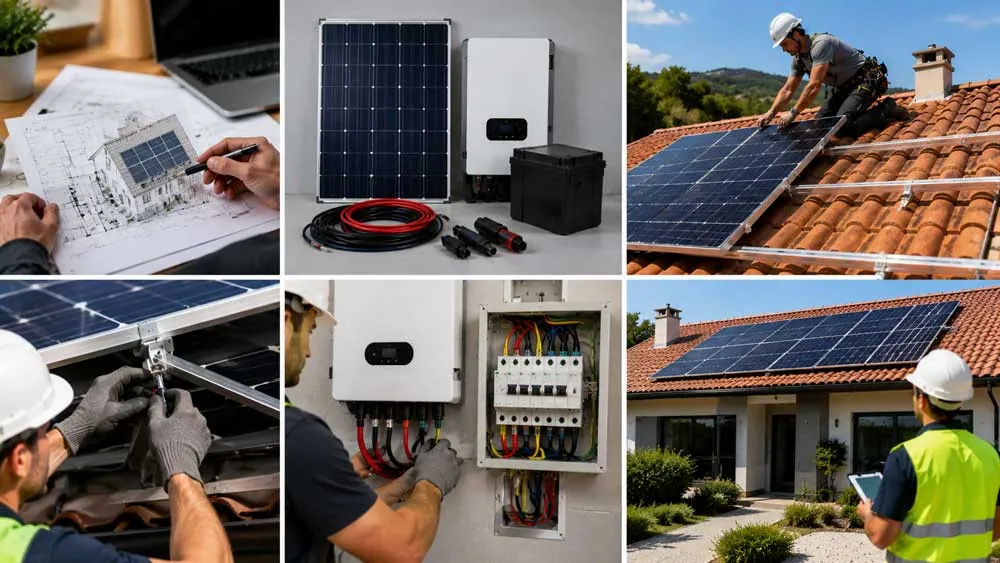
This is the most delicate step, because it connects solar production with the building's installation. The inverter's AC output is connected to the electrical panel through protections (circuit breaker and residual current device against overloads, short circuits and earth leakage). The wiring must be calculated according to power, distance, voltage drop and regulations, and grounding is essential for safety. Solar energy is integrated with the home's circuits: the loads use the available energy first, and if there is a shortfall, it is drawn from the grid. For all these reasons, the connection to the electrical panel must be made by an authorized installer, who sizes the protections, checks the panel, certifies the installation and ensures compliance with regulations.
Step 6: configure the inverter and monitor
Once connected, the inverter must be configured with the local grid parameters and verified. Monitoring lets you see production (daily and monthly), instantaneous consumption, surplus, estimated savings, inverter status and alarms. With metering systems you will know at any moment whether you are consuming solar energy, grid energy or both.
Step 7: legalize the installation
A grid-connected installation must be legalized. Depending on its power and type, it may require a technical report or project, an electrical installation certificate, self-consumption registration, communication with the distribution company and, if you want to compensate surplus on your bill, a properly processed compensation contract.
Self-consumption with surplus and zero feed-in
In self-consumption with surplus, when you produce more than you consume the excess is fed into the grid (for example, 4 kW of production and 2 kW of consumption = 2 kW of surplus), which the bidirectional meter records and which can be compensated on your bill according to the contract. It is worthwhile if you produce more during the day than you consume at that moment. In self-consumption without surplus (zero feed-in), a meter or controller limits the inverter's production so that no energy is injected into the grid: it is worthwhile if you want to simplify paperwork, if feeding in does not pay off or if your consumption closely matches production; its limitation is that part of the production may be wasted when there is not enough consumption.
A grid-tie inverter works synchronized with the grid (grid-connected self-consumption). An off-grid inverter is used in standalone systems, supplying loads from panels and batteries; it must not be connected to the grid as if it were a grid-tie unit. For homes with grid and batteries, the option is a hybrid inverter. And if you need backup during prolonged outages, a generator set can support the system, always with safe switchover, protections and professional installation (never connected in just any way to the electrical panel or the solar system).
Common mistakes when connecting solar panels to the grid
The most dangerous: connecting panels without a suitable inverter (panels do not go directly to the home grid); not installing protections (they are not optional); confusing direct and alternating current (they have different risks and requirements); exceeding the inverter's voltage (too many panels in series); using incorrect wiring (overheating and losses); not legalizing (problems with the distribution company, the insurer or future modifications); and handling the electrical panel without qualification. To maintain performance, check panel cleanliness, connections and the inverter, and compare expected production with actual production to detect issues.
"All-inclusive" solar kits from Genergy
As a manufacturer, Genergy does not carry out the connection to the electrical panel (that is done by an authorized installer), but it does offer the PLAN SOLAR kits for self-consumption with panels, inverter and, optionally, battery. Filter according to whether or not you need storage:
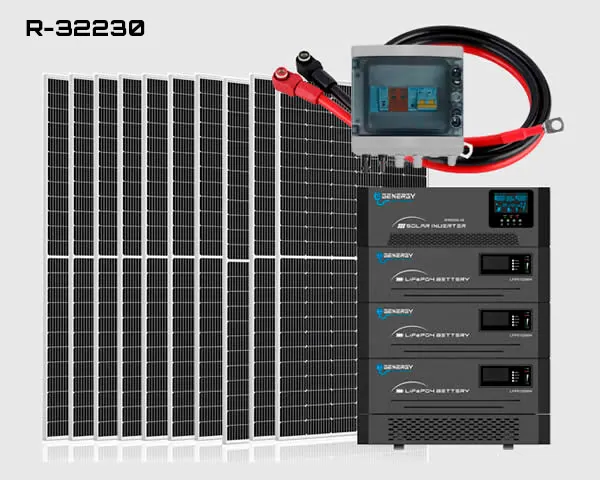
Plan Solar Sigma
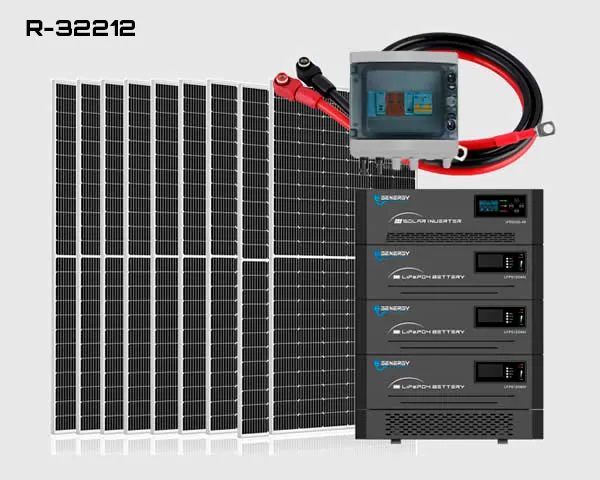
Plan Solar Vega
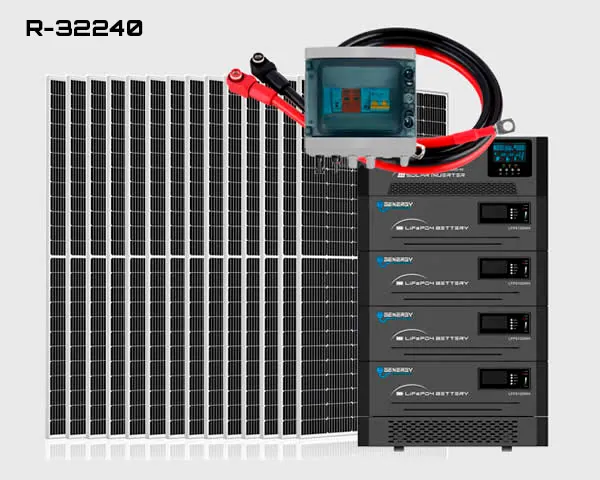
Plan Solar Pegasus
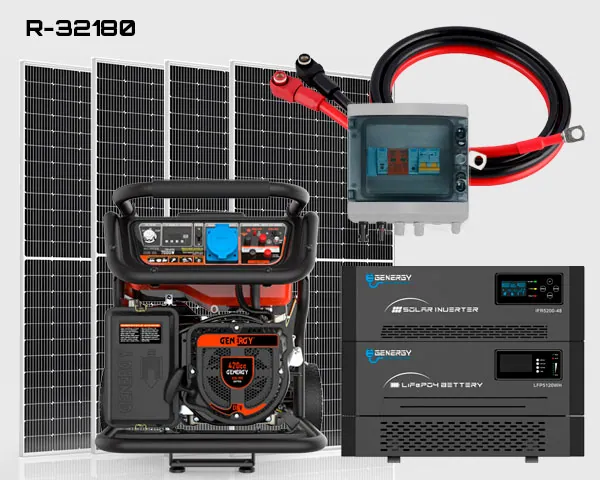
Plan Solar Rigel Backup-A
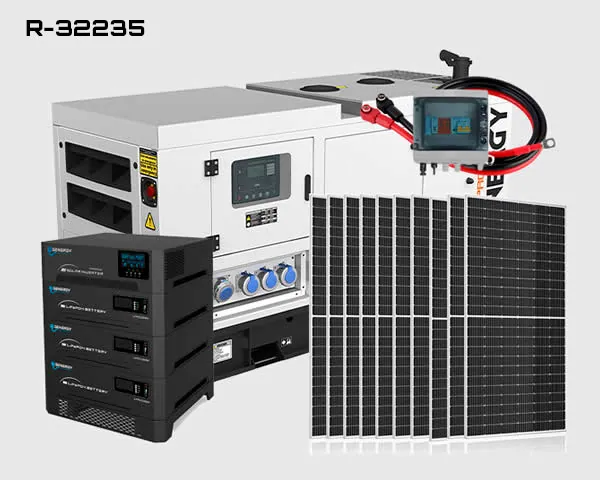
Plan Solar Sigma Backup-A
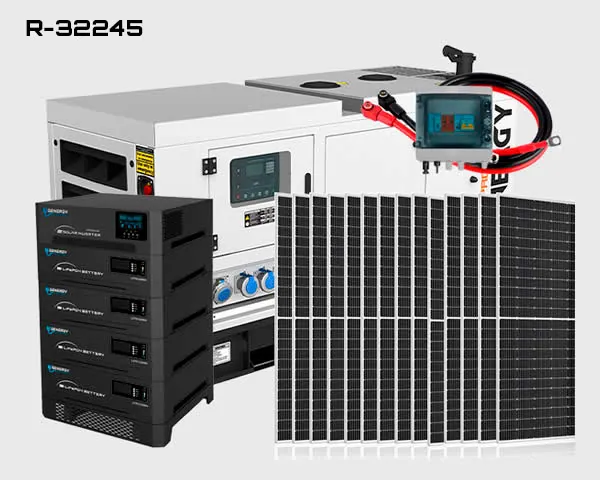
Plan Solar Pegasus Backup-A
👉 See the full range: All-inclusive photovoltaic systems · Solar kit with battery · Off-grid solar inverter · Questions? talk to a technician.
Want to connect solar panels to your grid?
Tell us your consumption and whether you are looking for self-consumption with or without a battery, and we will help you choose the right kit. We are manufacturers and work with authorized installers who legalize the installation. No obligation.
Talk to a Genergy technicianConclusion
To connect a solar panel to the electrical grid you need much more than the panel. The basic diagram is: panels → DC protections → inverter → AC protections → electrical panel → home / grid. The grid-tie inverter is essential because it converts the direct current from the panels into alternating current synchronized with the home grid. The connection must be made with protections, suitable wiring, grounding, correct configuration and legalization, and the final work on the electrical panel must be left to a qualified installer. If you want to store energy, consider batteries or kits with storage; if you are looking for an off-grid installation, you will need an off-grid inverter; and for backup during prolonged outages, a compatible generator or generator set may make sense.
Related categories

Related topics
Frequently asked questions
Can I connect a solar panel directly to the electrical grid?
No. You need a grid-tie inverter and suitable protections. Solar panels produce direct current, which cannot be integrated directly into the home's installation.
What inverter do I need to connect solar panels to the grid?
A grid-tie inverter compatible with the power, voltage and current of your panels. If you want to add batteries, a hybrid inverter; for an off-grid installation, an off-grid inverter.
Where is the solar inverter connected in a house?
The inverter's alternating current output is connected to the electrical panel through suitable protections, and it must be done by a qualified installer.
What protections are needed?
It depends on the design, but protections are usually provided on the direct current side, on the alternating current side, against surges, plus disconnect switches and grounding.
Do I need a bidirectional meter?
If you are going to feed surplus into the grid, yes, you need bidirectional metering that records the energy you consume and the energy you export.
Can I connect solar panels without legalizing them?
A grid-connected installation must be legalized in accordance with the applicable regulations. Without legalization you may have problems with the distribution company, the insurer or future modifications.
What is the difference between self-consumption with and without surplus?
With surplus, the excess energy is fed into the grid and can be compensated on your bill. Without surplus, a zero feed-in system prevents it from being injected into the grid.
Can I add batteries later?
Yes, but it will depend on the inverter, the initial design and the compatibility of the system. A hybrid inverter makes it easier to add storage later.
Can an off-grid inverter be used to connect to the grid?
Not as a direct substitute for a grid-tie inverter. Off-grid units are designed for standalone installations, with different functions and protections.