How solar batteries work: a clear guide to understanding them before installing
By the technical team at Genergy · Spanish manufacturer of generators and photovoltaic solutions (+15 years) · updated July 2026 · 10 min read.
Table of contents
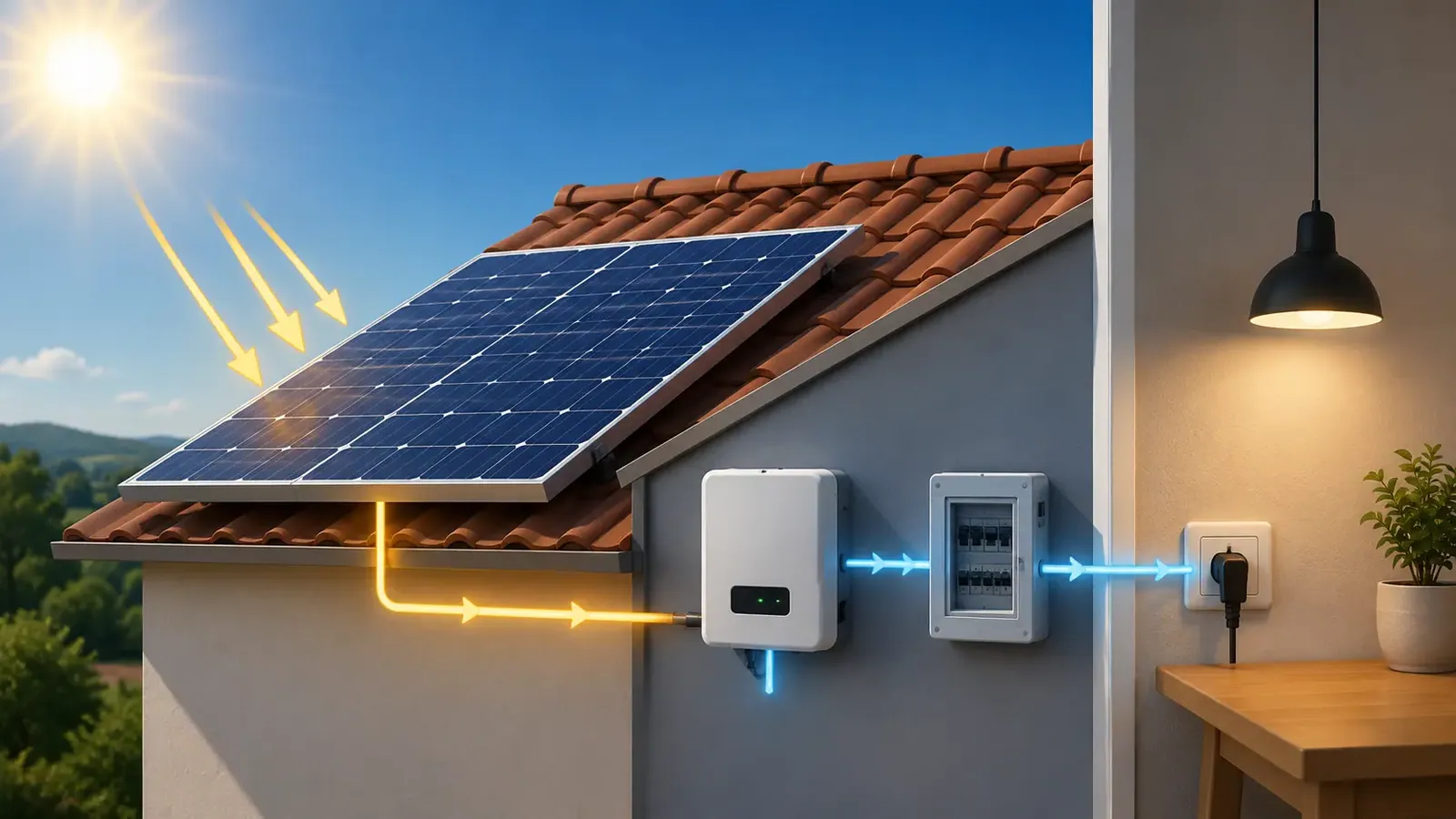
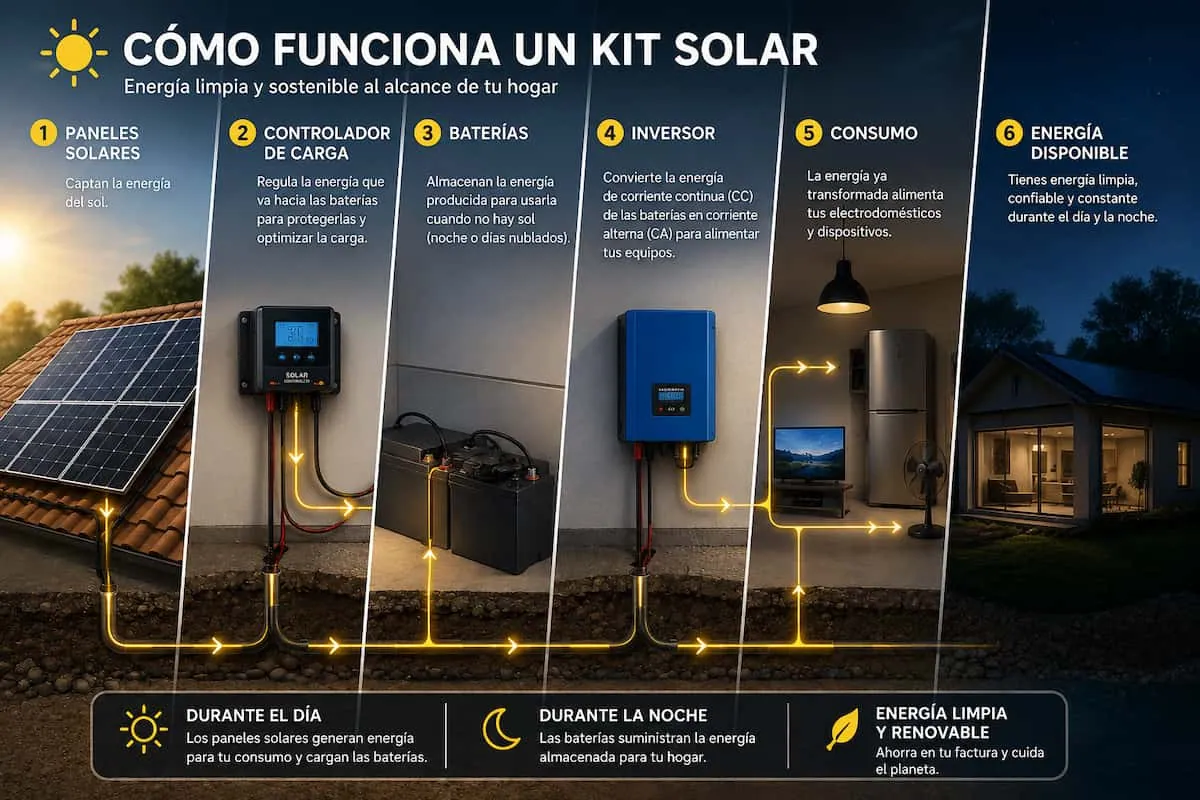
Solar batteries work by storing the surplus electrical energy that solar panels generate during daylight hours. When the panels stop producing, or when the home's consumption exceeds what the panels are generating at that moment, the battery supplies the stored energy to cover part of the demand. Put simply: it saves the energy you don't use during the day so you can use it at night, on cloudy days or at times of higher demand. It is key in self-consumption, because panels produce the most when the sun is out, but that doesn't always coincide with the hours of highest consumption (many homes use more energy toward the end of the day). Without a battery, the surplus is fed into the grid; with a battery, part of that energy stays at home to be used later.
What is a solar battery
A solar battery is an energy storage system designed to hold electricity generated by solar panels. Its main function is to accumulate the energy that isn't consumed at the time of production, so it can be used when the panels aren't producing, such as at night. It doesn't increase the panels' output, but it makes the installation useful for more hours of the day, making better use of what is already produced.
Difference between a solar panel and a solar battery
The solar panel produces electricity from solar radiation; the battery doesn't produce energy, it stores it.
| Element | Main function |
|---|---|
| Solar panel | Generates electricity during sunlight hours |
| Inverter | Converts the energy so it can be used at home |
| Solar battery | Stores surplus energy to use it later |
| Electrical grid | Provides energy when there is not enough production or battery |
How solar batteries work step by step
1. The panels generate electricity
During daylight hours, the panels capture solar radiation and turn it into electricity, which can be used directly in the home (appliances, lights, chargers, air conditioning or pumps).
2. The home consumes solar energy first
While the panels are producing, the installation tries to cover the household's consumption with that energy. If the washing machine, the refrigerator or the air conditioner are on, part of that demand is met directly with what the panels generate.
3. The surplus is sent to the battery
If the panels produce more than the home needs, a surplus appears, which can be sent to the battery to be stored. This is the key point: not wasting the solar energy produced during the day.
4. The battery stores the energy
The energy is stored through electrochemical processes: electricity is converted into chemical energy inside the cells and remains available for later discharge. In short, the battery transforms electricity into a form that can be kept and then delivered again.
5. The battery discharges when needed
When the panels stop producing or produce little, the battery starts supplying energy: at night, on cloudy days, early in the morning, at dusk, during consumption peaks above production or during outages (if the system is set up for backup). This is the most important part: the battery means solar energy doesn't depend solely on the exact moment the sun is shining.
Simple example of how it works in a home
In the morning, the panels start producing and the home uses a portion (refrigerator, small appliances). At midday production rises: if the house consumes less than the panels generate, the surplus charges the battery. In the afternoon production drops and, if consumption increases, the battery supplements the panels. At night, the panels no longer produce and the battery supplies the stored energy. This cycle repeats every day: production, consumption, charging, storage and discharge.
What components are involved in an installation with a battery
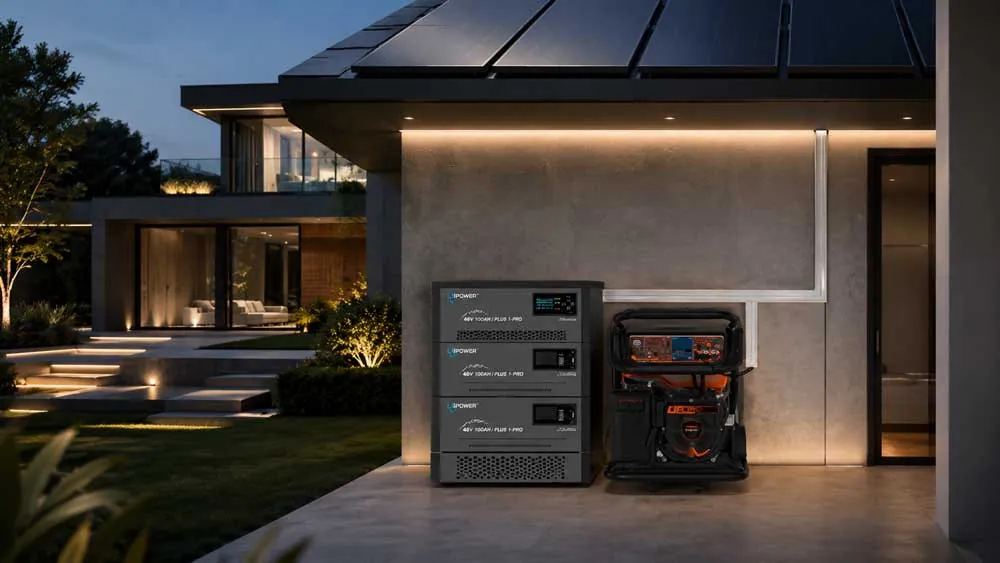
A battery doesn't work alone: the panels generate electricity; the inverter converts the current for the home and, in many installations with a battery, also manages charging and discharging; the battery stores the surplus and delivers it when needed; the regulator or management system controls how it charges and discharges to protect it and extend its service life; and the electrical grid or backup system covers the demand when there is not enough solar energy or battery. In off-grid installations, an electric generator can serve as occasional backup when continuity is needed.
Key concepts for understanding a solar battery
To choose well, it's not enough to know that it stores energy. The capacity (kWh) indicates how much energy it can store (a 5 kWh unit stores more than a 2 kWh one, but bigger isn't always better: it depends on your consumption). The continuous power is how much energy it delivers steadily over a prolonged period (it matters if you power several devices at once). The peak power is the maximum it delivers for a few seconds, to cover the start-up of motors, pumps or compressors; it is always higher than the continuous power. The depth of discharge is the percentage of energy you can use safely: it is usually between 80% and 95%, although many high-voltage lithium batteries reach 100%. The charge cycles (one charge + one discharge) determine service life: the more it withstands, the better. And the efficiency indicates how much useful energy you recover after storing it, since there are always small losses when charging and discharging.
Types of solar batteries
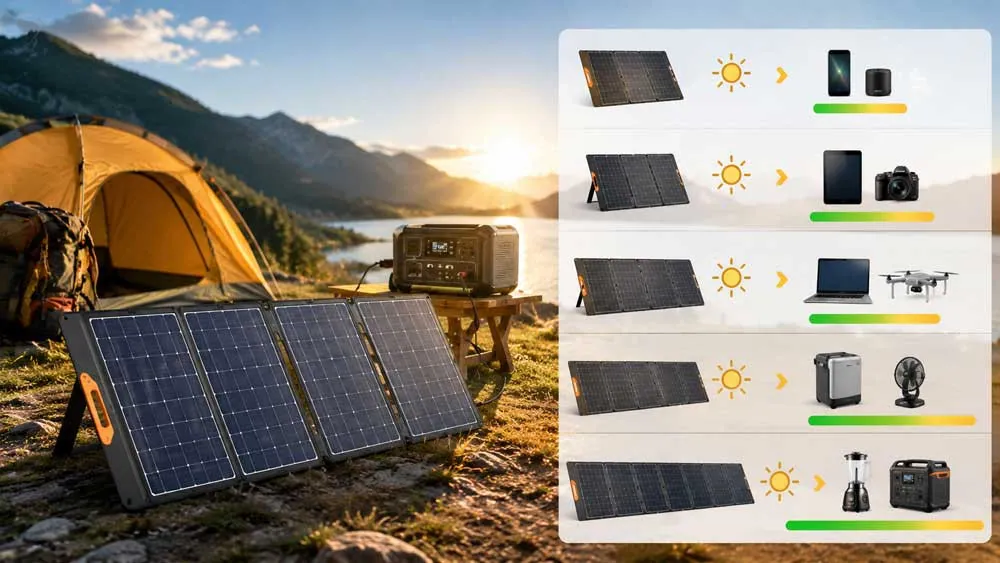
Lithium batteries are the most widely used in modern home installations: they stand out for efficiency, service life, low maintenance and good depth of discharge; they charge quickly, are lighter and withstand deep discharges well, although they have a higher price. Lead-acid batteries are more traditional and cheaper, but heavier, with lower energy density and more maintenance. Flow batteries are uncommon in homes and are aimed at large installations. And portable batteries (power stations) store electricity for mobile or backup uses: camping, caravans, light tools or emergencies; here a portable solar generator works as a station that stores energy in batteries and recharges from panels, the grid or other sources.
Physical solar battery or virtual battery
The physical battery is a device installed in the home that stores real energy in its cells and delivers it when needed: it is the right choice if you want to use your own energy at night, increase self-consumption or have backup during outages. The virtual battery doesn't store electricity at your home: it works as an economic system tied to the surplus fed into the grid (what accumulates, in reality, are euros of compensation, not energy). One stores energy to use later; the other stores credit on your bill.
When it's worth installing a solar battery
It can be worth it when you produce more energy than you consume during the day and want to make use of that surplus later.
| It makes sense if… | It may not pay off as much if… |
|---|---|
| You are away during the day and consume more at night | You consume almost all the solar energy at the moment it is produced |
| You have frequent solar surpluses | Your installation generates little surplus |
| You want more energy independence | The battery cost is high relative to your actual consumption |
| You live in an area with outages or have an off-grid installation | You are not clear on your consumption pattern |
| You want backup for essential loads | You can first optimize schedules and habits |
How to choose a solar battery
Analyze your daily consumption (how much electricity you use and at what times: consuming at midday is not the same as at night). Calculate your surplus: the battery is sized according to the energy that actually remains (you will never fill one that is too large; one that is too small will waste surplus). Check power and capacity (capacity tells you how much energy it stores; power, how many devices it can supply at once). Consider the technology (for homes, lithium is usually the most common). And think about the complete system: panels, inverter, battery, protections and installation must all be properly sized. If you are looking for a self-consumption solution with storage, a solar kit with battery combines generation, storage and use of your own energy in a single approach.
In an off-grid home, batteries are practically essential: with no grid connection, you need to store energy for the hours without sun. The system must be sized more carefully (there is no grid to cover calculation errors) and is usually combined with backup: a generator set can support the solar system when there are several days of low production.
Common mistakes when using solar batteries
The most frequent: choosing a battery that is too large (it makes the installation more expensive and may never fully charge); one that is too small (it fills up quickly and you don't make use of the surplus); not checking compatibility with the inverter and the rest of the system; not taking consumption habits into account (if schedules aren't studied, the installation may not be profitable); and assuming you will always have power during a blackout (not all batteries provide automatic backup; some need a specific backup configuration).
Genergy batteries and power stations
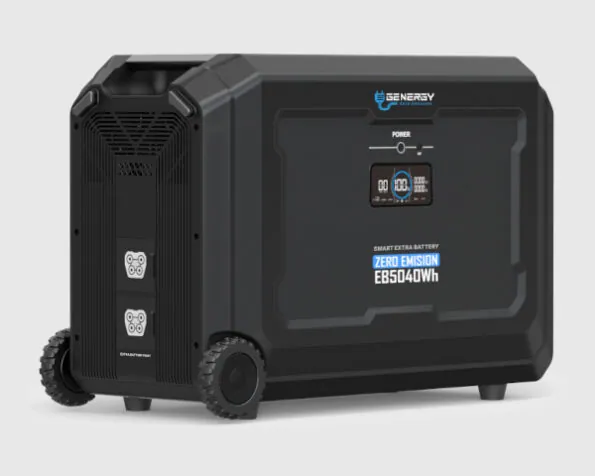
The simplest way to have solar storage at home or on the move is the Genergy GZE portable power stations: they store electricity in a battery and recharge from solar panel or grid. Filter by capacity:
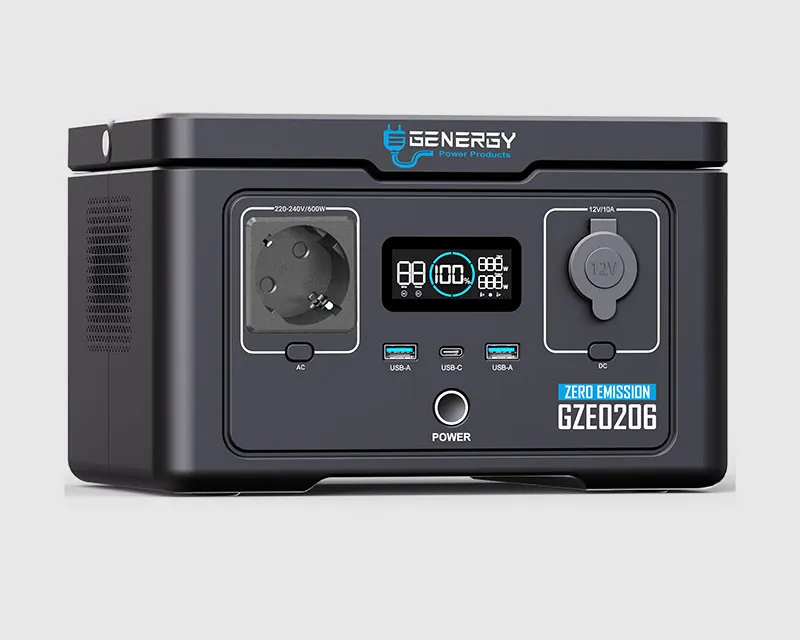
Power station GZE-0206
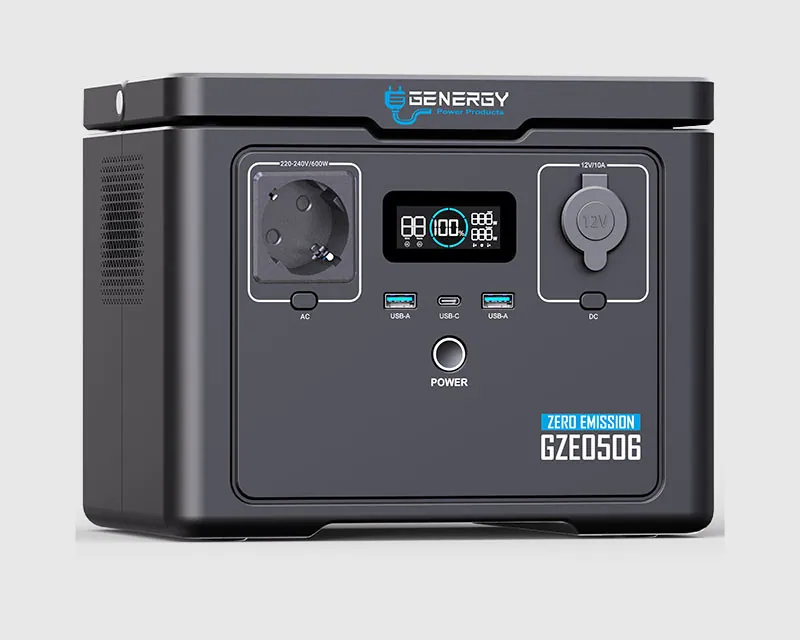
Power station GZE-0506
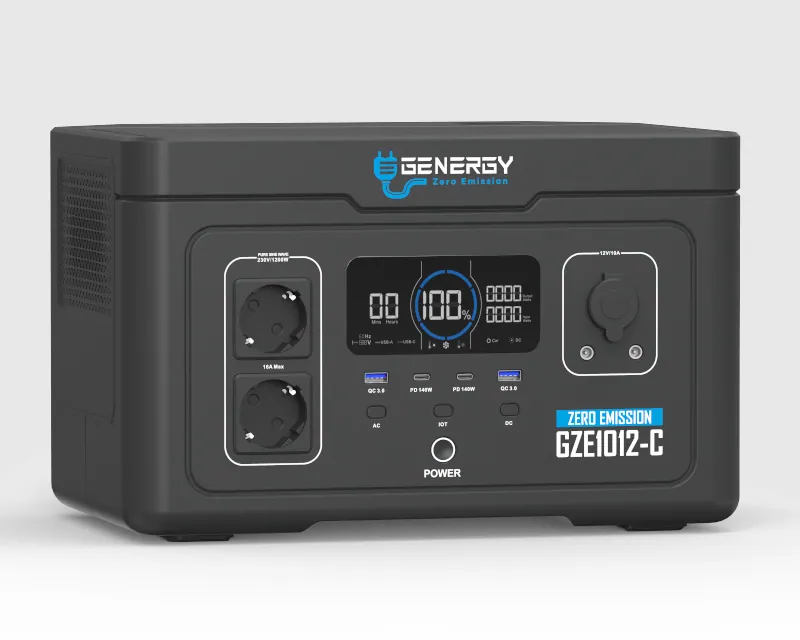
GZE-1012 [C] Station
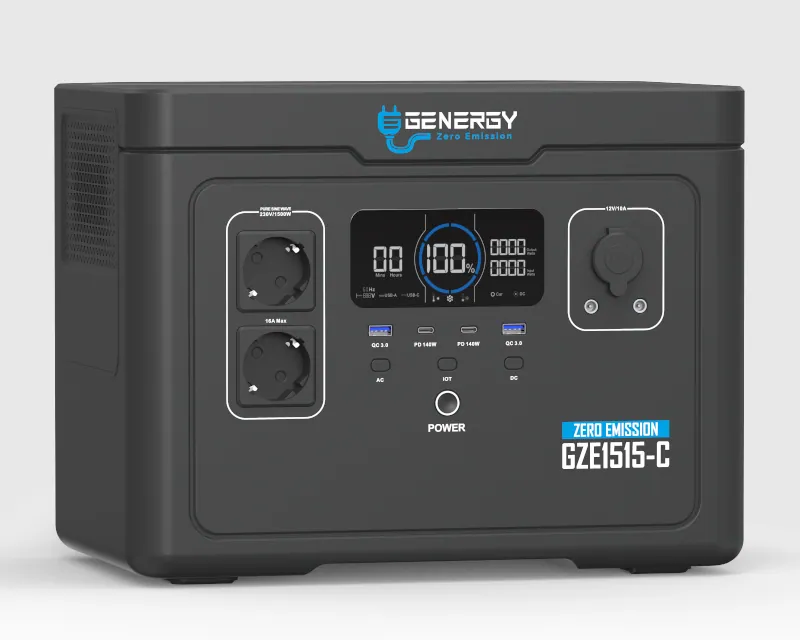
GZE-1515 [C] Station
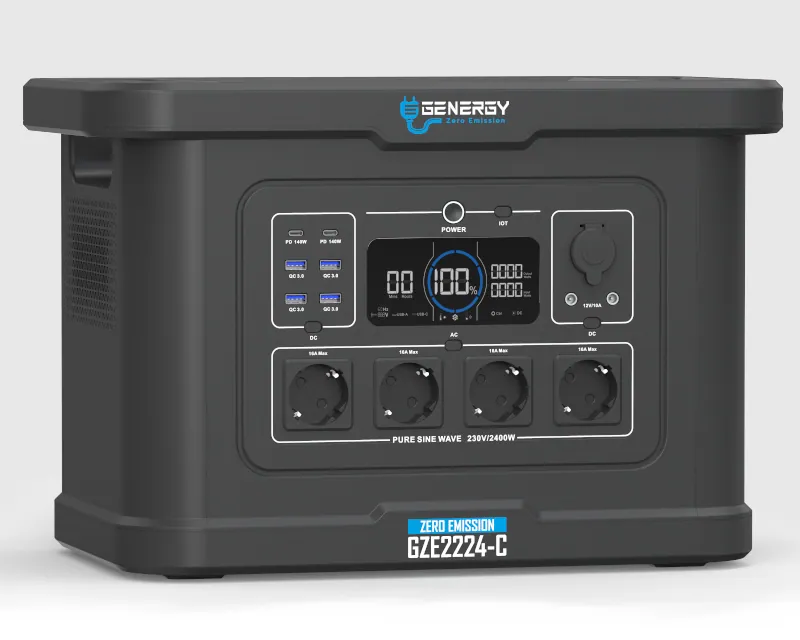
GZE-2224 [C] Station
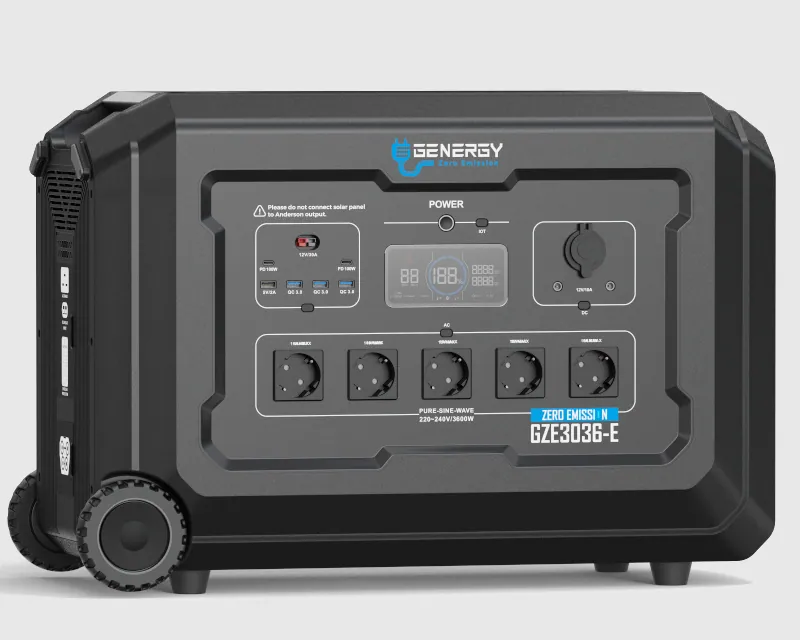
GZE-3036 [E] Station
👉 See the full range: Portable solar battery for home · Solar kit with battery · Zero Emission power stations · Questions? talk to a technician.
What solar battery do you need?
Tell us your consumption, how much surplus you generate and what you want the storage for (self-consumption, backup or mobility) and we'll help you size it. We are manufacturers. No obligation.
Talk to a Genergy technicianConclusion
Solar batteries work by storing the surplus electricity that the panels produce during daylight hours. When the panels stop generating, or when consumption exceeds solar production, the battery delivers that accumulated energy. Their role is simple but important: they let you use more of your own solar energy, reduce dependence on the grid and make better use of the installation. In short: the panels produce when the sun is out, the battery saves what is left over and the home uses that energy when it needs it most.
Related categories
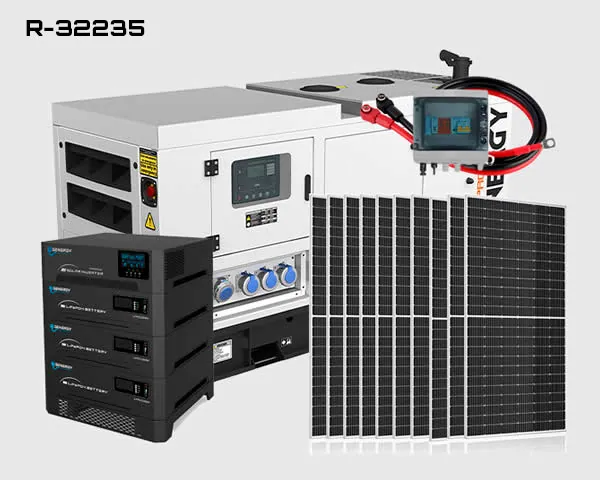
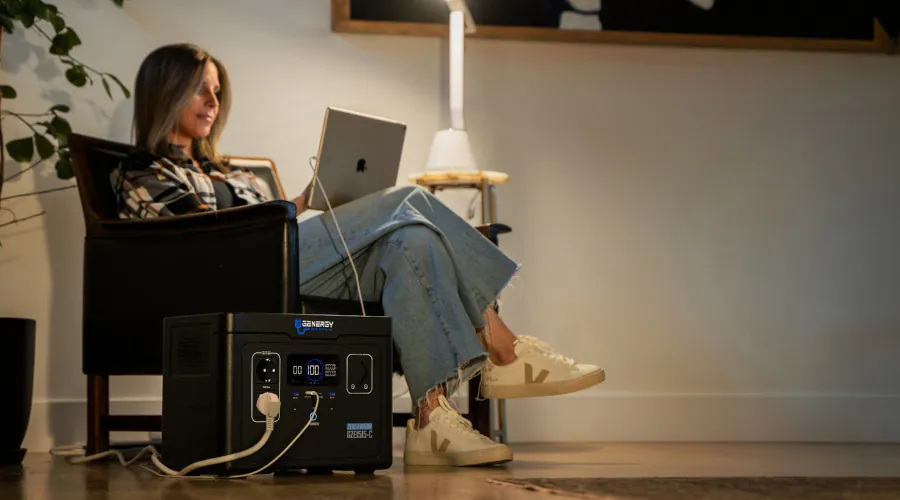
Related topics
Frequently asked questions about how solar batteries work
How do solar batteries work?
They work by storing the surplus energy generated by the solar panels during the day. They then release that energy when the panels are not producing or when the home needs more electricity than is being generated.
Does a solar battery produce electricity?
No. The battery doesn't produce electricity: the solar panels do. The battery only stores that energy to use it later.
Do solar batteries work at night?
Yes. In fact, one of their main functions is to let you use solar energy at night, when the panels aren't producing.
What happens when the battery is full?
When it is full and the panels keep producing surplus, the energy can be fed into the grid if the installation is connected and configured for it.
What happens when the battery is discharged?
When it is discharged, the home can go back to consuming electricity from the grid or from a backup system, depending on the type of installation.
What is the best solar battery for a home?
It depends on consumption, panel power, surplus and budget. In many homes, lithium batteries are a common choice because of their efficiency, service life and low maintenance.
Is it mandatory to install batteries with solar panels?
No. A solar installation can work without batteries. But batteries help make better use of surplus and let you use solar energy when there is no production.
How long does a solar battery last?
It depends on the technology, charge cycles, depth of discharge, temperature and use. Lithium batteries usually offer a longer service life than older technologies.