How a solar kit works: a clear step-by-step guide
By the Genergy technical team · Spanish manufacturer of generators and photovoltaic solutions (+15 years) · updated July 2026 · 12 min read.
Table of contents
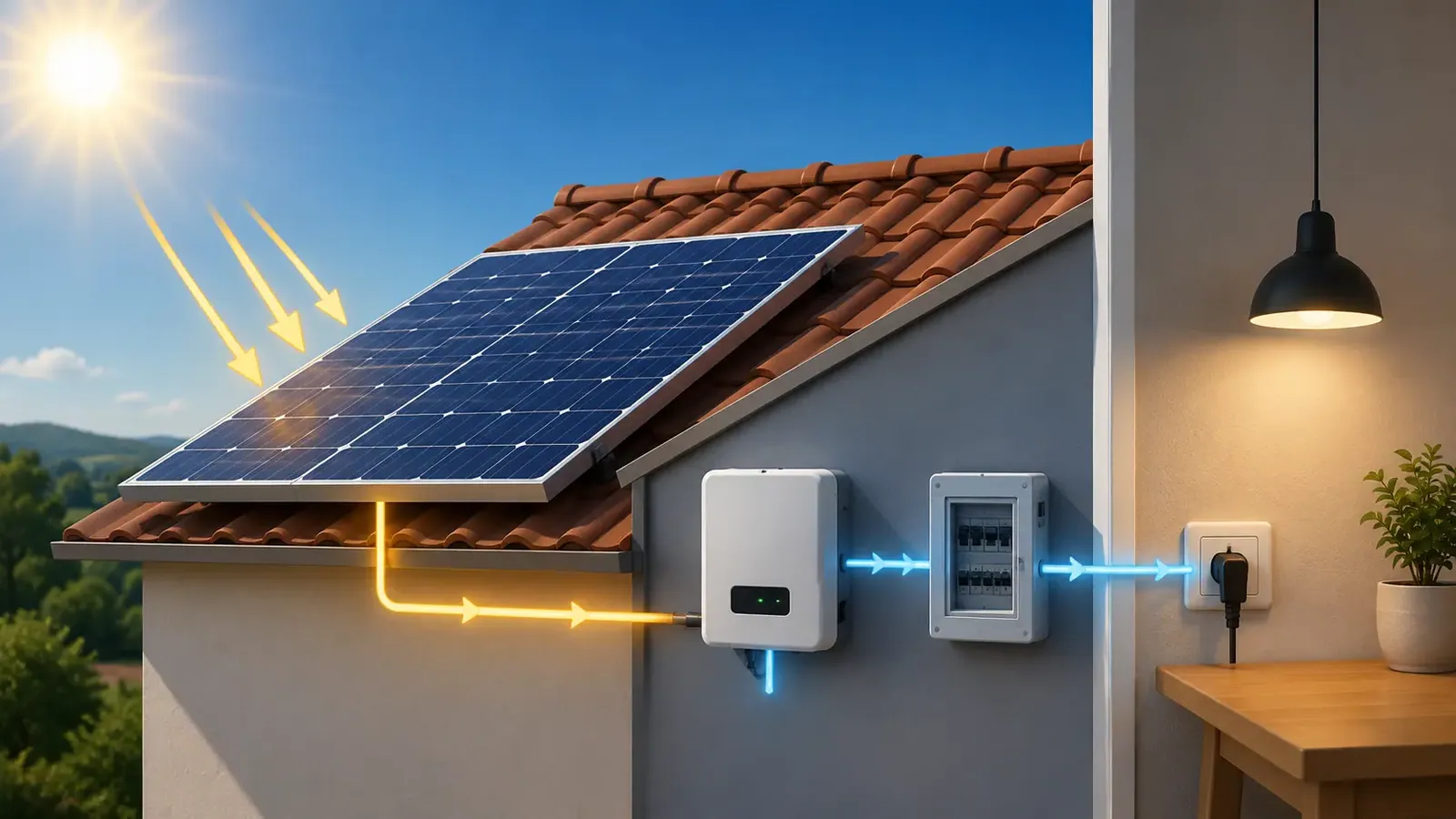
Understanding how a solar kit works is easier than it seems. Even though it sounds technical (panels, inverter, direct current, alternating current, batteries, surplus), the idea is simple: a solar kit captures sunlight, converts it into electricity and prepares it for use at home. It works in two phases: capture (the panels absorb light and generate direct current) and conversion (the inverter transforms that direct current into alternating current, the kind household appliances use). Put simply: the sun hits the panel, the panel produces electricity, the inverter adapts it and your home consumes it. Depending on the type of kit, that energy is used right away, stored in batteries or combined with the grid.
A solar kit can be used for grid-connected self-consumption, for off-grid installations where electricity doesn't reach, or as portable solutions. If you are looking for a complete solution to produce electricity at home, a self-consumption solar kit brings together panels, inverter, batteries and components designed to work together.
Solar kit vs complete photovoltaic installation
The difference lies less in how it works than in the format. A complete installation is designed from scratch with separately chosen components; a solar kit already bundles the main elements, which usually makes it easier to buy, install and expand. It is a more accessible way into self-consumption, although not all kits serve the same purpose: a kit for a grid-connected home is not the same as one for an off-grid house, a caravan or occasional use.
What types of solar kits exist
| Type of solar kit | What it is for |
|---|---|
| Grid-connected solar kit | Reduces the home's electricity consumption by using solar energy during the day |
| Off-grid solar kit | Lets you have electricity where there is no grid connection |
| Solar kit with battery | Stores energy to use when there is no sun |
| Portable / plug-in solar kit | Mobile uses, camping, emergencies or occasional backup; balcony "plug & play" kits provide a small amount of support |
The choice depends on one specific question: do you want to save on your bill, have autonomy or have energy anywhere?
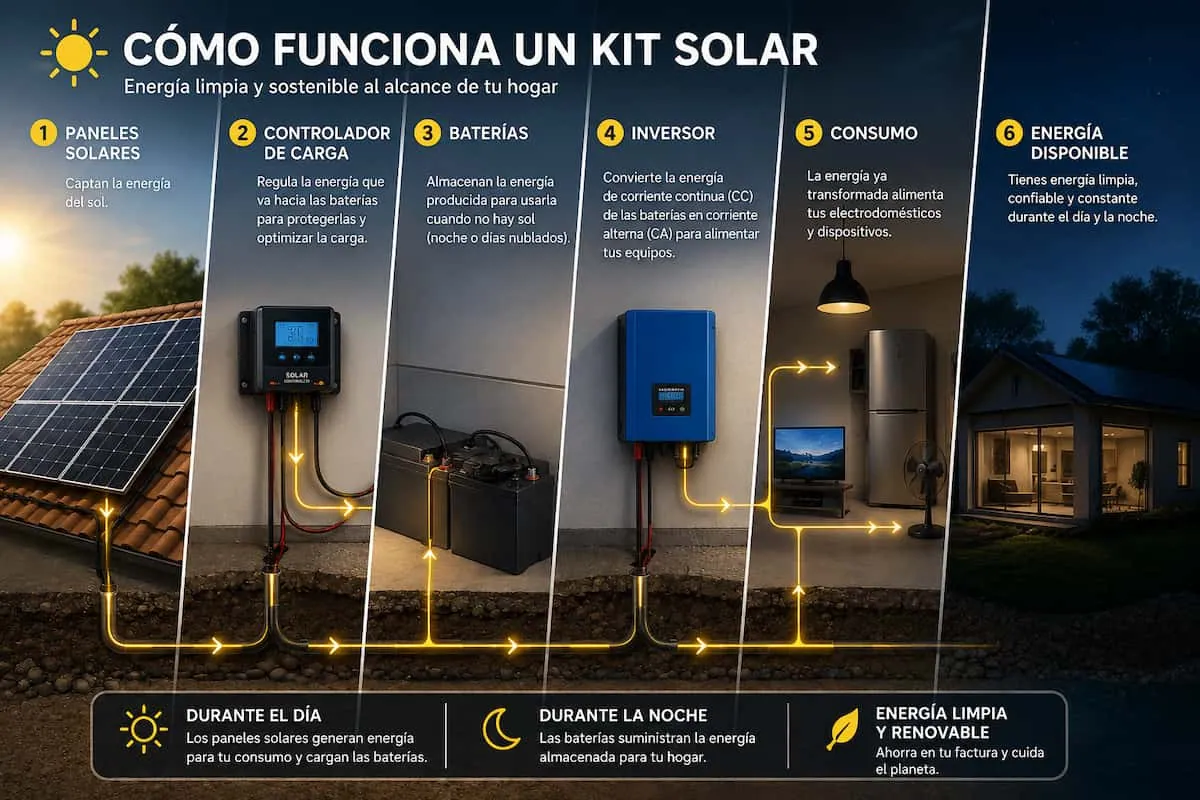
How a solar kit works step by step
1. The panels capture sunlight
It all starts with the photovoltaic panels, made up of cells that react when they receive light. An important point: panels don't need heat, they need light. That's why they produce electricity even on cloudy days, although with lower performance; the more radiation they receive, the more energy they generate.
2. The panels generate direct current
When they receive light, the panels produce electricity in the form of direct current (DC). But most appliances don't run on DC, they run on alternating current. That's why a solar kit isn't just "putting panels in the sun": that energy still needs to be adapted.
3. The inverter transforms DC into alternating current
The solar inverter is the heart of the kit: it converts the direct current from the panels into alternating current (AC), the kind used by lights, sockets and appliances. Without an inverter, the energy from the panels could not be used normally in most home installations.
4. The electricity is used by the appliances
Once converted to AC, the electricity enters the home's installation and powers the active loads (refrigerator, washing machine, lighting, water pump, chargers...). The great thing about self-consumption is that the energy is used first inside the home, reducing what you buy from the grid. The better your consumption matches the sunny hours, the more you get out of it.
5. Surplus energy is stored or sent to the grid
When you produce more than you consume, depending on the system: it is stored in batteries, sent to the grid as surplus, limited with zero export, or the charge controller manages the charging in off-grid installations. Not all solar energy is always used 100%: it depends on the design, the consumption and whether there is a battery or compensation.
What components a solar kit has
Almost all kits share these elements: the photovoltaic panels capture light and convert it into electricity (their power is measured in watts peak, Wp); the inverter or microinverter converts DC into AC (microinverters help with partial shading or multiple orientations); the charge controller, present in kits with batteries, controls charging to prevent overcharging or damage; the batteries store electricity for use at night or on cloudy days (not all kits include them); and the mounting structure, wiring and electrical protections, which are not secondary: an installation must be safe and withstand outdoor conditions.
How a grid-connected solar kit works
It works together with the home's installation: during the day the panels produce and that energy is consumed at home; if there is a shortfall, it is drawn from the grid; if there is a surplus, it is sent or managed according to the configuration. It is the most common type for self-consumption because it lets you save without depending on the sun alone.
If you produce less than you consume (panels at 1,000 W and a home at 1,500 W), the kit provides part and the grid covers the rest: you don't lose power, you just buy less. If you produce more than you need (2,000 W produced, 800 W consumed), that surplus energy is sent out as surplus, stored or limited with zero export. Surplus is the solar electricity you produce but don't consume at that moment; in legalized installations it can be credited on your bill, although the most profitable approach is still to self-consume as much as possible.
How an off-grid solar kit works
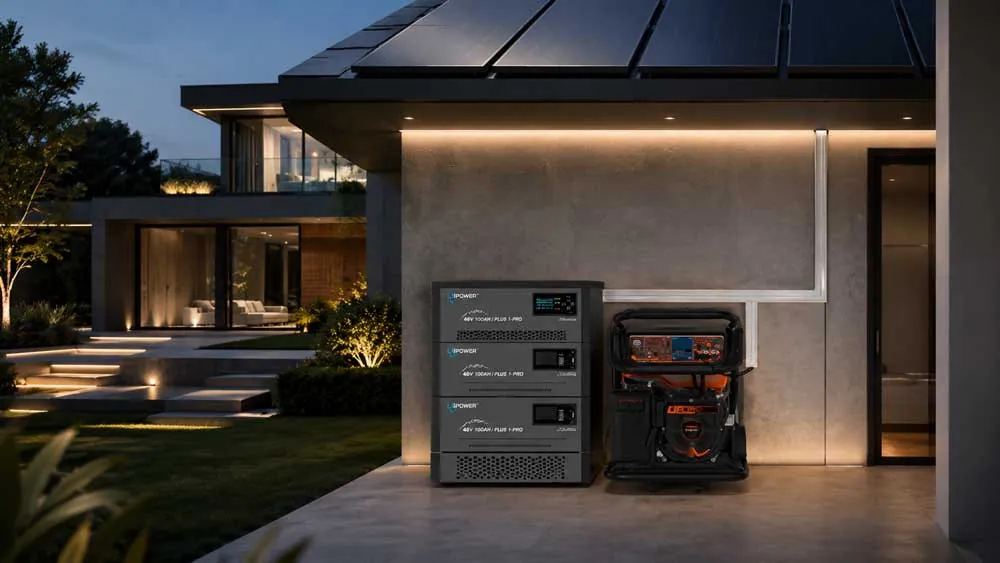
It is designed for places with no grid connection (country house, farm, shed, rural area). The system must produce, manage and store energy by itself, so batteries are almost essential: during the day the panels charge the batteries and at night the home consumes what has been stored. Without batteries you would only have power while the panels are producing. In off-grid installations with significant loads, a backup electric generator covers several days of low production or peaks the solar system can't meet; it is not always necessary, but it is worth considering when continuous supply must be guaranteed.
Solar kit with or without a battery: which is better
It depends on your consumption, your budget and the independence you are looking for. A kit with a battery lets you use solar energy at night, make better use of surplus, improve autonomy and have backup during outages (if the system is set up for it); its weak point is the price, as it increases the initial investment. A kit without a battery is cheaper and simpler, and works very well when you consume during sunny hours (remote work, or scheduling the washing machine, dishwasher or water heater for solar hours).
Consider one if you consume a lot at night, want more independence from the grid, have an off-grid installation, want to make use of surplus, are looking for backup during outages or plan to expand. If you expect to grow (more battery, more autonomy), scalable systems let you adapt the solution without starting from scratch.
How much energy a solar kit can produce
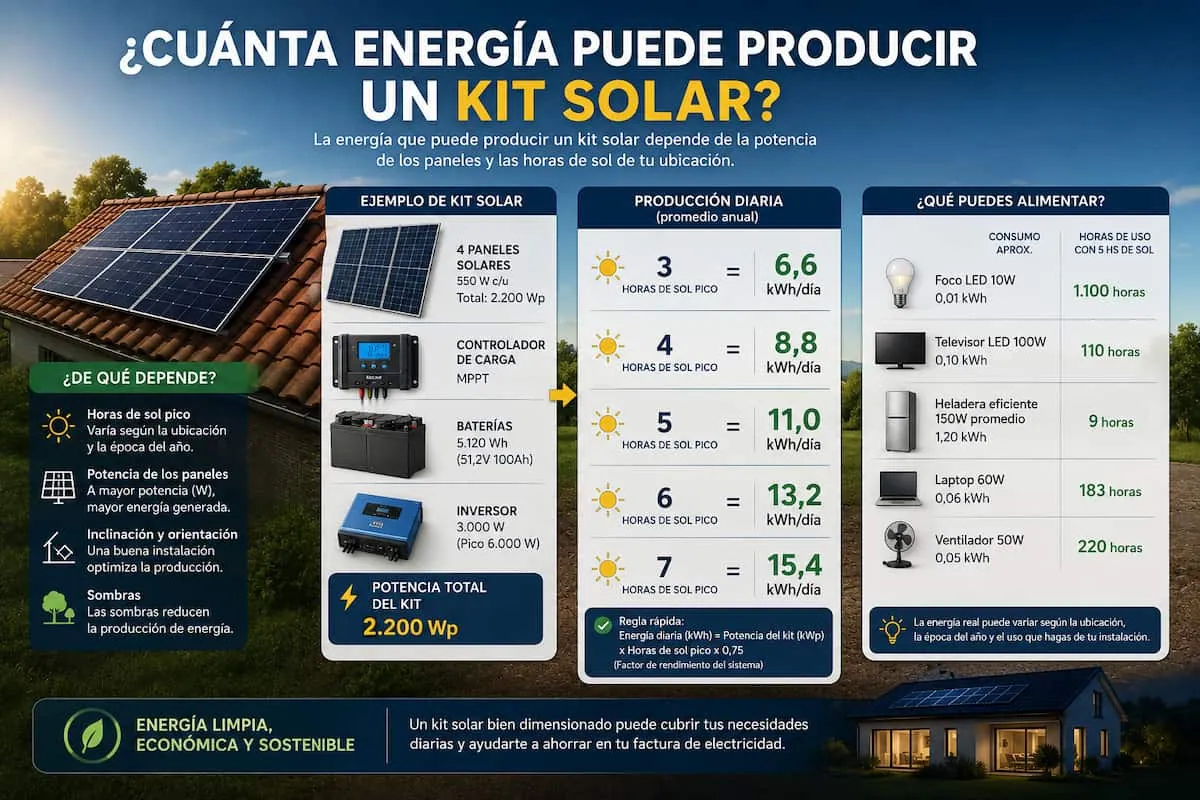
Production depends on many factors, not just the power of the panels: hours of sunlight, orientation (in Spain, south-facing is the goal whenever possible), tilt, shading (one of the biggest enemies: even a small shadow reduces production more than it seems), temperature, inverter efficiency and panel cleanliness all have an influence. The same kit produces more or less depending on where it is installed, which is why it pays to study the space before buying. And to size it properly, check your daily consumption in kWh on your bill and when you consume: that determines the panel power, the type of inverter and whether a battery is worth it.
Where to install a solar kit to get the most out of it
A pitched roof is the most common option: it uses an unused surface and offers a natural tilt (check orientation, condition and shading). A terrace or flat roof lets you orient and tilt the panels with mounting structures, and makes maintenance easier. The ground or garden is useful on farms and large spaces, with optimal orientation, although it takes up room and is more exposed. A balcony or facade works as a supplement in small spaces (they produce less than a roof installation). For mobile uses (getaways, camping, light tools), a portable solar generator is a practical alternative with no fixed installation.
Common mistakes when choosing or installing a solar kit
The most frequent ones: buying without calculating your actual consumption (look at your bill and daily kWh before choosing by power or price); ignoring shading and orientation; choosing the wrong inverter (it must be compatible with the panel power and the type of installation: grid-connected, off-grid, with battery; a hybrid one makes it easier to add batteries later); not planning for batteries or expansion (check whether the system allows growth); and neglecting electrical protections (fuses, circuit breakers, residual current devices and surge protection are essential for safety).
What to look at before buying a solar kit
Don't choose on price alone. Look at the panel power (matched to your consumption), the type of inverter (it must fit grid-connected, off-grid, hybrid or battery setups), battery compatibility if you want to store energy, the warranties and certifications (a cheap kit without spare parts or support ends up costing more) and the ease of installation. That said, the electrical side must be taken seriously: if it is connected to the home's grid, it is advisable to use professionals and comply with the regulations.
"All-inclusive" solar kits from Genergy
Genergy's PLAN SOLAR kits are photovoltaic kits with panels, inverter and (optionally) a battery, designed to work together. Filter according to whether you need pure self-consumption or storage:
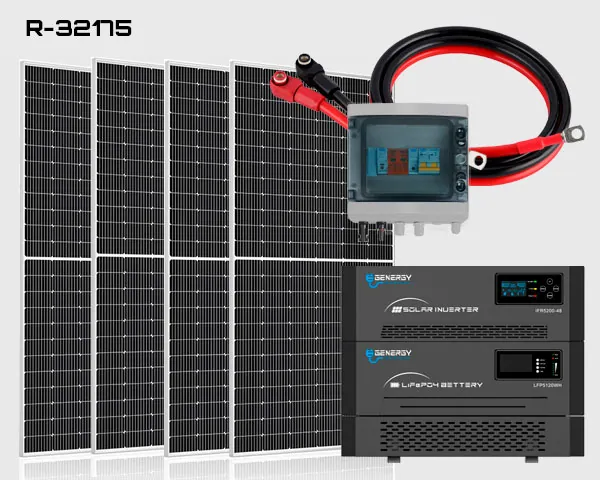
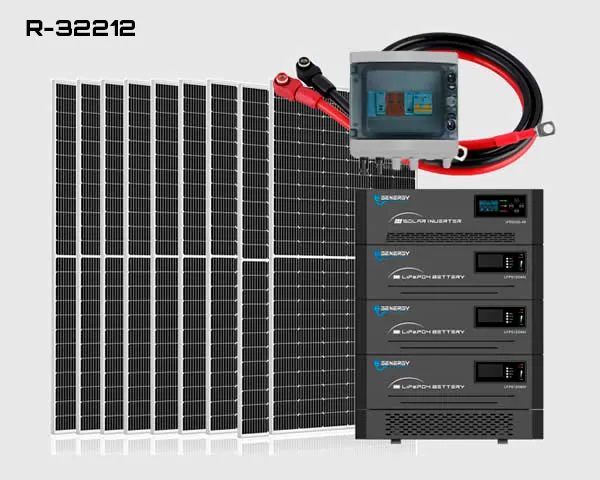
Plan Solar Rigel
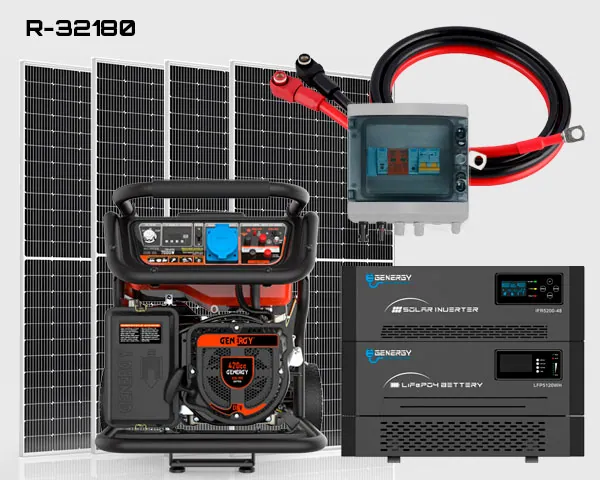
Plan Solar Vega
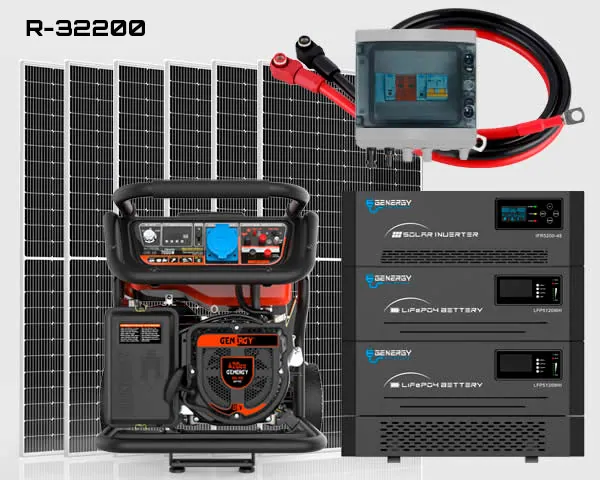
Plan Solar Rigel Backup-A
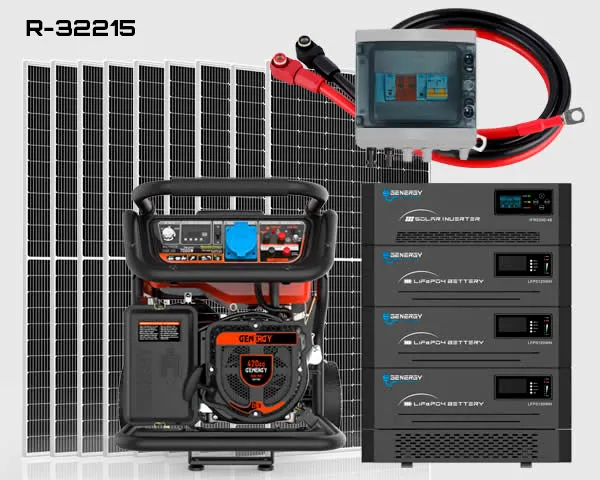
Plan Solar Sirius Backup-A
Plan Solar Vega Backup-A
👉 See the full range: All-inclusive photovoltaic systems · Solar kit with battery · Scalable systems · Questions? Talk to a technician.
Want to know which kit suits your home?
Tell us your daily consumption in kWh, whether you have grid access or live off-grid and what your roof is like, and we'll help you size the right solar kit (and battery). We are the manufacturer. No obligation.
Talk to a Genergy technicianConclusion: the path of solar energy at home
A solar kit follows a logical path: it captures light, generates direct current, converts it into alternating current and sends it to the home to power your loads. If there is a battery, it stores energy; if it is grid-connected, it combines solar production with electricity from the utility; if it is off-grid, it manages production and storage by itself. The key idea is that it is not just a set of panels, but a system in which each component has a function: the panels capture, the inverter converts, the batteries store, the protections keep things safe and the installation distributes. What matters is knowing what you need: saving on your bill, having energy in an off-grid area, storing energy, having backup or building a system that can grow.
Related categories

Related topics
Frequently asked questions about how a solar kit works
Does a solar kit work when it's cloudy?
Yes, but it produces less energy. Panels need light, not heat, so they generate electricity on cloudy days, although with lower performance than on sunny days.
Does a solar kit work at night?
No. At night the panels don't produce electricity because they receive no light. To use solar energy at night you need batteries or to stay connected to the grid.
Can I power my whole house with a solar kit?
It depends on the size of the kit, your consumption and whether you have batteries. A home with low consumption can cover a large share of its demand, but to power the whole house the panels, inverter and storage must be properly sized.
Do I absolutely need batteries?
Not always. With grid-connected kits you can use solar energy during the day without a battery. Batteries matter more if you want to use energy at night, increase autonomy or have an off-grid installation.
What happens to the electricity I don't use?
It can be stored in batteries, sent to the grid as surplus or limited through a zero-export system. It depends on the type of installation and how the kit is configured.
Can a solar kit be plugged into a socket?
Some small kits ("plug & play" or balcony type) are designed for simple connection, but not all of them are. Before connecting any solar system to the electrical installation you must check the regulations, safety, power and compatibility; if it is connected to the home's grid, it is advisable to use a professional.
What does the inverter do in a solar kit?
It transforms the direct current produced by the panels into alternating current, which is the electricity most household appliances use. It is the component that makes solar energy usable.