How to install solar panels at home step by step (2026 Guide)
By the Genergy technical team · Spanish manufacturer of generators and photovoltaic backup systems (15+ years) · updated July 2026 · 14 min read.
Table of contents
- What you need to install solar panels at home
- Before installing: check whether your home is suitable
- How to install solar panels step by step
- How long it takes to install solar panels
- Components of a home solar installation
- Solar panel installation by type of home
- Permits and procedures to install solar panels in Spain
- How much it costs to install solar panels at home
- Self-consumption, surplus energy and virtual battery
- Solar panel maintenance
- Can you install solar panels yourself?
- Common mistakes to avoid
- Which system and equipment to choose for your home
- Conclusion
- Frequently asked questions
Installing solar panels at home is one of the best ways to reduce your electricity bill and gain energy independence. But it is not just a matter of putting panels on the roof: you need to study the home's consumption, review the available space and the roof, choose the right system and legalize the installation so that it works and you can access surplus compensation and subsidies.
In this guide you will see how to install solar panels step by step, which permits you need in Spain, roughly how much it costs, what maintenance they require and which system to choose for your home.
What you need to install solar panels at home
Before getting into the step-by-step process, this is what you need to install solar panels in a home and set up a self-consumption home photovoltaic installation:
- A suitable home: a roof in good condition, a usable orientation and enough space (about 5–7 m² per kWp).
- The equipment: panels, mounting structure, inverter, protections, wiring and, optionally, a battery and monitoring.
- An authorized installer for the electrical connection and the Electrical Installation Certificate (CIE).
- Legalization: works permit or notification, registration with the regional Industry department and, if you feed energy into the grid, a surplus compensation contract.
In the following sections you will see each point in detail.
Before installing: check whether your home is suitable
Not all homes produce or save the same. Before buying anything, review these four points, because they determine the design, the price and the return on investment.
1. Your actual electricity consumption
Look at your bill and note down the kWh/year and the time slots in which you use the most. If you consume mainly during the day, you will make use of direct solar power; if you use more at night, a battery or surplus compensation will make sense. An average home in Spain consumes about 3,500–5,000 kWh/year, which can usually be covered with an installation of 2.5–5 kWp (approximate).
2. Condition and type of roof
Check the condition of the roof before installing: if it needs repair, do it first (removing panels afterwards is expensive). Important: if the roof is made of asbestos cement (uralite), panels cannot be fixed to it and its removal requires an authorized company. The sale of asbestos has been banned in Spain since 2002.
3. Orientation, tilt and shading
The ideal orientation is south; east and west are valid depending on your consumption pattern (east if you use more in the morning, west in the afternoon); north is ruled out. The optimal tilt on the mainland is around 30–35°. Check for shade from chimneys, trees, antennas and buildings at different times of day: even a small shadow can bring down the output of an entire string of panels.
4. Available space
Each kWp takes up approximately 5–7 m² of modules. With that you can estimate how many panels will fit on your roof, flat roof or terrace.
How to install solar panels step by step
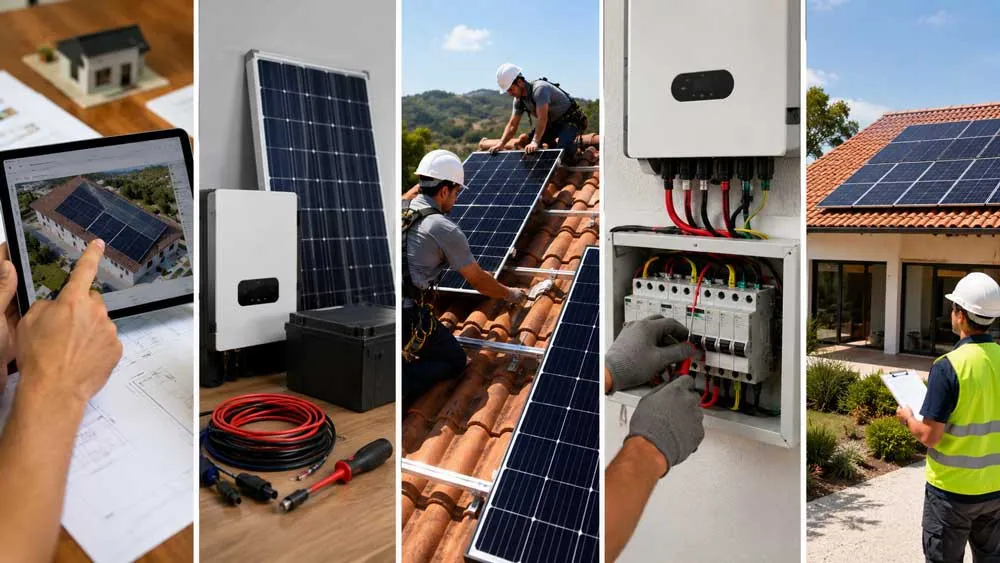
A home installation is a complete system: panels, mounting structure, wiring, inverter, protections, electrical panel and legalization. These are the main steps:
Step 1: design and sizing
Define the number of panels, the power (kWp), the inverter, whether there will be a battery, whether it will be grid-connected or off-grid, the protections and any planned expansion (aerothermal heating, electric car). If you expect to grow, consider a scalable system.
Step 2: choosing the equipment
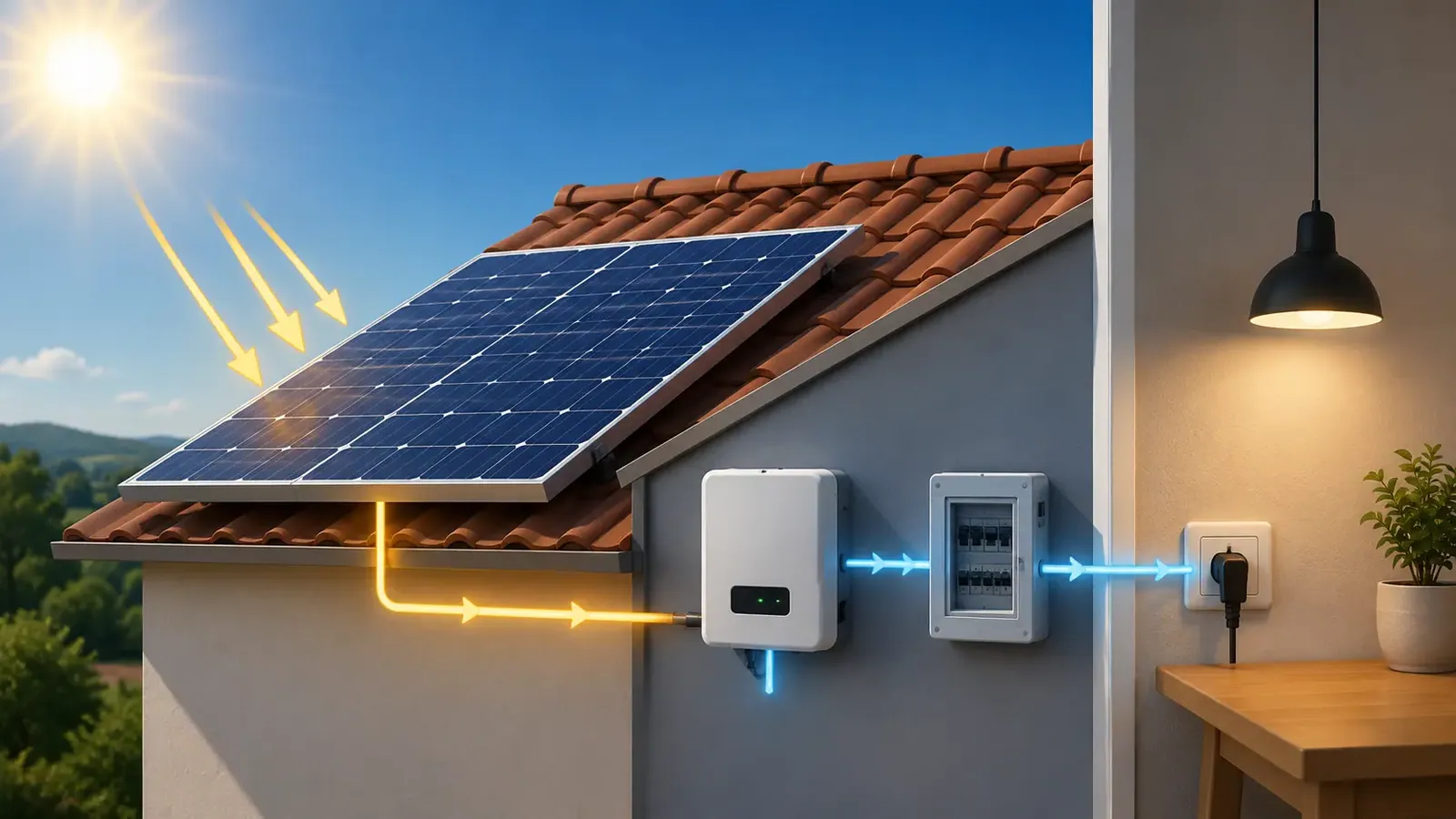
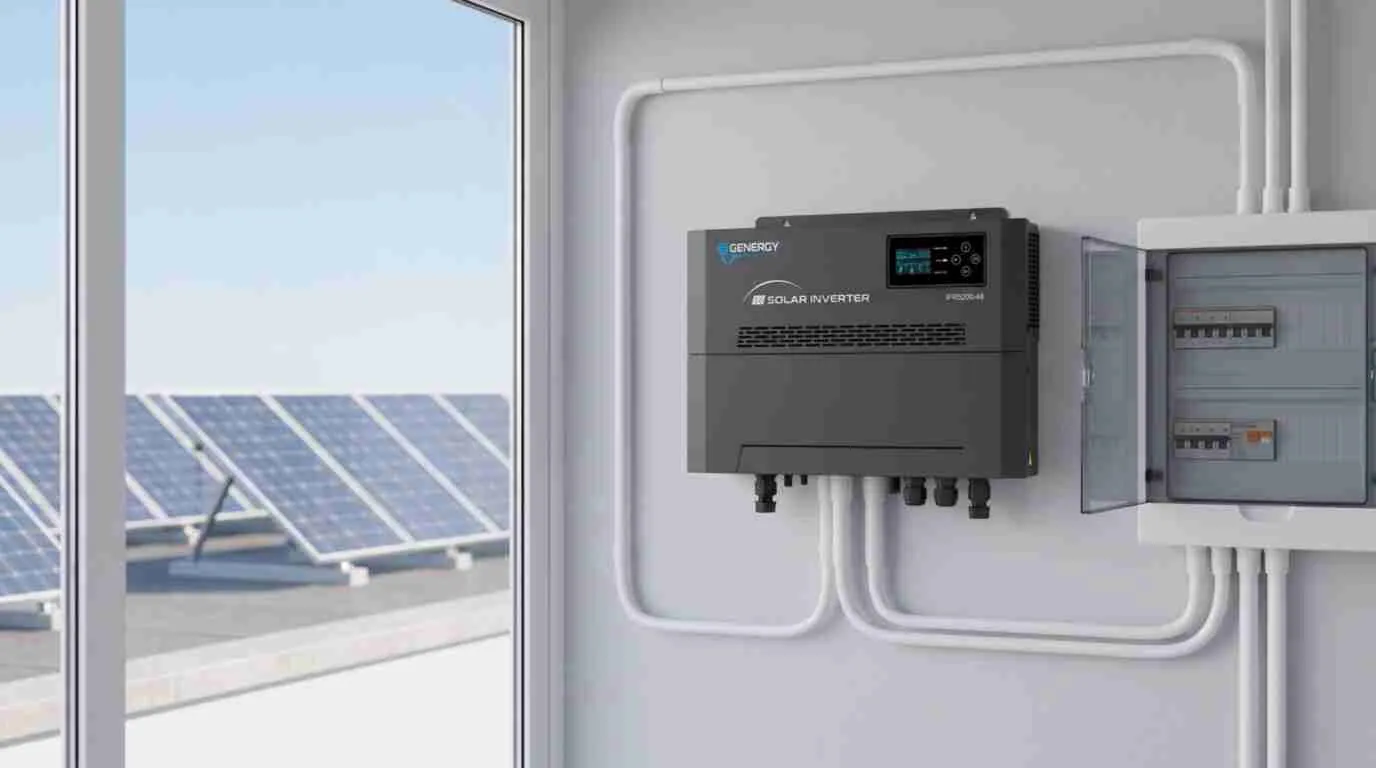
The panels generate direct current and the inverter converts it into alternating current for the home. Here you choose panels, inverter (string or microinverters) and, optionally, a battery if you want to store energy for the night.
Step 3: mounting the structure and placing the panels
When mounting the solar panels, the structure must be fixed with specific anchors on a pitched roof, or with ballasted or tilted structures on a flat roof or terrace. Placing the panels correctly is a critical part because they will be exposed to wind, rain and temperature changes. This work should be done by qualified personnel, although the user can prepare the site and take measurements.
Step 4: connection to the inverter and the electrical panel
Panels → inverter → electrical panel, with the regulatory DC and AC protections. This phase is carried out or supervised by an authorized installer.
Step 5: legalization and commissioning
It includes the technical report or project, the Electrical Installation Certificate (CIE), registration with the Industry department of your autonomous community and, if you feed surplus energy into the grid, a compensation contract with your energy retailer.
How long it takes to install solar panels
The physical installation of a home system is quick: the work usually takes 1–3 days depending on the size and difficulty of the roof. What lengthens the timeline is not the installation itself, but the paperwork and legalization, which can add several weeks depending on the autonomous community. Preparing the documentation properly from the start is what makes the process truly smooth.
Components of a home solar installation
| Component | Function |
|---|---|
| Solar panels | Generate electricity from sunlight |
| Support structure | Secures the panels to the roof, flat roof or terrace |
| Inverter | Converts direct current into alternating current |
| Protections (DC/AC) | Electrical safety against overvoltages and faults |
| Wiring and connectors | Connects all the elements of the system |
| Battery (optional) | Stores energy for use when there is no sun |
| Monitoring | Shows production and consumption in real time |
For off-grid homes or those with little dependence on the grid, an off-grid solar inverter may be needed.
Solar panel installation by type of home
A house with its own roof is not the same as an apartment or an isolated home. These are the particularities for each type:
Detached house or villa
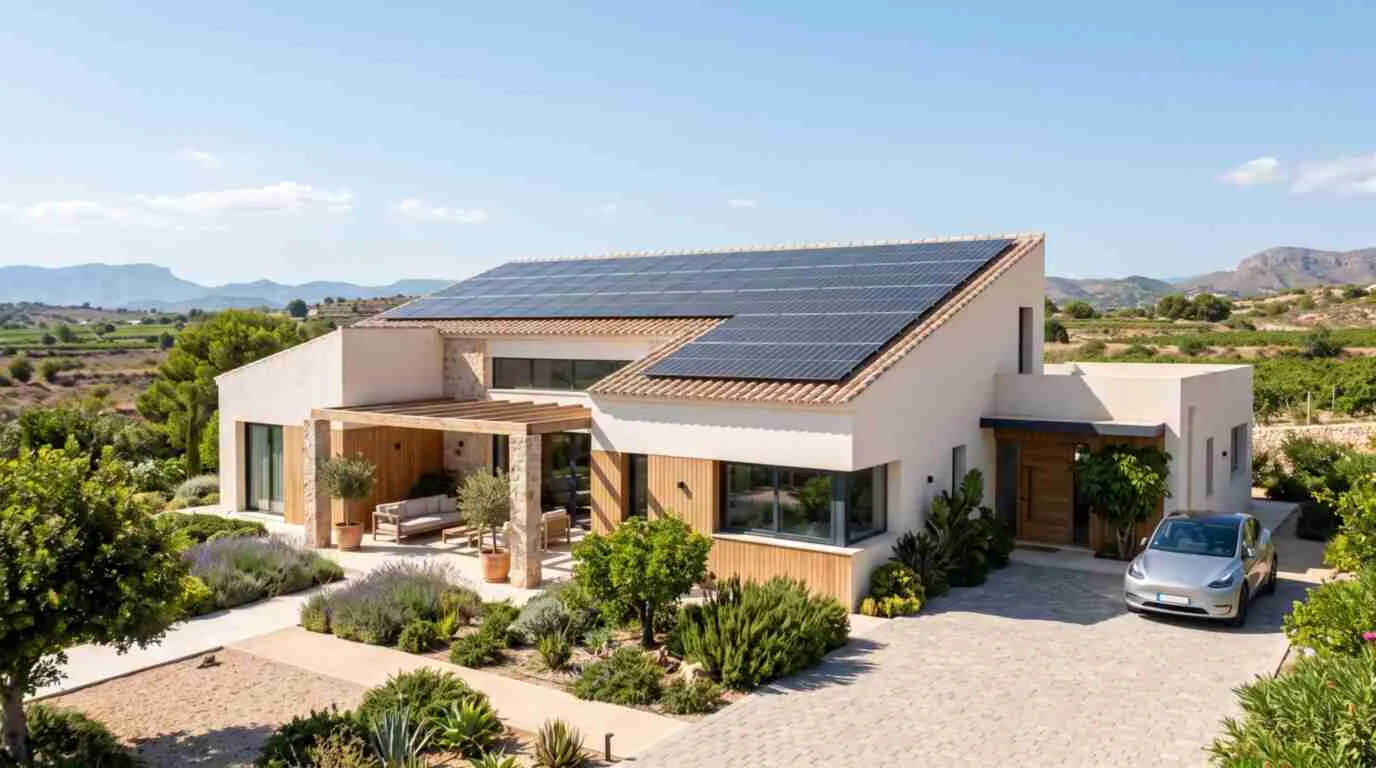
This is the simplest case: you usually have your own roof and plenty of space. The installation of solar panels in a detached house or villa lets you size the system to your consumption and expand in the future. An all-inclusive photovoltaic system fits well here.
Apartment or penthouse (terrace)
To put solar panels on an apartment or penthouse, you make use of the private terrace or the roof. Even if the terrace is for private use, it may affect common elements of the building, so check the community bylaws and municipal regulations before installing anything. The usable space is usually smaller, so the installed power will be tighter.
Country house or isolated home
In a country house without easy access to the grid, the installation is usually off-grid with batteries, and it is advisable to reinforce it with backup for days without sun. For occasional loads or transportable solutions, a portable solar generator can also be a good fit. See the photovoltaic backup section below.
Permits and procedures to install solar panels in Spain
This is where most people fail, and what many users are looking for. It depends on the municipality and the autonomous community, but the general framework is as follows:
| Procedure | What it involves |
|---|---|
| Works permit or notification | Depending on the city council, a minor works permit or a responsible declaration. More demanding on protected land or in historic centers. |
| Electrical Installation Certificate (CIE) | Issued by the authorized installer. Essential for legalization. |
| Registration with Industria | Technical report or project in your autonomous community, depending on power. |
| Surplus compensation contract | With your energy retailer if you feed energy into the grid (RD 244/2019). |
The names and the framework (CIE, RD 244/2019, the 2002 asbestos ban) are stable; the specific details vary by autonomous community and should be confirmed before signing a contract.
How to register your electricity supply and legalize a solar panel installation
Once the installation is mounted, to register and legalize it the installer processes the Electrical Installation Certificate (CIE) and the registration with Industria; afterwards you sign the surplus compensation contract with your energy retailer so that the energy you feed into the grid is deducted from your bill. If you also change retailer or account holder, that is the time to register or update the supply with self-consumption already declared. Without this legalization you cannot access surplus compensation or subsidies.
How much it costs to install solar panels at home
The cost is best understood by installed power (€/kWp) and by the total cost of the installation, not just the price of the panel. The factors that affect it most are: number of panels and power, type of inverter, whether it includes a battery, roof difficulty, distance to the electrical panel, legalization, labor and component quality.
That is why, when comparing quotes, check what each one includes (equipment, mounting structure, protections, legalization and warranty) and don't focus only on the final price. If you want a turnkey solution without coordinating each part, consider all-inclusive photovoltaic systems.
Don't size the installation based only on the price of the panel. An installation well matched to your consumption, with a good mounting structure and protections, pays for itself better than a cheap, poorly planned one that has to be redone or that you cannot legalize. Always ask for a detailed quote itemized by line item.
Subsidies, rebates and taxation
In addition to savings on your bill, there may be incentives (they vary by area and call): IBI rebate and ICIO rebate in many city councils, IRPF deductions for energy efficiency works and, where applicable, regional subsidies. Confirm validity and percentages in your municipality and autonomous community.
Self-consumption, surplus energy and virtual battery
With a grid-connected installation you consume your solar energy when you produce it and draw from the grid when you don't. The energy you don't use can be compensated on your bill (simplified surplus compensation). As an alternative or complement to a physical battery, some retailers offer the "virtual battery": a monetary balance for your surplus that you deduct from later bills. For real independence at night, the physical battery is still the option; for long outages, see the backup section.
Solar panel maintenance
Maintenance is low, but not zero:
- Cleaning: 1–2 times a year (more in dusty areas, areas with pollen or near the sea). See how to clean solar panels.
- Checking connections and protections: annually, preferably by the installer.
- Monitoring: check the app or portal to detect drops in production in time.
Can you install solar panels yourself?
For small kits (a shed, basic loads or a solar panel on a camper van) yes, with the right knowledge. For a home installation connected to the electrical panel, it is not recommended: it involves working at height, handling direct current and complying with regulations, and without the CIE or legalization you lose surplus compensation, subsidies and part of the warranties. What you can prepare yourself: review your bills, calculate consumption, photograph the roof, check shading, measure the space and ask for several quotes.
Common mistakes to avoid
- Sizing the power incorrectly (falling short or oversizing).
- Not studying shading at different times and seasons.
- Skimping on the mounting structure or protections: they are safety, not accessories.
- Not legalizing: problems with the distribution company, surplus energy, subsidies and the future sale of the home.
Which system and equipment to choose for your home
Different solutions fit different cases: individual panels to expand an installation, kits with a battery, or photovoltaic backup if you are worried about blackouts. Filter by type:
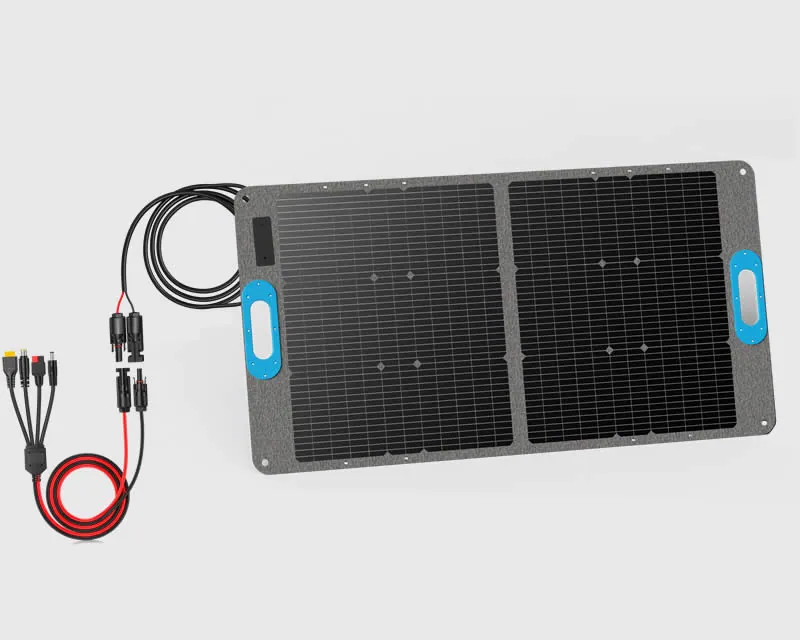
Solar panel SUN100W
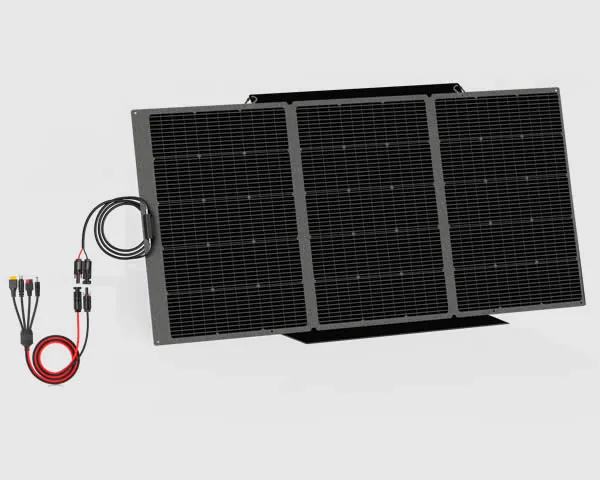
Solar panel SUN300W
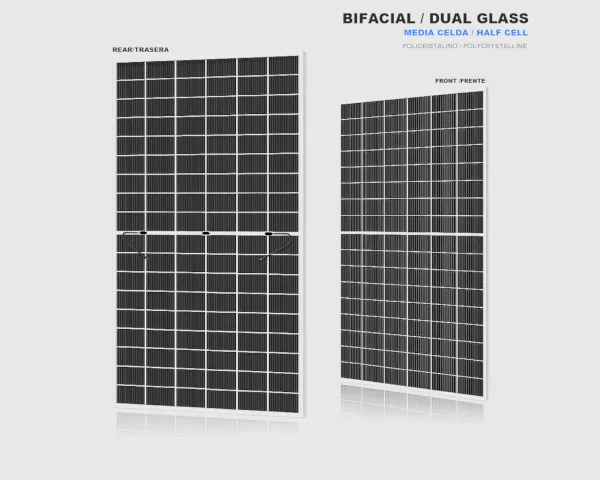
Solar panel HC660W
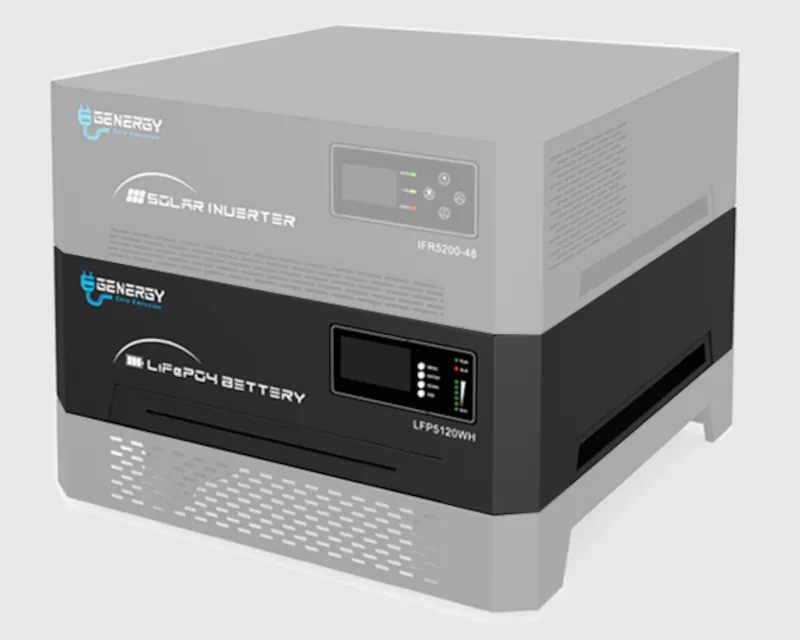
LFP5120WH battery
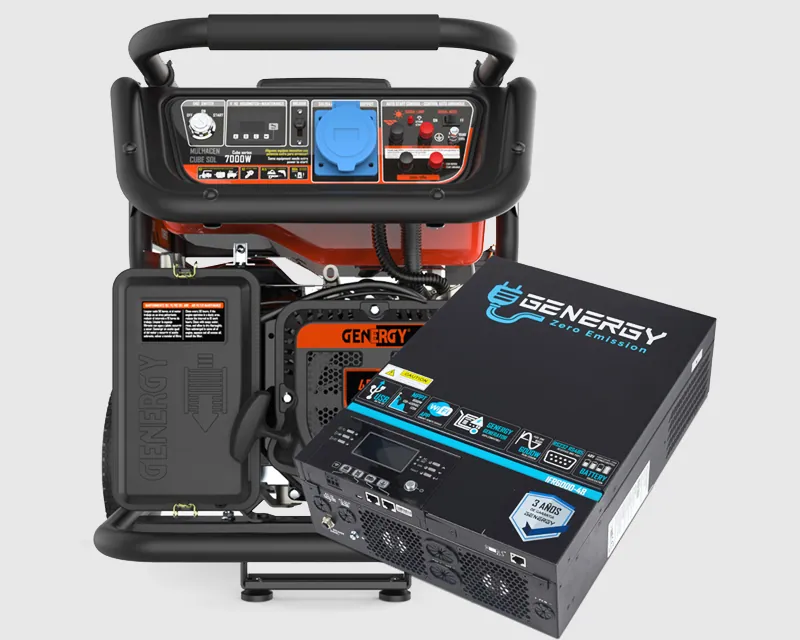
Kit solar ECO-6000
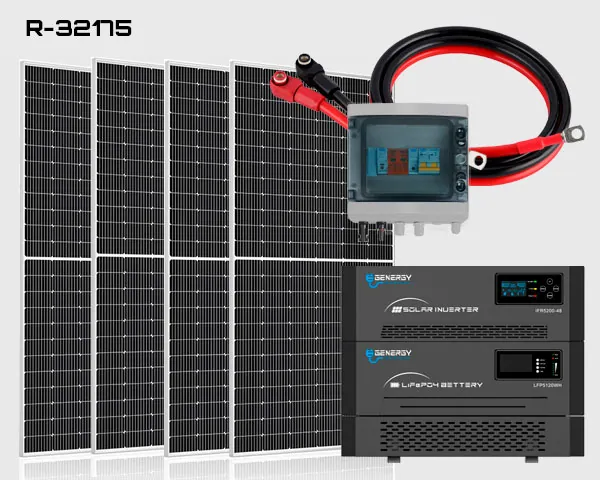
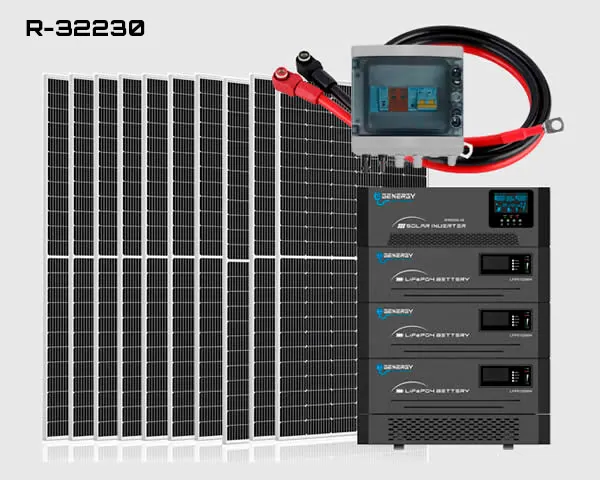
Plan Solar RIGEL
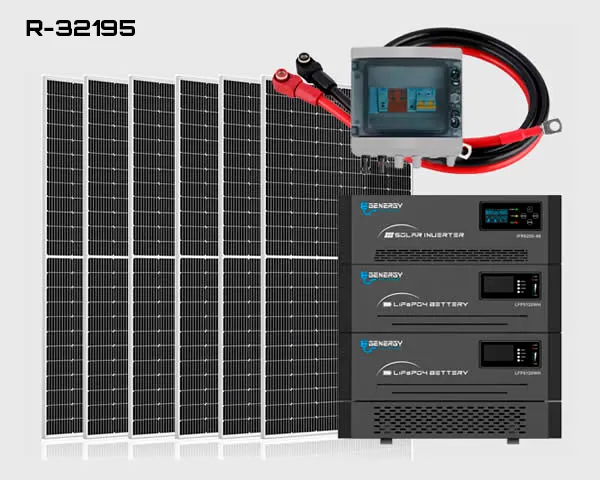
Plan Solar SIRIUS
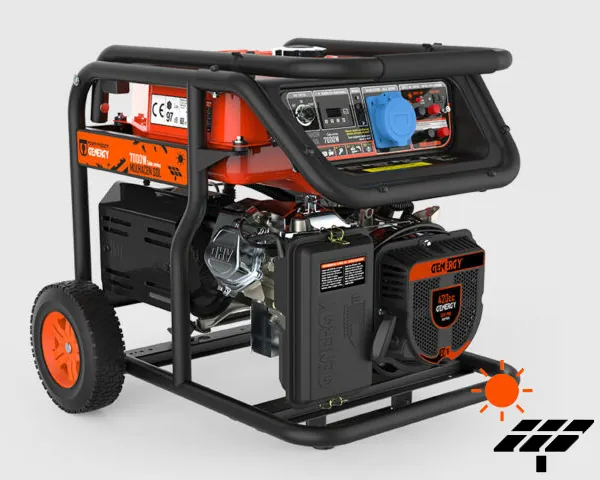
Mulhacén SOL 7000W Generator
👉 See the full range: All-inclusive photovoltaic systems · Scalable systems · Photovoltaic backup · Questions? Talk to a technician.
Not sure which installation you need?
We help you calculate the power and the system your home needs —panels, inverter, battery and, if necessary, backup for blackouts—, with no obligation.
Talk to a Genergy technicianConclusion
Installing solar panels at home is worthwhile if done sensibly: study your consumption and your roof, size the system properly, mount it safely, legalize it and take advantage of subsidies and surplus compensation. Prepare the data yourself, but leave the electrical work and legalization to an authorized installer. And if you want continuity during long outages, combine your installation with a photovoltaic backup.
Related categories
Related topics
Frequently asked questions
What do you need to install solar panels at home?
You need a suitable home (a roof in good condition, a usable orientation and enough space), the equipment (panels, mounting structure, inverter, protections and wiring), an authorized installer for the connection and the CIE, and legalization with the works permit, registration with the Industry department and the surplus compensation contract.
What permits do I need to install solar panels?
Depending on your municipality, you need a minor works permit or a responsible declaration, plus the Electrical Installation Certificate (CIE) issued by the installer and registration with the Industry department of your autonomous community. If you feed energy into the grid, you also need the surplus compensation contract with your energy retailer.
Can I install solar panels myself?
For small kits, yes, with the right knowledge; for a home installation connected to the electrical panel, it is not recommended. The electrical connection must be made or certified by an authorized installer and the installation must be legalized. Without the CIE or legalization, you lose surplus compensation, subsidies and part of the warranties.
How long does it take to install solar panels?
The physical installation is quick: the work on a home usually takes between one and three days, depending on the size and difficulty of the roof. What lengthens the process is the paperwork and legalization, which can add several weeks depending on the autonomous community.
How do I register the electricity supply if the home has solar panels?
Once the installation is legalized, the installer processes the CIE and the registration with the Industry department; afterwards you sign the surplus compensation contract with your energy retailer. If you change account holder or retailer, that is the time to register or update the supply with self-consumption already declared.
How do I install solar panels in an apartment or penthouse?
In an apartment or penthouse, you make use of the private terrace or the roof. Even if the terrace is for private use, it may affect common elements of the building, so check the community bylaws and municipal regulations before installing anything. The usable space is usually smaller.
How many solar panels do I need for a home?
It depends on your consumption. An average home in Spain (3,500 to 5,000 kWh per year) can usually be covered with an installation of between 2.5 and 5 kWp, and each kWp takes up about 5 to 7 m² of modules. Always match the power to your actual consumption and your future needs.
Can I install solar panels if my roof has asbestos or fiber cement?
Not directly on the asbestos. It must first be removed by an authorized company, because panels cannot be fixed onto asbestos fiber cement and handling it is dangerous. The sale of asbestos has been banned in Spain since 2002, so on older roofs it is advisable to check before installing.
How are solar panels mounted?
The panels are mounted on a structure fixed to the roof with specific anchors, or with ballasted or tilted supports on flat roofs and terraces. They are then connected to the inverter and the electrical panel with their protections. It is work at height and electrical work that should be left to qualified professionals.
Does the battery protect me during long blackouts?
A battery covers hours, not days. During prolonged outages or stretches without sun it can run out, unless it is greatly oversized. To ensure continuity, a photovoltaic backup system with automatic start keeps the home powered and recharges the batteries without you having to do anything.