What solar kit do I need for a house: guide to choosing it based on your consumption
By the Genergy technical team · Spanish manufacturer of generators and photovoltaic solutions (+15 years) · updated July 2026 · 12 min read.
Table of contents
- Which kit for your type of home
- How to calculate your kit step by step
- Table: power by consumption
- If you're connected to the grid
- If it's an off-grid home
- Country house or second home
- Panels, inverter and batteries
- If your consumption grows
- Common mistakes
- Genergy solar kits
- Frequently asked questions
Choosing which solar kit you need for a home isn't about buying the pack with the most panels or the one that promises the most power on paper. It's about something more practical: knowing how much energy you use, when you use it, whether you have a grid connection and how much real space you have to install the panels. With three answers —kWh per day, grid-connected or off-grid, and roof orientation— you can get quite close to the type of kit you need. As a reference, kits range from around 2 kW (low consumption or occasional use) to 5 kW or more (daily use with appliances, air conditioning or a water pump). The key is not to size it "by eye": a small kit falls short quickly, and one that is too large generates energy you can't use if you have no battery or surplus compensation.
Which solar kit you need for your type of home
Before getting into calculations, this table gives an initial guideline. It doesn't replace a personalized study, but it helps you understand roughly where you stand:
| Type of home | Approximate consumption | Indicative solar kit | Battery recommended? |
|---|---|---|---|
| Occasional-use home | Low | Approx. 2 kW | Optional |
| Second home | Low-medium | Approx. 2-3 kW | Recommended if there's no grid |
| Small primary residence | Medium | Approx. 3-4 kW | Depends on schedules |
| Primary residence with high consumption | Medium-high | 5 kW or more | Highly recommended |
| Off-grid home | Variable | Depending on consumption + autonomy | Yes, almost essential |
A kit for low consumption (lighting, an efficient fridge, small appliances, chargers, TV) can be around 2 kW, especially for limited use or a second home. For a primary residence with a fridge, washing machine, dishwasher, oven, water heater, air conditioning or remote work, 3 to 5 kW is typical, and it's worth considering a battery if a lot of power is used in the afternoon and evening. An off-grid home needs a different approach: it's not enough to produce, you have to store and deliver energy when you need it, so batteries become the center of the system.
How to calculate which solar kit you need for a home
Don't start by counting panels: start by calculating consumption. The right question isn't "how many panels do I need?", but how much energy does my home need each day and when does it use it?
1. Calculate your daily consumption in kWh
This is the most important figure. Get it from your electricity bill by dividing the monthly consumption by the number of days in the billing period:
| Monthly consumption | Approximate daily consumption |
|---|---|
| 150 kWh/month | 5 kWh/day |
| 300 kWh/month | 10 kWh/day |
| 450 kWh/month | 15 kWh/day |
| 600 kWh/month | 20 kWh/day |
2. Review which appliances you'll use at the same time
Besides total consumption, simultaneous power matters: how many appliances run at the same time. A fridge and a few lights are not the same as an oven, washing machine, water heater and air conditioning all at once. That demand peak influences the choice of inverter.
| Equipment | Indicative consumption / power |
|---|---|
| LED lighting | Low |
| Refrigerator | Low-medium, but constant |
| Washing machine | Medium |
| Dishwasher | Medium |
| Electric oven | High |
| Electric water heater | High |
| Air conditioning | Medium-high |
| Water pump | Medium-high, with a starting peak |
3. Decide whether you'll be grid-connected or off-grid
This point changes everything. With the grid, the kit covers part of the daytime consumption and relies on the grid when needed (you can start without a battery if you consume during solar hours). Off-grid, the kit must be much more complete: batteries, a good inverter, autonomy and, sometimes, backup.
4. Analyze the roof's orientation, tilt and shading
A well-chosen but poorly oriented kit produces less than expected. Before buying, check whether the roof receives direct sunlight, whether there is shading (trees, chimneys, antennas, buildings), the roof's orientation, the available tilt and the usable space. In Spain, south-facing exposure or as close to it as possible is sought, avoiding prolonged shade.
5. Decide whether you need a battery from the start
A battery isn't always mandatory, but it's worth considering if: you consume a lot at night, you have an off-grid home, you want more independence, you want to store surplus energy, power cuts are frequent or you want to make better use of daytime energy. If you're grid-connected and consume mainly during solar hours, you can start without a battery.
Indicative table: solar kit power by consumption
Approximate values; they depend on location, sun hours, orientation, inverter, battery and habits:
| Approximate daily consumption | Type of home | Indicative kit power |
|---|---|---|
| 3-6 kWh/day | Occasional use, small home | Approx. 2 kW |
| 6-10 kWh/day | Second home or moderate consumption | Approx. 3 kW |
| 10-15 kWh/day | Average primary residence | Approx. 4 kW |
| 15-20 kWh/day | Primary residence with several loads | Approx. 5 kW |
| +20 kWh/day | Large home or high consumption | 5 kW or more |
A 2 kW kit suits small homes, occasional use or controlled consumption (lighting, efficient fridge, TV, chargers). A 3-4 kW kit is the balanced range for average consumption and grid-connected homes that want to reduce their bill. A 5 kW or larger kit makes sense for daily use with several occupants; there it's worth analyzing battery, inverter, contracted power and expansion possibilities in detail.
Which solar kit you need if you're connected to the electricity grid
With the grid, the kit works as self-consumption: during the day you produce with the panels and reduce what you buy from the utility. The important thing is to maximize self-consumption, using solar energy while it's being produced. A kit without a battery may be enough if you consume a fair amount during the day (remote work, programmable appliances, shifting loads to solar hours) and is usually cheaper to start with. A self-consumption solar kit is a good fit when you want a ready-made solution to reduce grid consumption.
The battery makes more sense when you consume outside solar hours (at night, when you get home from work) or want more independence and a system prepared for power cuts. And with surplus energy: if you produce more than you consume at the moment, depending on the system and its legalization it can be compensated on the bill, stored in a battery or limited with zero-export. Ideally, size the system to make use of most of what is generated.
Which solar kit you need for an off-grid home
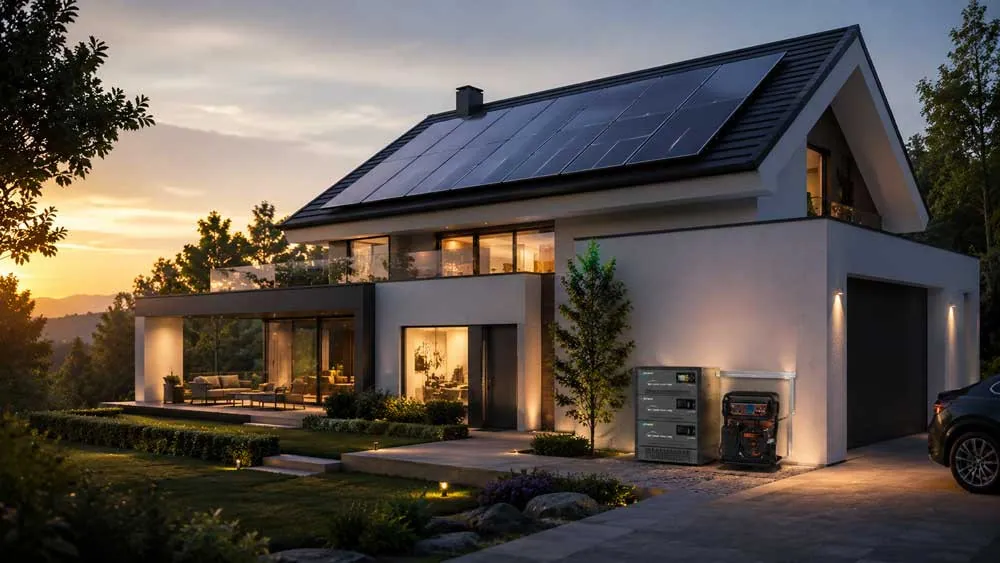
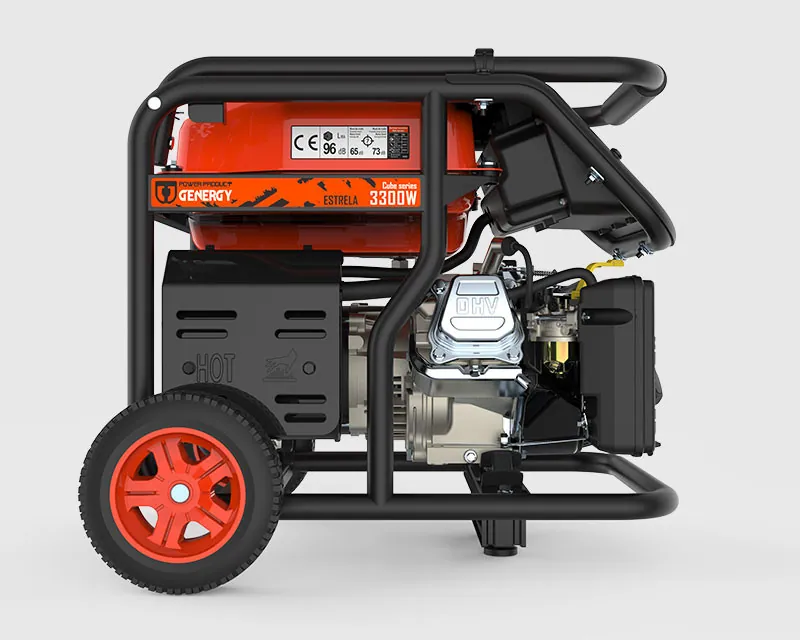
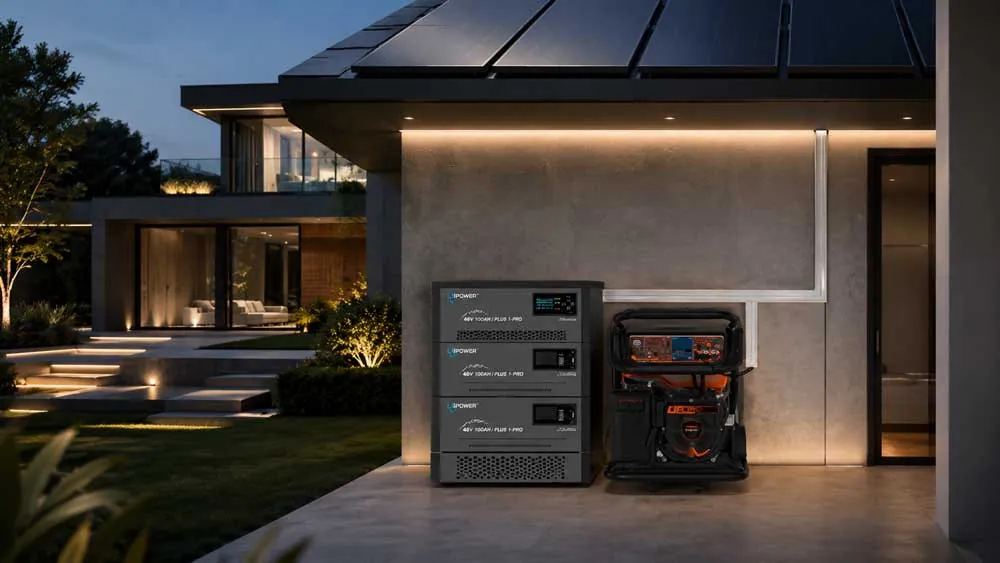
An off-grid home needs a more complete kit because it can't depend on the grid: the goal isn't just to save, but to guarantee supply. You need to calculate daily consumption, simultaneous power, battery capacity, days of autonomy, inverter power and possible backup. Batteries are key: they store the day's energy so you can use it without sun; without them you would only have electricity during production hours. Autonomy indicates how many days the home can run without enough sun: in areas with several cloudy days in a row it's worth expanding the battery or having backup. And when the home must always have electricity, adding a backup electric generator covers peaks and low-production days, complementing the kit without replacing it.
Which solar kit you need for a country house or second home

Needs vary a lot. If you only go on weekends, a 2 to 3 kW kit may be enough for low or moderate consumption; consider whether you need to keep something running when you're away (fridge, alarm, camera, pump, irrigation). If you use the house in summer, there's more sun but also more consumption (fridge, fans, air conditioning, pool, pump), so 3 to 5 kW is usually more reasonable. For mobile or occasional uses, a full installation isn't always needed: a portable solar generator is suited to getaways, camping or off-grid support, and a mini electric generator works as support for emergencies or occasional loads.
Panels, inverter and batteries: how to choose each component
A kit isn't chosen only by the number of panels (that's one of the most common mistakes). You have to look at the whole. The number of panels depends on the power of each module and the total power: for ~2 kW, 2 to 4 panels could be enough, and for 5 kW you'll need quite a few more and the space for them; more panels aren't always better if you don't consume or store that energy. The inverter must handle the panels' power and the home's loads (and in off-grid homes, withstand the starting peaks of pumps or motors); one that is too tight causes cuts and limitations. The battery is calculated according to the energy you want to store: think about night-time consumption, days of autonomy, type of home, whether there's a grid, whether there's a backup generator and whether you'll want to expand.
What happens if your consumption grows over time
A home's consumption doesn't always stay the same: you might install air conditioning, add a pump, buy an electric car or spend more time at home. That's why it's worth thinking ahead and not falling short: a very limited inverter may not allow you to add panels or batteries without replacing it. Scalable systems let you start with a specific configuration and expand later (battery, autonomy, reinforcement) without starting from scratch. And in homes with high consumption or a need for continuous supply, a generator set works as backup when the solar system and batteries aren't enough.
Common mistakes when choosing a solar kit for a home
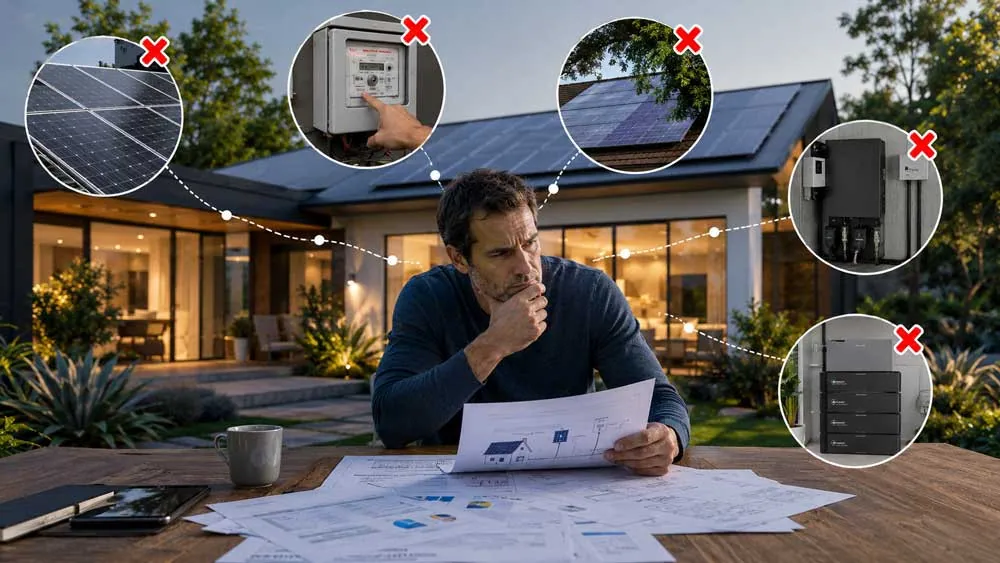
The costliest ones: buying only by number of panels (if the inverter doesn't keep up or there's no battery, you waste energy); not calculating daily consumption in kWh (without that figure everything is guesswork: review bills, habits and appliances); ignoring shading and orientation (a small shadow greatly reduces production); choosing an inverter that is too tight for starting peaks; and not planning for expansions (changing everything later costs more than planning well).
A primary residence with a fridge, washing machine, LED lights, TV, computers and some cooking loads for several people usually runs around 10-15 kWh/day: a 4-5 kW kit, depending on location and habits. Grid-connected and with daytime consumption, it can start without a battery; if most of the consumption is at night, a battery improves utilization; if it's off-grid, the battery is no longer optional. The logic is always the same: first consumption, then connection type, then panels, inverter and battery.
"All-inclusive" solar kits from Genergy
Genergy's PLAN SOLAR kits are photovoltaic kits ready for homes, with and without a backup battery. Filter according to whether you need pure self-consumption or storage:
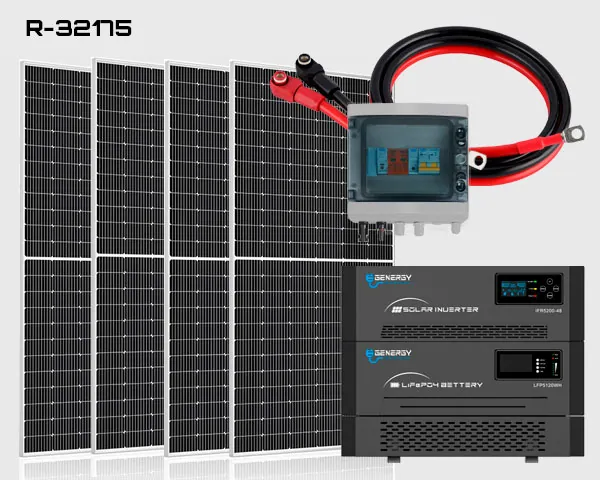
Plan Solar Rigel
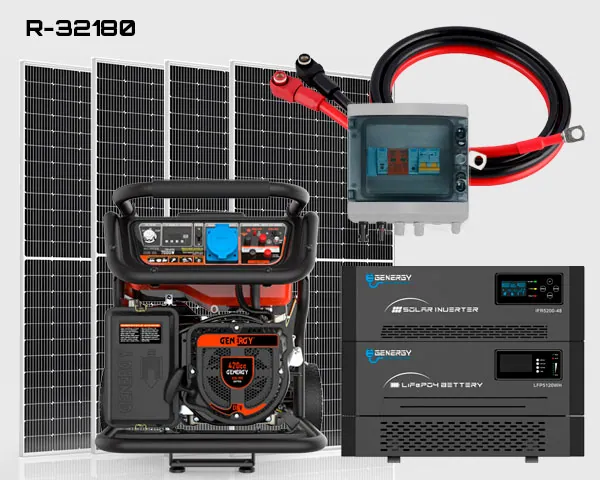
Plan Solar Rigel Backup-A
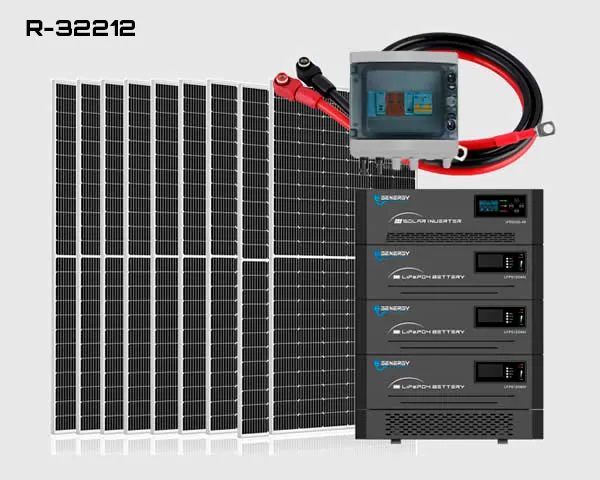
Plan Solar Vega
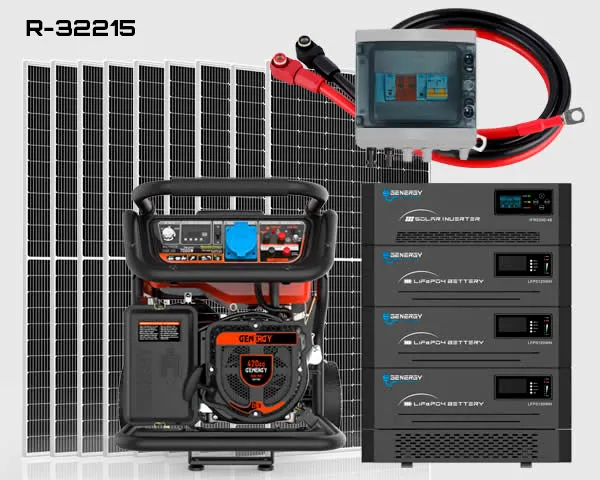
Plan Solar Vega Backup-A
👉 See the full range: All-inclusive photovoltaic systems · Scalable systems · Solar kit with battery · Questions? Talk to a technician.
Not sure what power to choose?
Tell us your daily consumption in kWh, whether you have a grid connection or live off-grid and what your roof is like, and we'll help you size the solar kit (and battery) that truly fits your home. We are manufacturers. No obligation.
Talk to a Genergy technicianConclusion: the best solar kit is the one that fits your real consumption
To know which solar kit you need for a home, don't start by asking how many panels to buy, but how much energy you use per day and how you use it. As a rule of thumb: ~2 kW for low consumption or occasional use, 3-5 kW for a primary residence, and 5 kW or more for high consumption or intensive daily use; if the home is off-grid, battery and backup become much more important. The safe formula is simple: calculate your daily kWh, check whether you have a grid connection, analyze your roof and decide whether you need a battery. From there, choosing well is much easier.
Related categories
Related topics

Frequently asked questions about which solar kit I need for my home
How many kW do I need for a home?
It depends on daily consumption. For low consumption, around 2 kW may be enough. For a primary residence, it's typically between 3 and 5 kW. For homes with high consumption, 5 kW or more may be needed.
How many solar panels do I need for a home?
It depends on the power of each panel and the home's consumption. As a guideline, a small system may have 2 to 4 panels, while a primary residence may need quite a few more to reach 4 or 5 kW.
Is a solar kit with or without a battery better?
If you consume a lot during the day and have a grid connection, you can start without a battery. If you consume at night, want more independence or have an off-grid home, a battery is much more advisable.
Which solar kit do I need for an off-grid home?
An off-grid home needs a kit with panels, a suitable inverter, batteries and sufficient autonomy. It may also be advisable to add generator backup if supply must be guaranteed.
Is a 2 kW solar kit enough for a home?
It may be enough for low consumption, small homes or occasional use. For a primary residence with several appliances, it will normally fall short.
When do I need a backup generator?
When the home is off-grid, there are high loads, you need continuous supply or there is a risk of several days with low solar production. It's also useful for consumption peaks that the solar system can't comfortably cover.
What happens if I buy a solar kit that is too small?
You'll cover less consumption than expected, you'll depend more on the grid or you'll drain the batteries sooner if it's an off-grid installation. That's why it's worth sizing according to real kWh and planning for possible expansions.