Hybrid, on-grid and off-grid inverter: which to choose based on your installation
By the Genergy technical team · Spanish manufacturer of generators and photovoltaic backup systems (+15 years) · updated in July 2026 · 9 min read.
Table of contents
- What is a solar inverter and why its type changes everything
- On-grid (grid-tied) inverter: what it is and when to choose it
- Off-grid (standalone) inverter: what it is and when to choose it
- Hybrid inverter: what it is and how it works
- On-grid vs off-grid vs hybrid: comparison table
- How to know which one you need for your case
- "Hybrid generator" is not the same as "hybrid inverter"
- Conclusion
- Frequently asked questions
When you install or expand a solar system, the first major decision isn't the panels: it's the type of inverter. It determines whether you make use of the grid, whether you store energy in batteries and whether you'll have power during an outage. The three names that come up most often are on-grid, off-grid and hybrid, and choosing wrong means paying more than necessary or missing the function you were looking for.
This guide gets straight to the point: what each one does, how they differ and which one fits your situation. If you also want to understand the technical side of how an inverter converts energy in depth, you'll find the details in how a solar inverter works.
What is a solar inverter and why its type changes everything
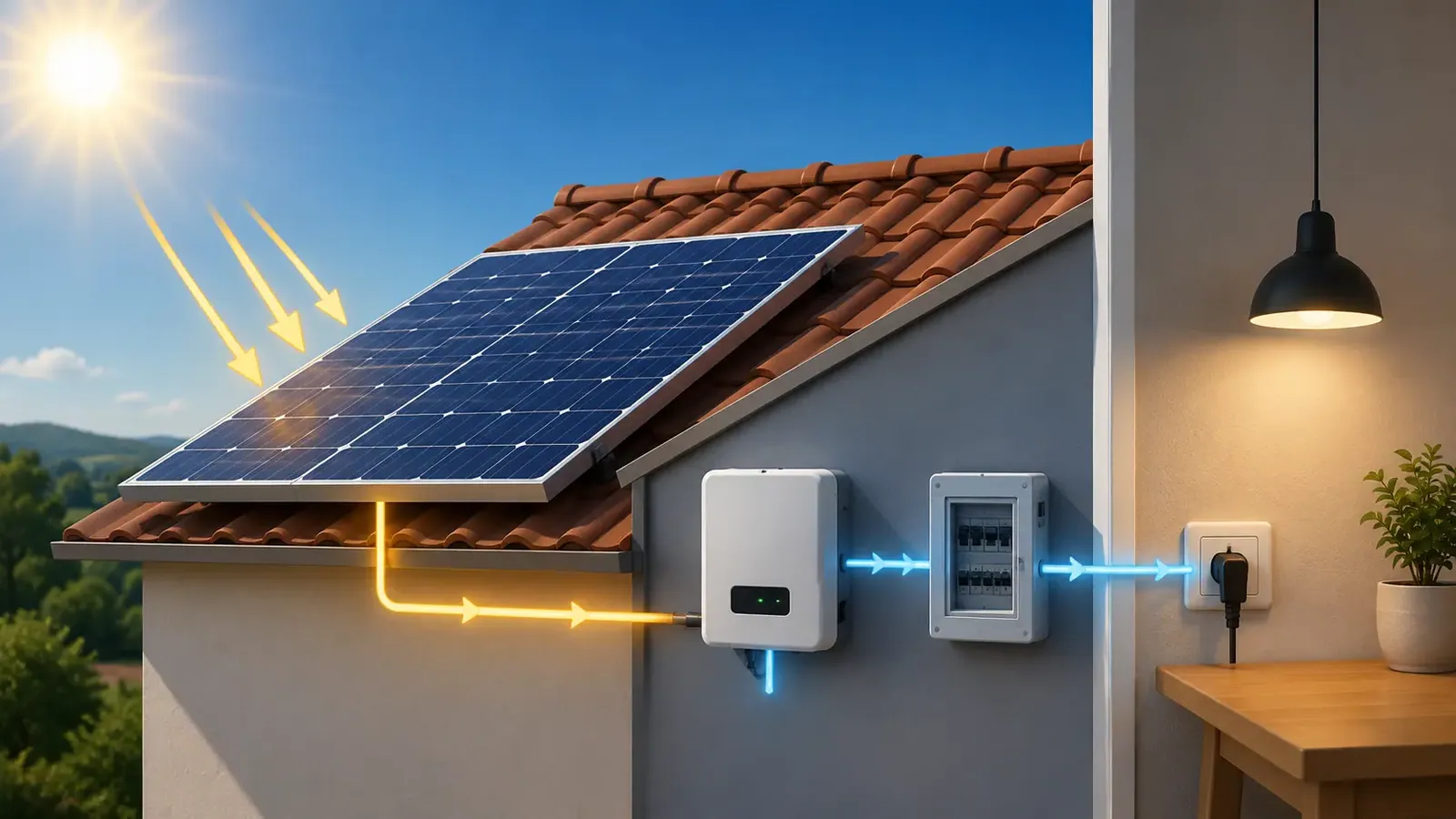
A solar inverter is the device that converts the direct current generated by the panels into 230 V alternating current, which is what household sockets and appliances use. Without it, the energy from the panels would be of no use.
But not all of them do the same thing with that energy. That's the key to this comparison: an inverter can synchronize with the grid, work standalone with batteries or combine both. That capability defines whether it is on-grid, off-grid or hybrid, and determines which type of installation it suits. Everything else (power, number of panels, brand) comes afterwards.
On-grid (grid-tied) inverter: what it is and when to choose it
An on-grid inverter (or grid-tied inverter) works synchronized with the electricity grid. The panels produce, you consume that energy during the day and any surplus can be fed back into the grid. As a general rule it doesn't use batteries: when there's no sun, you draw from the grid as usual.
It's the simplest and most affordable option for lowering the bill in a home with a normal electricity supply. Its weak point: if the power goes out, most of these inverters shut down for safety (the so-called anti-islanding protection), so they don't provide backup during a blackout. If "on-grid" sounds like "grid-connected" to you, you've understood it: that's exactly what it is.
Off-grid (standalone) inverter: what it is and when to choose it
An off-grid inverter is designed for standalone installations with no connection to the electricity grid. It manages the panels and, above all, the batteries, to provide stable electricity in places the grid doesn't reach: country houses, farms, cabins, remote warehouses or shelters.
Here the battery isn't optional, it's the heart of the system: without it there's no energy when there's no sun. Many off-grid inverters also support a backup generator (gasoline, diesel or gas) to charge the batteries during long stretches without sun. You can see the actual models in the off-grid solar inverter category.
Hybrid inverter: what it is and how it works
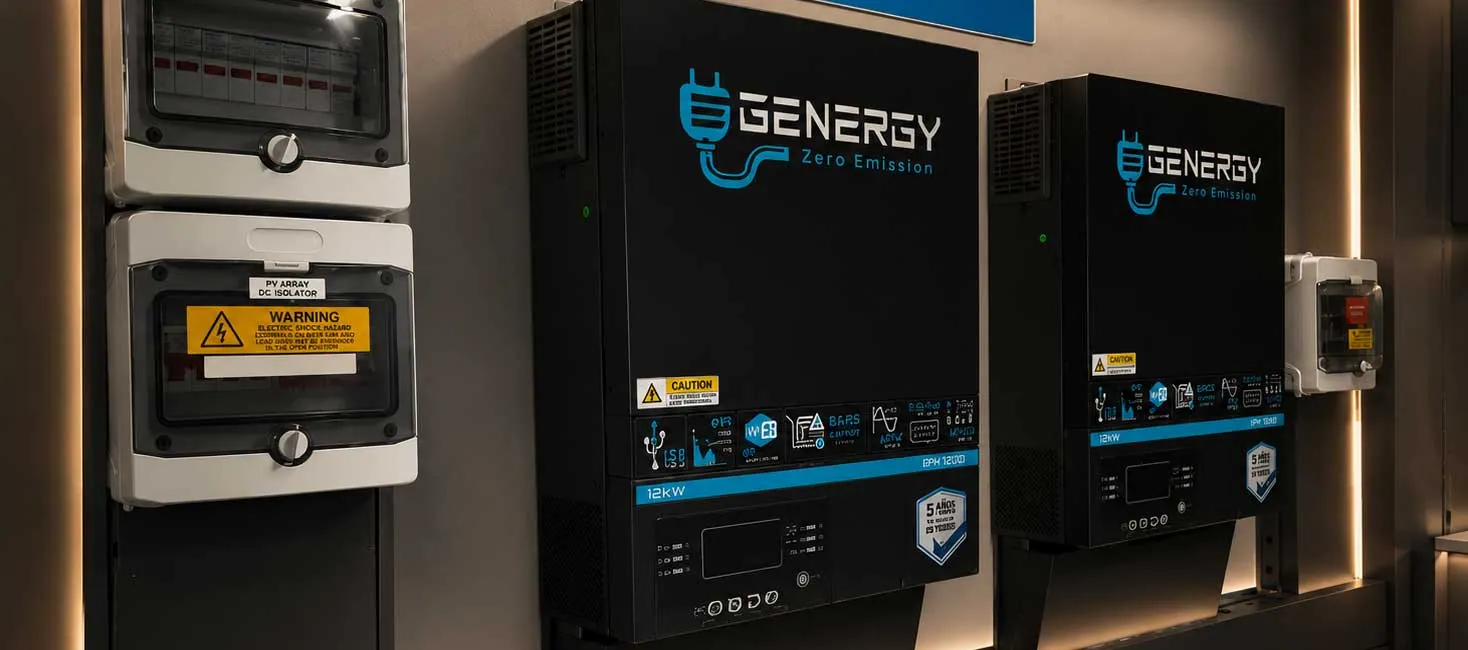
A hybrid inverter is the most complete: it combines the best of on-grid and off-grid. It works simultaneously with panels, grid and batteries, and decides at every moment where to draw energy from and where to send it. That's why it's sometimes also called a hybrid solar inverter.
In practice it works like this: it prioritizes solar energy for your consumption, stores the surplus in the battery, draws from the grid only when needed and, if you configure it with backup, keeps essential loads running when the power goes out. It's the ideal option if you want self-consumption with storage and peace of mind during outages. In return, it's the most complete solution (and therefore the one that requires better installation planning). To keep things simple, there are all-inclusive photovoltaic systems that already integrate a hybrid inverter, battery and panels sized together.
Even if you don't plan to add batteries today, if you think you'll want them in the future, choose a hybrid inverter from the start. Later replacing an on-grid with a hybrid means replacing the core equipment of the installation, and that costs far more than planning ahead.
On-grid vs off-grid vs hybrid: comparison table
This is the quick snapshot of the differences that matter most when deciding:
| On-grid (grid-tied) | Off-grid (standalone) | Hybrid | |
|---|---|---|---|
| Needs mains electricity | Yes | No | Uses it if available, but doesn't depend on it |
| Batteries | Usually not | Essential | Yes (recommended) |
| Provides power in a blackout | No (shuts down for safety) | Yes (with battery) | Yes (with backup configured) |
| Makes use of surplus | Yes | Not applicable | Yes |
| Ideal for | Home with grid access looking to save | Area without grid access | Self-consumption with storage and backup |
| Complexity and cost | Lower | Medium | Higher |
How to know which one you need for your case
Narrowing the decision down to the essentials, go by your situation:
- You have grid access and just want to lower your bill: an on-grid is the simplest and most affordable.
- You have grid access but are worried about outages or want to store energy for the night: go for a hybrid with batteries.
- You're in a standalone home with no grid: you need off-grid with batteries (and, if possible, a backup generator for days without sun).
Different equipment fits each case, from a standalone inverter for an off-grid installation to a complete system with batteries or backup. Filter by type:
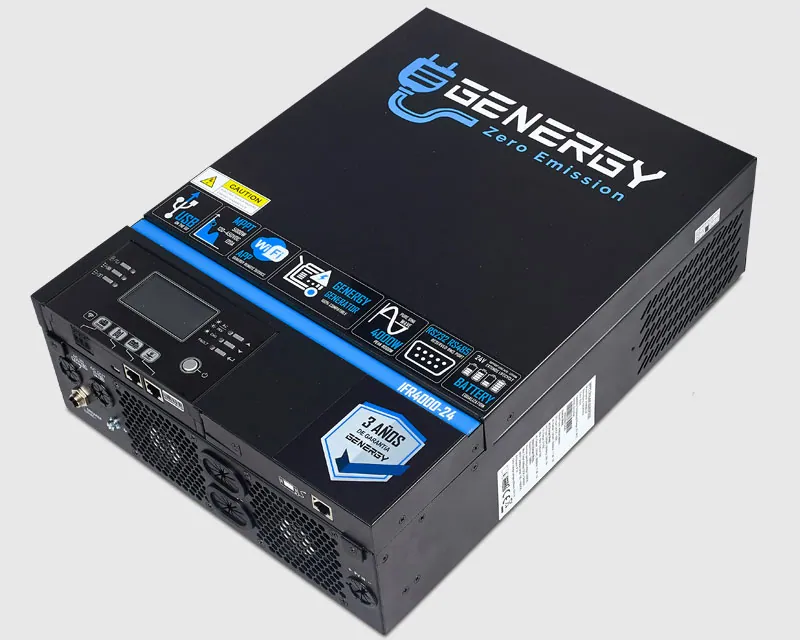
Inversor IFR4000 24V
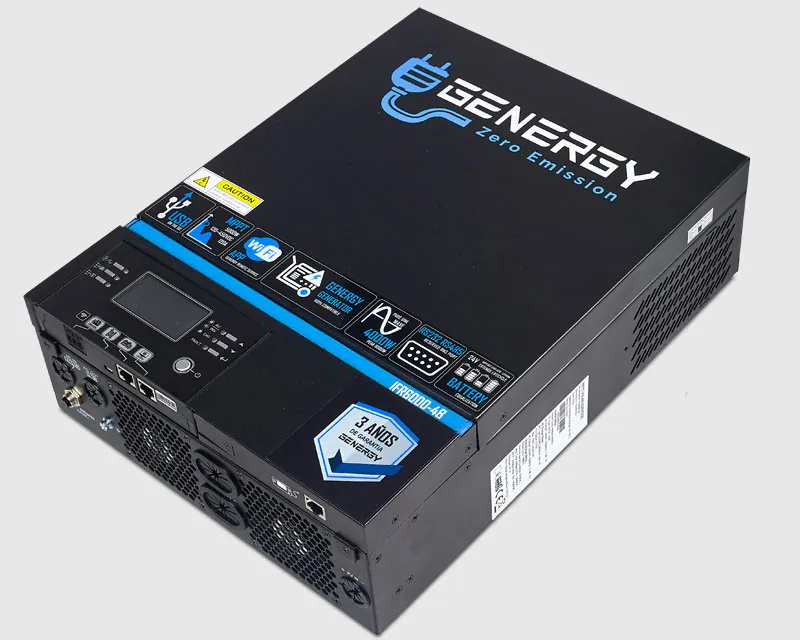
Inversor IFR6000 48V
Kit solar ECO-6000
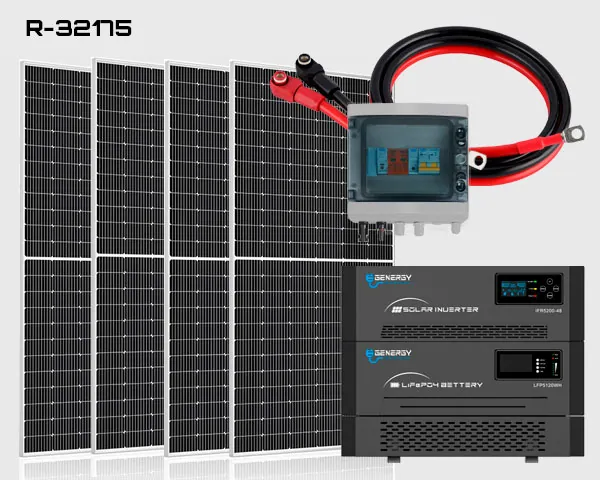
Plan Solar RIGEL
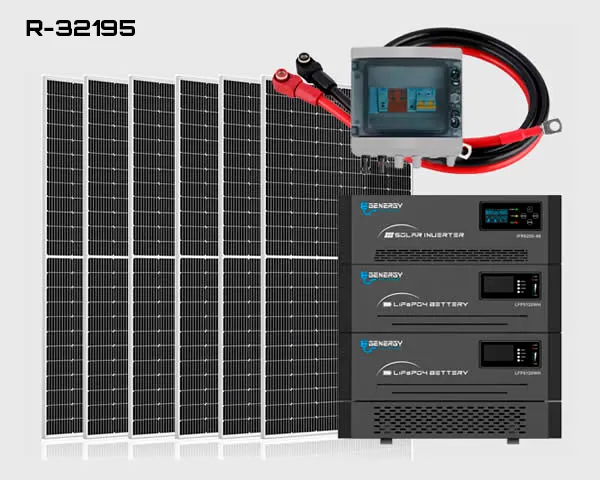
Plan Solar SIRIUS
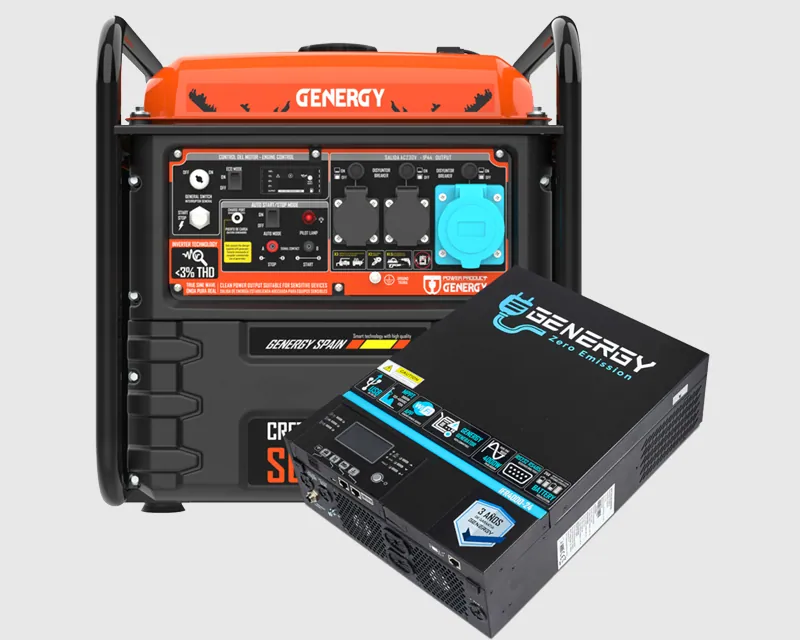
Kit solar PRO-6000
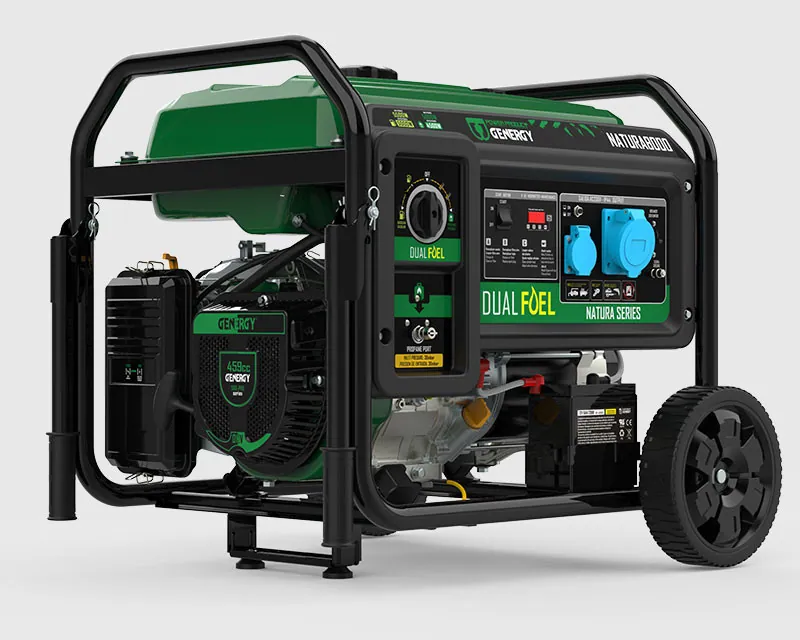
Generador Natura 8000
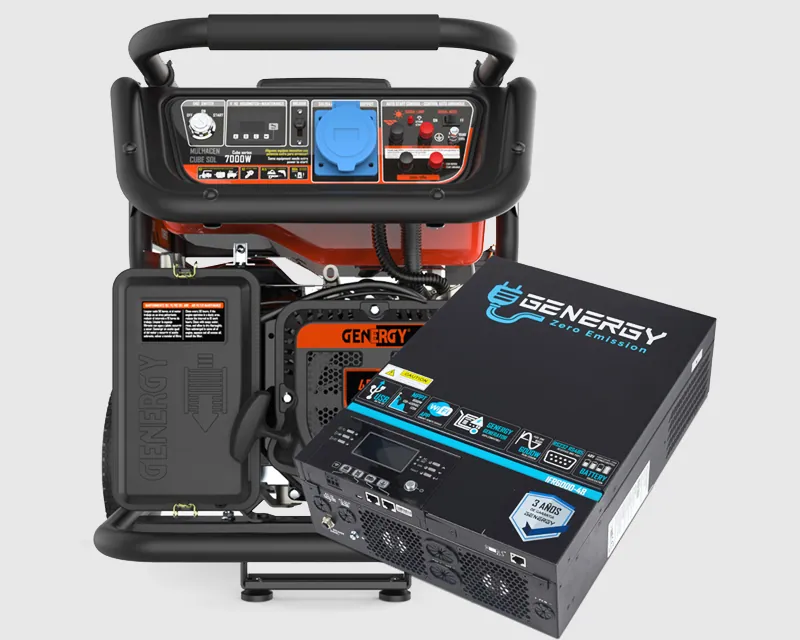
👉 See the full range: Off-grid solar inverter · All-inclusive photovoltaic systems · Inverter + backup generator packs · Questions? talk to a technician.
Not sure which inverter you need?
We'll help you work out the type of inverter and the power your installation needs —on-grid, off-grid or hybrid, with or without batteries—, with no obligation.
Talk to a Genergy technician"Hybrid generator" is not the same as "hybrid inverter"
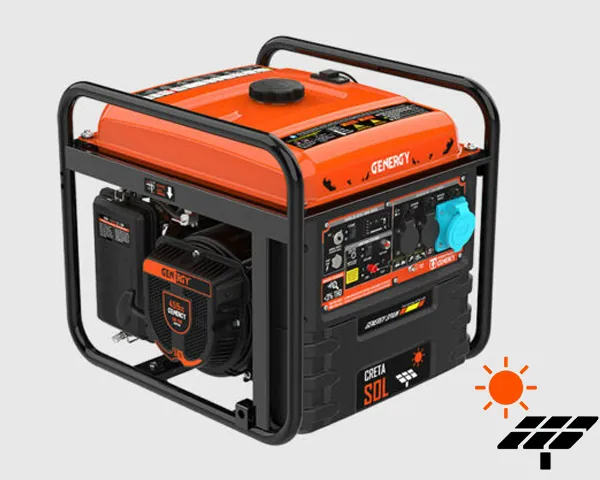
It's a very common mix-up when searching on Google, so it's worth clearing up. A hybrid inverter is a piece of equipment in a solar installation: it manages panels, grid and batteries. A hybrid generator is something else entirely: a combustion generator that can run on two fuels (for example, gasoline and propane gas), like the Natura series.
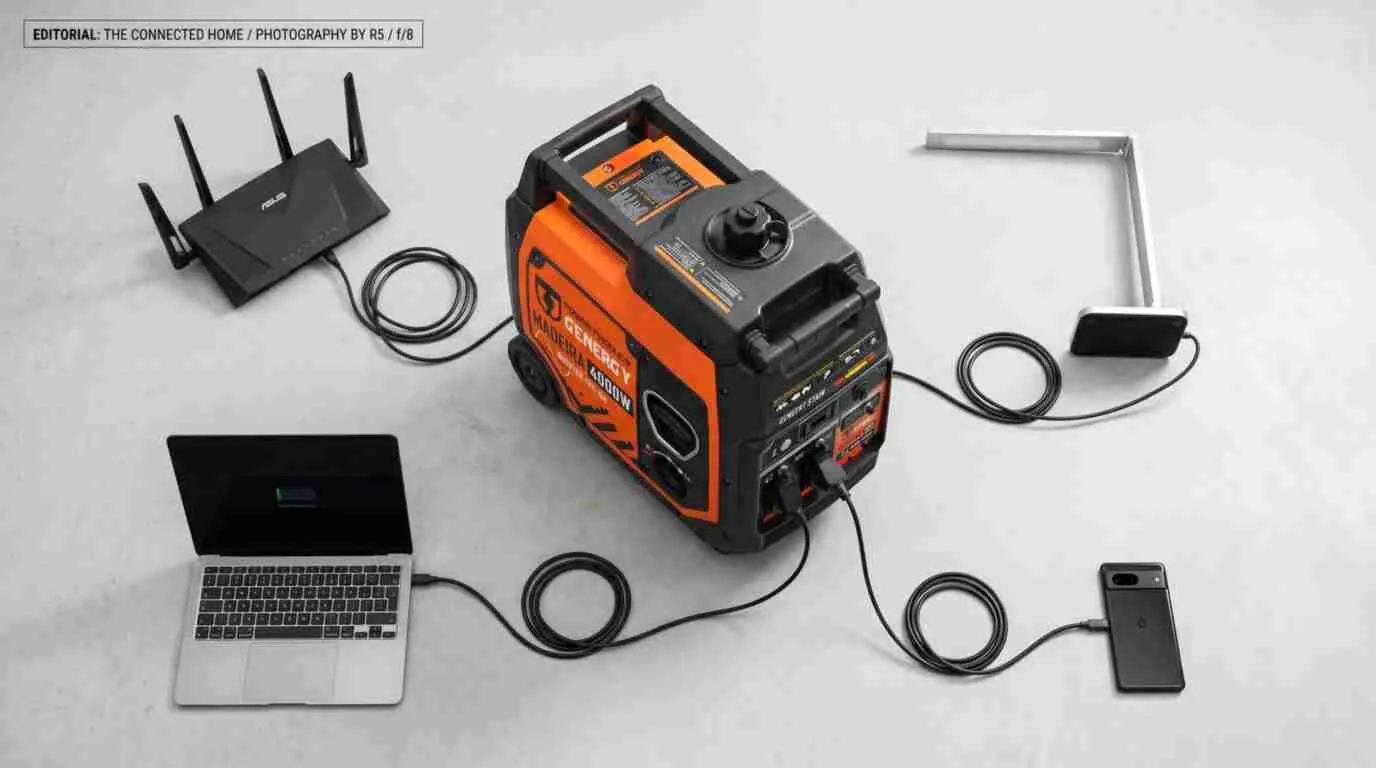
And there's a third term that also gets mixed in: the inverter generator, which is a gasoline generator with electronics that delivers more stable current. If that's your question, it's explained in what an inverter generator is. In short: "hybrid inverter" = solar; "hybrid generator" = dual fuel; "inverter generator" = generator with clean power.
Conclusion
Choosing the right inverter means choosing the right installation. If you have grid access and are after savings, on-grid does the job; if you want to store energy and be covered during outages, hybrid is the most complete choice; and if you're off the grid, off-grid with batteries is the way to go. Think about your consumption, whether you want backup and whether you'll expand in the future, and leave the fine sizing to a technician. If self-consumption with storage and peace of mind during blackouts appeal to you, look at the all-inclusive photovoltaic systems with a hybrid inverter.
Related categories
Related topics
Frequently asked questions
What is a hybrid inverter?
A hybrid inverter is the core equipment of a solar installation that works simultaneously with panels, the electricity grid and batteries. It decides at every moment whether energy is consumed, stored in the battery or drawn from the grid, and it can provide backup during power outages if configured for it.
What is a hybrid solar inverter?
It's the same as a hybrid inverter: the word "solar" simply underlines that it is part of a photovoltaic installation. It combines self-consumption with the grid (like an on-grid) and battery storage (like an off-grid), intelligently managing where the energy comes from and where it goes at any given moment.
How does a hybrid inverter work?
It prioritizes solar energy for your consumption, sends the surplus to the battery and only draws from the grid when needed. If you have surplus and the battery is full, it can feed it into the grid. With backup configured, it keeps the home's essential loads running when a blackout occurs.
What does on-grid mean?
On-grid means "connected to the grid". It describes a solar installation that works synchronized with the electricity grid: you consume your solar energy during the day and use the grid when the panels aren't producing. It generally doesn't use batteries and its main purpose is to reduce the bill through self-consumption.
What is an on-grid (grid-tied) inverter?
It's the inverter that converts the energy from the panels and synchronizes it with the electricity grid. It allows self-consumption and feeding surplus into the grid, but it normally doesn't store energy. For safety, most shut down during a power outage, so it doesn't offer backup on its own.
What is an off-grid inverter?
It's the inverter for standalone installations with no connection to the electricity grid. It manages panels and batteries to provide stable electricity in places the grid doesn't reach, such as country houses or farms. The battery is essential, and many models support a backup generator for days without sun.
What is the difference between on-grid, off-grid and hybrid?
On-grid depends on the grid and doesn't usually store energy; off-grid works standalone with just panels and batteries; and hybrid combines both, using grid, panels and batteries, with the option of providing backup during outages. In short: grid, standalone, or both at once with storage.
Can an off-grid inverter work with a backup generator?
Yes. Many off-grid inverters support a gasoline, diesel or gas generator to charge the batteries or cover consumption when solar production isn't enough, for example during several cloudy days. It's a common combination in standalone homes to guarantee energy throughout the year.
What inverter do I need for a standalone home?
For a home without grid access you need an off-grid inverter with batteries sized to your consumption. If you want to ensure supply during periods of little sun, it's worth adding a backup generator. A standalone solar kit already includes an inverter, batteries and protections designed to work together.
Is a hybrid inverter the same as a hybrid generator?
No. A hybrid inverter is a solar device that manages panels, grid and batteries. A hybrid generator is a combustion generator that runs on two fuels, such as gasoline and gas. They share the word "hybrid", but they are different products for different needs.
Does a hybrid inverter need batteries?
To take advantage of its benefits, yes. A hybrid inverter can work without batteries, but then it behaves almost like an on-grid and you lose storage and outage backup. Its purpose is precisely to manage batteries, so it's usual to install it with them or to leave the installation ready to add them later.