Best solar generator 2026: which to choose based on power and use
By the Genergy technical team · Spanish manufacturer of generators and solar energy systems (+15 years) · updated in July 2026 · 8 min read.
Table of contents
Choosing the best solar generator is not about buying the biggest or the most expensive one, but about understanding how much power you need and what you are going to use it for. Someone who wants to charge phones and a laptop on a getaway does not need the same equipment as someone looking for home backup during a blackout. And there is an important nuance: the term "solar generator" covers two different products.
What a solar generator is and what its two types are
A solar generator is an energy solution that combines, depending on the case, a battery, an inverter and recharging via panels. In practice, the term is used for two different things:
1. Portable power station (all-in-one battery)
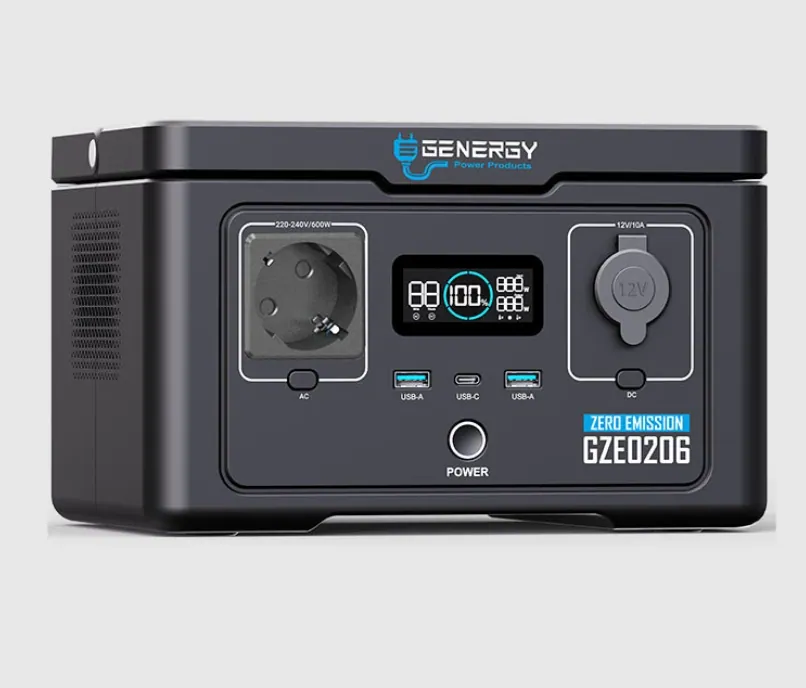
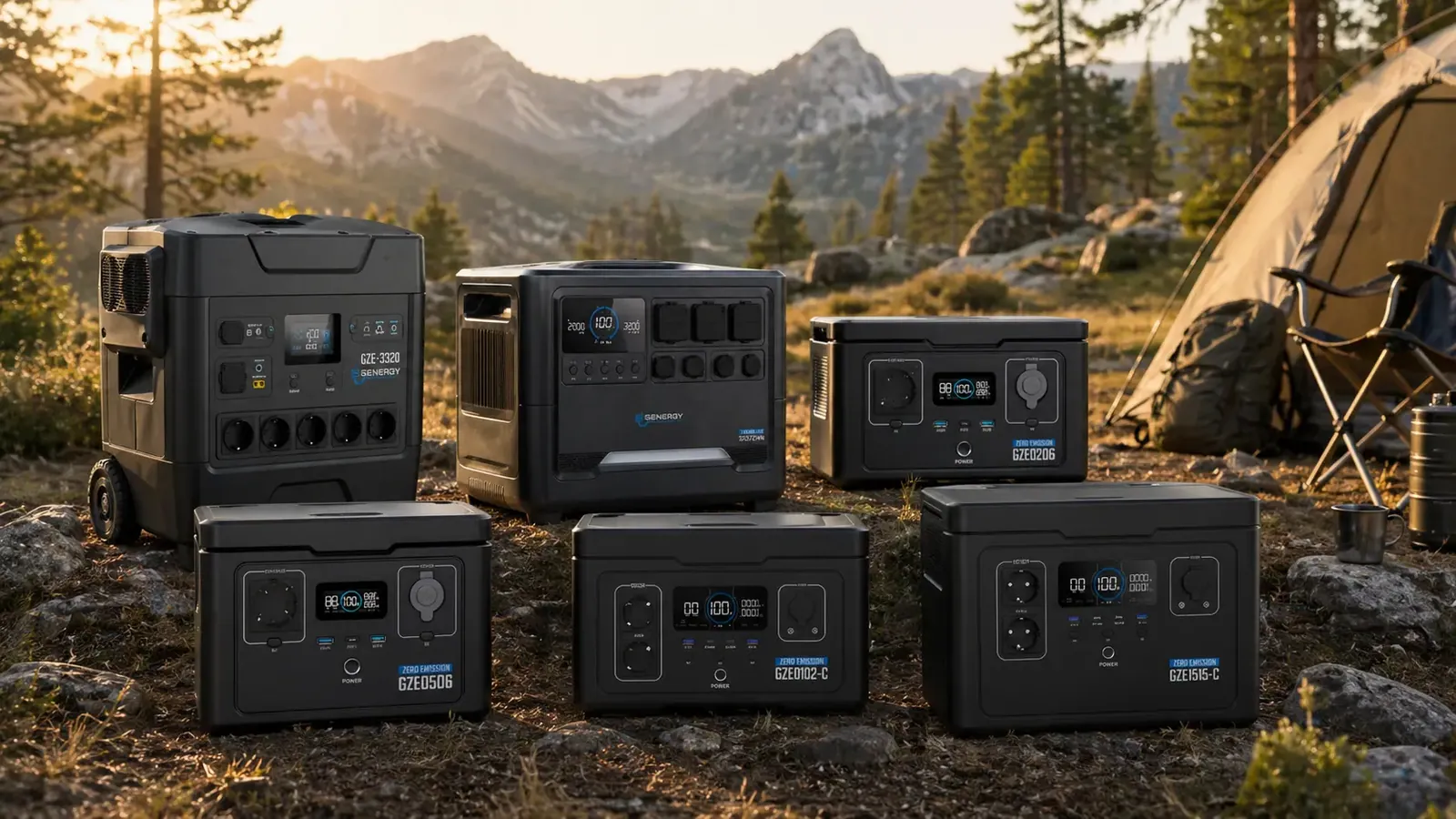
This is what many people call a "solar generator": a portable power station with a battery (usually LiFePO4), an inverter and outlets, which recharges from the mains or with solar panels. Quiet, fume-free and suitable for indoor use. Ideal for camping, device charging, mobility and light backup.
2. Photovoltaic backup generator (engine + solar support)
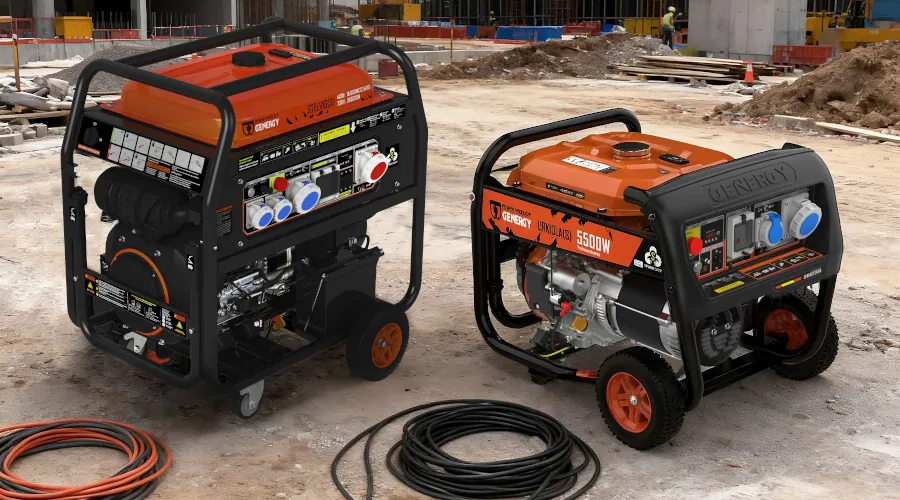
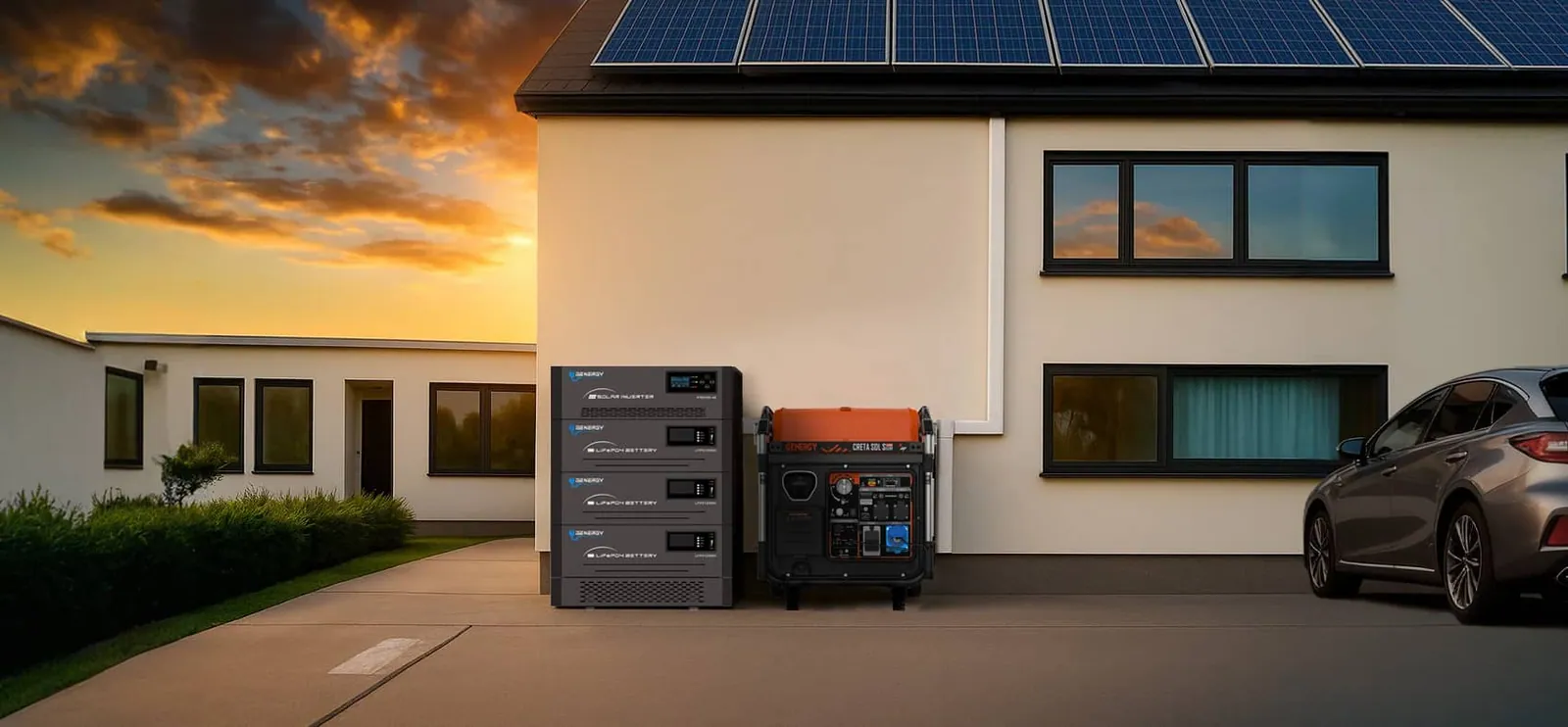
This is a generator with solar support: it combines a generator (engine) with the photovoltaic installation to provide continuity when the sun and the batteries are not enough. Designed for serious home backup or higher, longer-lasting loads.
The two types of solar generator, in a table
| Portable power station | Photovoltaic backup generator | |
|---|---|---|
| What it is | All-in-one battery + inverter | Generator (engine) + solar support |
| Recharging | Mains, solar panel, car | Fuel + photovoltaic |
| Noise / emissions | Quiet, fume-free (indoor use) | Engine (outdoor use) |
| Ideal use | Camping, device charging, mobility, light backup | Serious home backup, high and long-lasting loads |
| Genergy range | GZE stations (256 Wh - 5040 Wh) | Creta SOL / photovoltaic backup |
Before looking at models, decide which type you need: clean, portable energy you can take and use anywhere (power station), or stable backup for your home/installation (photovoltaic backup generator)? That decision shapes the whole purchase.
How to choose: power and capacity
Power: how many W you need
Power (W) indicates how much the unit can deliver at any given moment: whether it can only power a phone and a laptop, or also a small fridge, a TV or several devices at once. This is where many mistakes are made: "more power is always better" is not true. If your use is light, oversizing means spending more than necessary and carrying around equipment you don't need.
Capacity: how many Wh or kWh suit you
Capacity (Wh/kWh) indicates how much energy the battery stores. Put simply: power tells you what it can power and capacity tells you for how long. Two units with similar power can have very different runtimes; this is one of the most important decisions.
Battery type, outlets and recharging
The battery matters a great deal for runtime, durability and safety: LiFePO4 batteries (in the Genergy range, ~4000 cycles) last much longer than conventional Li-ion. Add three practical questions: do you need to move it often?, which devices will you connect?, how long does it take to recharge (mains, solar, car)?
The best solar generator by use
For camping and getaways
Prioritize portability, ease of transport, device charging and runtime of several hours to a day. There is no need to go for huge power: it should be practical, quiet and easy to recharge. A 256-512 Wh station is usually enough.
For charging phones, laptops and light electronics
One of the most common uses. A compact, well-designed unit works better than an oversized station. The key is not to buy "for fear of falling short" if the real use is going to be basic.
For blackouts and home backup
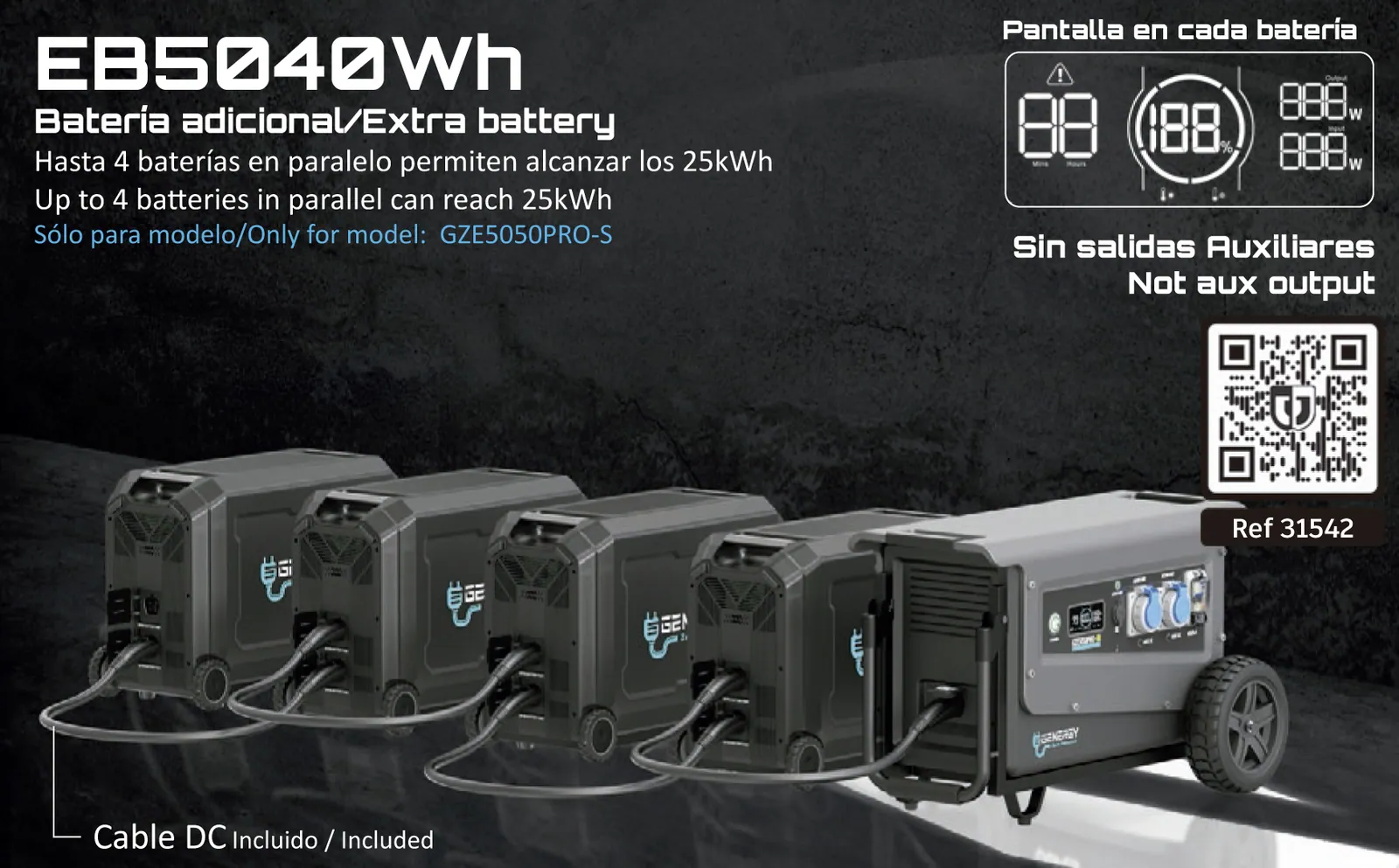
Here the situation changes: the priority is real capacity to respond to an outage. Higher-capacity stations (2000 Wh or more, expandable) start to make sense or, for more structured backup, a photovoltaic backup generator or an inverter + backup generator pack.
For sensitive electronic equipment
If you are going to connect computers, routers or equipment that requires stable current, power alone is not enough: the quality of the output matters. Prioritize units with a pure sine wave inverter and an architecture designed to protect electronics.
What devices a solar generator can power
Small devices (phones, tablets, laptops, routers, lights, cameras): any small or mid-sized station covers them easily, and it is the use that gets the most out of portability. Light appliances (TV, mini fridge, small equipment): it already depends on the available power and the real runtime, so it is worth checking which device and for how long. High, prolonged loads: here the solar generator stops being just a portable unit and becomes part of an energy strategy; scalable systems or all-inclusive photovoltaic systems make sense.
Advantages and limitations of a solar generator
Pros: quiet operation, energy without direct combustion, portability, ease of use and good adaptation to many scenarios. Things to keep in mind: not all of them are suitable for everything. Before buying, think about which devices you will connect, for how long, whether you want to move it or leave it fixed, and whether you are looking for a portable station or more complete backup. Those who start by searching for "the best solar generator" sometimes end up needing a better-sized system than a simple power station.
Genergy solar generators
Filter by what you are looking for: portable power station (LiFePO4 battery ~4000 cycles, rechargeable with panels) or photovoltaic backup generator (engine + solar support):
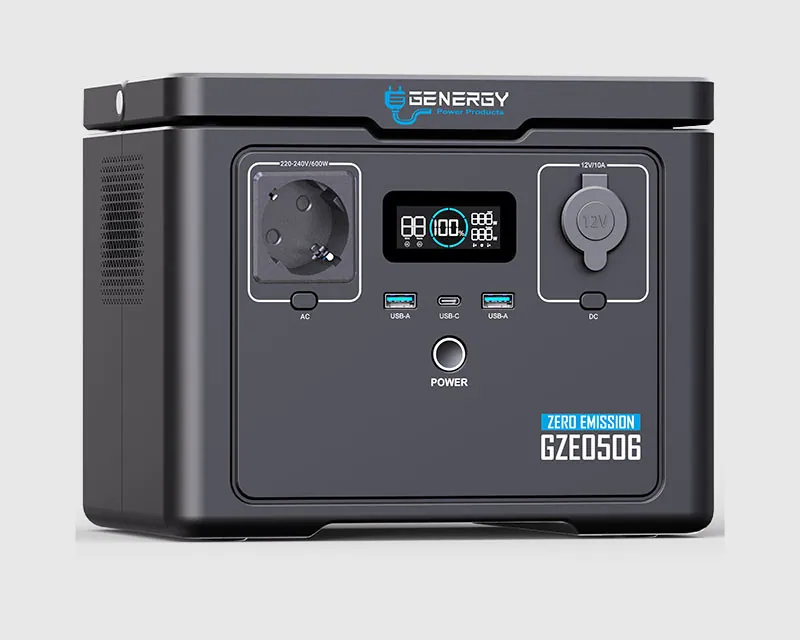
Power station GZE-0506
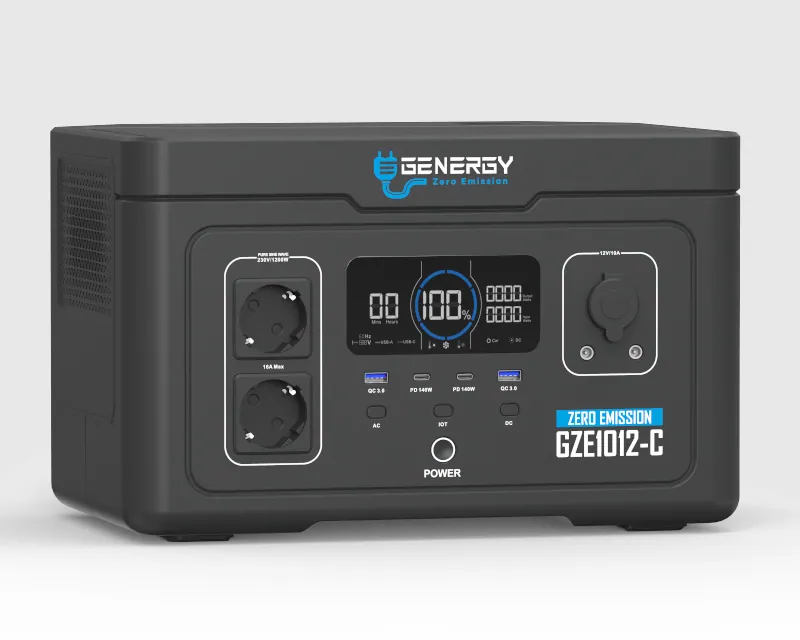
Power station GZE-1012
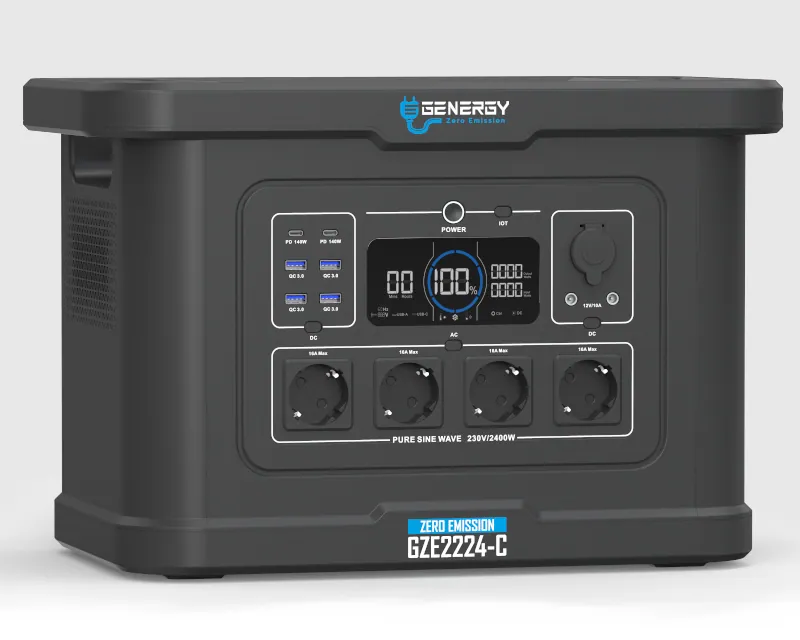
Power station GZE-2224
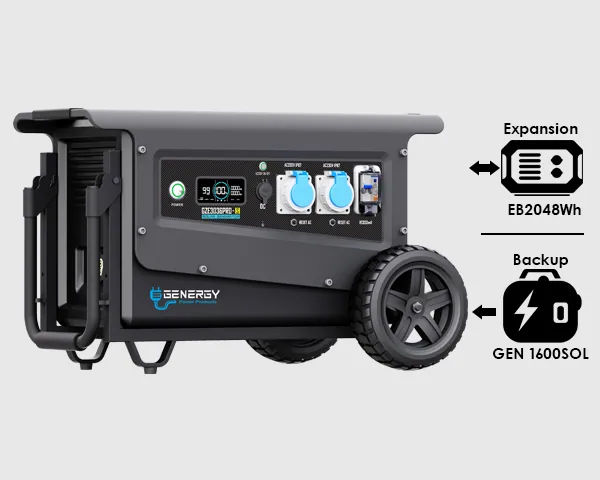
GZE-3036-PRO-S Station
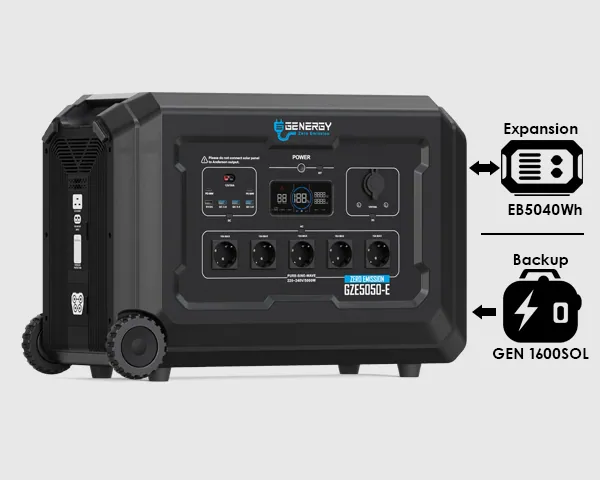
Power station GZE-5050
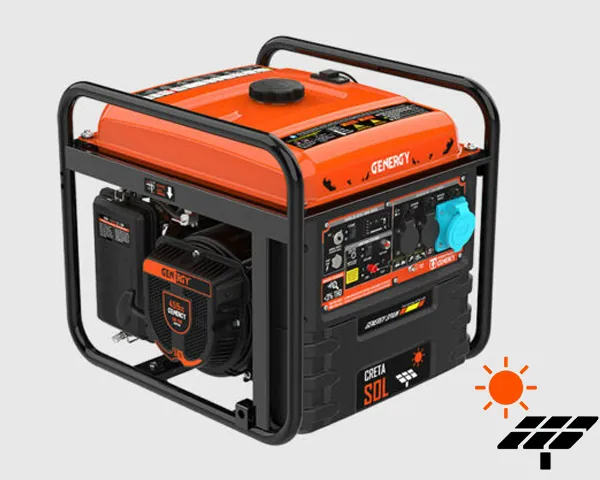
Creta SOL 7500W Generator
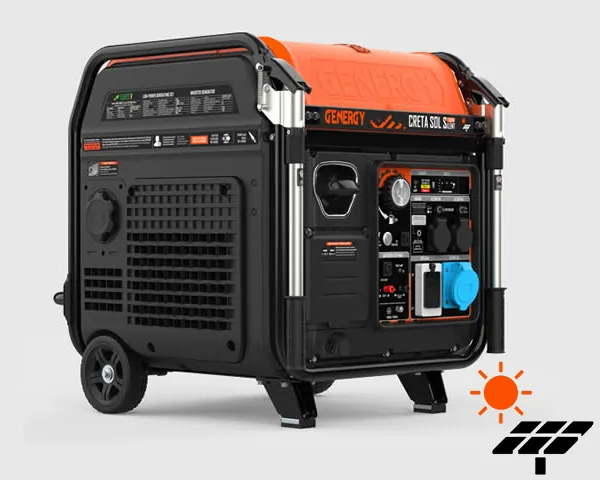
Creta SOL Silent 7500W Generator
👉 See the full range: Portable power stations · Photovoltaic backup · Scalable systems · Any questions? Talk to a technician.
Portable station or photovoltaic backup for your case?
Tell us what you want to power, for how long and where (camping, home, solar installation), and we will tell you which solar generator fits best. We are manufacturers. No obligation.
Talk to a Genergy technicianConclusion
The best solar generator is not chosen by trend or by an isolated figure, but by combining how much power you need and what you are going to use it for, and by knowing which type you are looking for. For something portable (camping, device charging, light backup), a portable power station with a LiFePO4 battery. For serious home backup or a photovoltaic installation, a photovoltaic backup generator. And if your need goes beyond that, a scalable or comprehensive photovoltaic solution. The best purchase is not the biggest one: it is the one that truly fits you.
Related categories
Related topics
Frequently asked questions about the best solar generator
What is the best solar generator?
The one that best fits the power you need and the use you will give it. For camping and light loads, a small portable power station; for home backup, a higher-capacity station or a photovoltaic backup generator. The same unit is not suitable for everything.
Is a "solar generator" a battery or an engine-driven generator?
It can be either. The name usually refers to the portable power station (battery + inverter rechargeable with panels). But there is also the photovoltaic backup generator, which combines an engine with the solar installation for more serious backup.
What is the difference between power and capacity?
Power (W) indicates which devices the unit can power at the same time; capacity (Wh) indicates for how long it can do so. You need both matched to your use: power for the startup surge and capacity for runtime.
How much power does a solar generator need?
It depends on the devices you will connect at the same time and their startup peak. The more devices or the more demanding they are, the more power you need. Choose an output power higher than the sum of your simultaneous loads.
Which solar generator is suitable for camping?
A portable power station that is quiet and easy to transport, with enough capacity for your devices and perhaps a small fridge. For getaways, between 256 and 1000 Wh is usually enough, rechargeable with a solar panel.
Which solar generator works for a home during a blackout?
For home backup you need more capacity: a station of 2000 Wh or more (preferably expandable) or a photovoltaic backup generator if you want continuity for high, prolonged loads. The important thing is to cover your essential loads for the duration of the outage.
What is the best value-for-money solar generator?
The one that matches capacity and power to your use without oversizing, with a LiFePO4 battery (many more cycles) and solar recharging. Paying for power you won't use is not good value; falling short isn't either.
Can it be recharged with solar panels?
Yes. Both portable stations and backup systems support solar recharging. Combining the unit with panels gives you renewable energy and autonomy without depending on a power outlet.
What is a solar backup generator?
It is a generator (engine) that works alongside a photovoltaic installation, stepping in as support when the sun and the batteries are not enough. It provides continuity of supply for home backup or demanding loads, beyond what a portable power station can cover.
When is a scalable solution worth it?
When you expect your consumption to grow, want a gradual investment or need a solution that can be expanded over time. Starting with what you need today and growing with expansion batteries or scalable systems avoids oversizing from the start.