Best high-pressure washers in 2026: which to choose based on use and power
By the Genergy technical team · Spanish manufacturer of gasoline-powered machinery and generators (15+ years) · updated July 2026 · 8 min read.
Table of contents
Choosing among the best high-pressure washers is not about buying the one that advertises the most bars on the box, but about finding a machine that fits the job you will be doing, how often you will use it and the level of dirt you are facing. Someone who washes the car once a month does not need the same high-pressure washer as someone who cleans terraces, patios or machinery intensively. The key to getting it right lies in three things: pressure, flow rate and durability.
What a good high-pressure washer should have
Pressure, flow rate and power
Pressure (bar) determines the ability to remove ingrained dirt. Flow rate (L/h) determines how much water the machine moves and, in practice, how long it takes to clean a surface. A high-pressure washer with lots of bars looks impressive on paper, but if the flow rate falls short or the machine cannot keep up the pace, the real-world experience will not be good. That is why the two figures should be compared together, not in isolation.
Hose length and ease of use
It seems like a minor detail, but it makes a big difference in comfort. A short hose forces you to reposition the machine constantly, which is noticeable when cleaning terraces, facades or large vehicles. It is also worth looking at how easy it is to move, storage, nozzles and accessories, lance ergonomics and how simple it is to maintain.
Durability and motor type
This is where occasional-use high-pressure washers part ways with those that can handle serious work. If you will use it frequently, durability becomes the main criterion: for more than four cleanings a year, prioritize robustness (motor, pump and chassis) over upfront savings. In the long run it pays off.
What pressure (bar) does a high-pressure washer need for each use
| Use | Recommended pressure | Machine type |
|---|---|---|
| Light household (occasional car, furniture, bike) | 100-150 bar | Compact electric |
| Semi-professional (frequent car washing, terrace, patio, garden) | 150-250 bar | High-end electric or gasoline |
| Intensive professional (machinery, construction, agriculture, no electricity) | 250+ bar · high flow rate | Professional gasoline |
Choosing the right pressure cleans better without damaging delicate surfaces (excessive pressure can mark car bodywork or wood).
What matters more: pressure or flow rate
You need both in balance. Pressure gains importance when there is stuck-on dirt, dried mud or persistent residue that requires dislodging power. Flow rate matters more when the goal is to clean large surfaces quickly or you want a smooth, steady working feel. For the average user, balance is what counts: an eye-catching pressure is of little use if the machine falls short on flow or cleaning ends up slow.
Which high-pressure washer to choose for your use
For light household tasks
For occasional cleaning (outdoor furniture, bicycles, small surfaces, light dirt), there is no need to oversize: a compact electric model of 100-150 bar is practical and sufficient. Buying more "just in case" is usually a mistake for this profile.
For car, terrace and garden (frequent use)
The most common scenario. You want a machine with a good balance between pressure and flow rate, able to wash a car without damaging the finish, clean a terrace with ease and remove dirt from outdoor floors without falling short. Here it already makes sense to think about quality and durability, not just price.
For professional use or without electricity
In tough jobs, in agriculture, on construction sites or in areas without power, the machine must perform steadily for many hours. That is where the gasoline high-pressure washer comes in: total autonomy (it does not depend on a socket), high pressure and flow rate, and a robust build for intensive use.
Genergy gasoline high-pressure washers: comparison
Genergy manufactures professional and semi-professional gasoline high-pressure washers, with Annovi Reverberi (Italy) Triplex pumps rated for 500 h at maximum performance and a 15 m reinforced hose. Ideal for outdoors, agriculture, construction or any job without access to the mains.
| Model | Pressure | Flow rate | Engine | Start |
|---|---|---|---|---|
| SEGURA | 175 bar | 684 L/h | SGB210PRO (208 cc) | Manual |
| SELLA | 275 bar | 900 L/h | SGB420PRO (420 cc) | Manual |
| NARCEA | 275 bar | 900 L/h | SGB420PRO (420 cc) | Manual and electric |
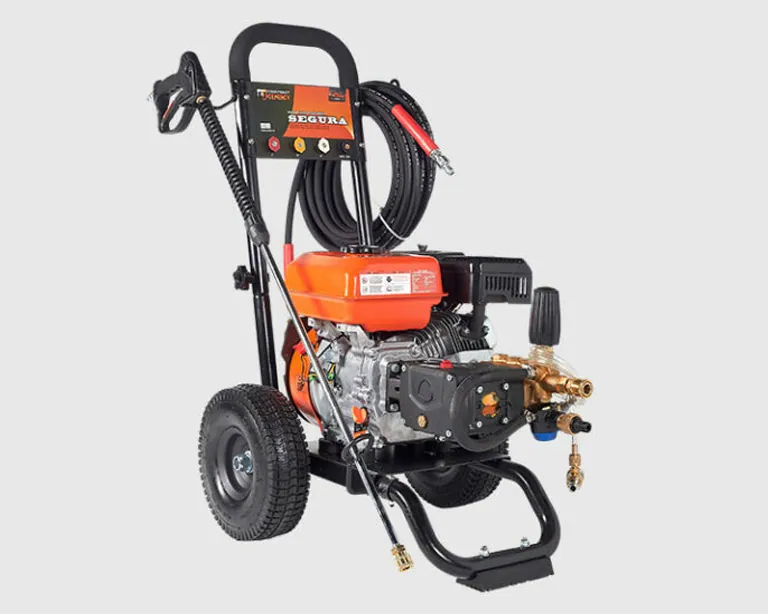
SEGURA high-pressure washer
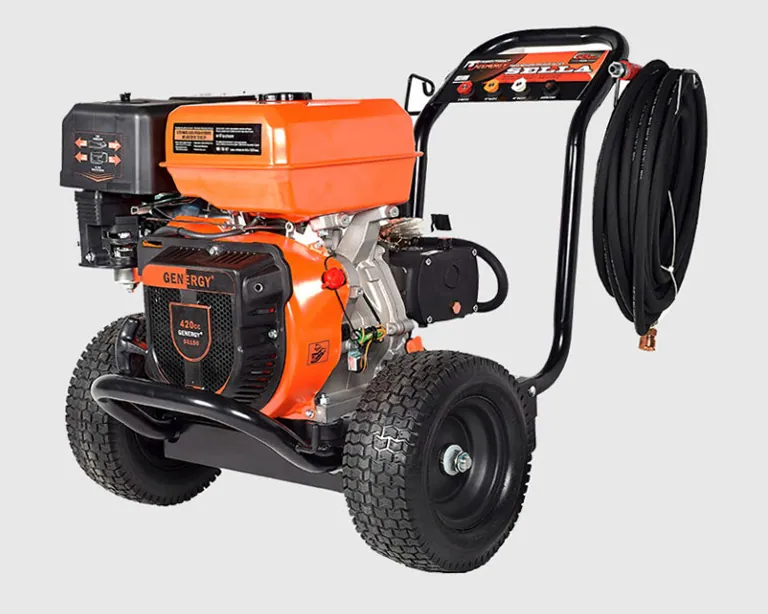
SELLA high-pressure washer
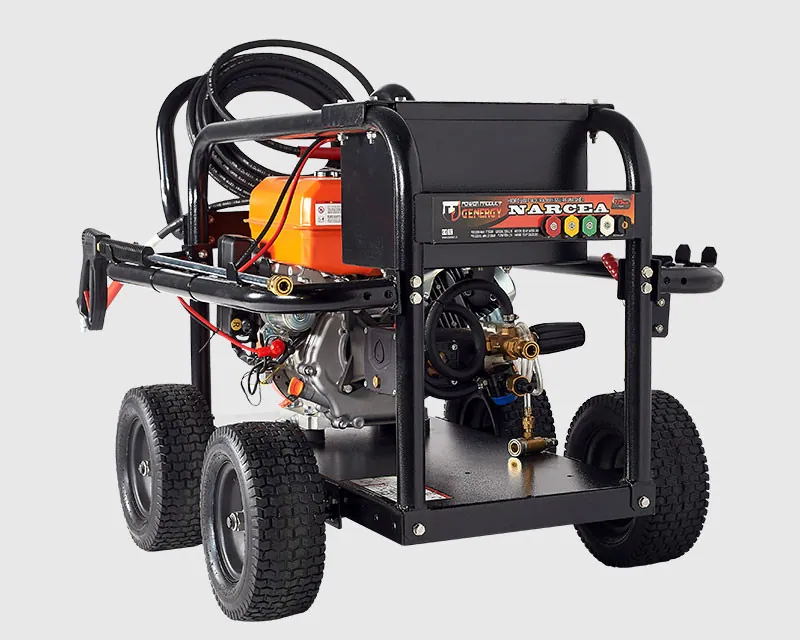
NARCEA high-pressure washer
👉 See the full range: Gasoline high-pressure washers · Gasoline machinery · Questions? talk to a technician.
For light, occasional washing at home, a compact electric model is enough and more convenient. A gasoline high-pressure washer makes sense when you need high pressure and flow rate, autonomy without a socket and frequent or professional use: construction, agriculture, large surfaces or areas without power.
Need to clean seriously without depending on a socket?
Genergy gasoline high-pressure washers deliver high pressure and total autonomy for professional work. Tell us what you will be cleaning and we will help you choose the model. We are manufacturers. No obligation.
Talk to a Genergy technicianWhen it is worth buying a more powerful high-pressure washer
There are clear signs that a basic range falls short: you take too long to clean, dirt is harder to remove than it should be, you use the machine frequently, or you notice that the real work demands more continuity than the equipment offers. It is worth moving up a level when the high-pressure washer stops being an occasional tool and becomes a regular part of the work: at that point, paying a bit more for a sturdier machine is a sensible decision that pays off in time and service life.
What to check before buying a high-pressure washer
Before choosing, review: pressure and flow rate (together, not separately); durability (motor, pump, chassis); accessories and nozzles, which greatly affect versatility; hose length and ease of use; maintenance and storage; and, above all, whether you will use it enough to justify a higher range. If the answer is yes, looking only at the upfront price is usually a mistake.
Conclusion
The best high-pressure washers are not necessarily the most powerful, but the ones best suited to the job you will be doing. Focus on real use, pressure, flow rate and durability. For light household cleaning a simple electric model is enough; for car, terrace and garden, balance and quality are what you want; and for frequent or professional work, or where there is no electricity, a high-pressure, high-flow gasoline washer is the option that truly delivers.
Related categories
Related topics
Frequently asked questions about the best high-pressure washers
Which is the best high-pressure washer?
The one that best fits your use. An occasional cleaning at home (electric, 100-150 bar) does not call for the same machine as frequent or professional work (gasoline, high pressure and flow rate). Look at pressure, flow rate and durability together.
What is more important, pressure or flow rate?
Both. Pressure (bar) helps remove ingrained dirt; flow rate (L/h) affects speed and effectiveness when cleaning large surfaces. A balanced machine performs better than one with lots of bars but little flow rate.
How many bars does a high-pressure washer need for home use?
As a guideline: 100-150 bar for light household use, 150-250 bar for semi-professional use (frequent car washing, terrace, patio) and over 250 bar for intensive professional use. More than the isolated figure, what matters is the balance with flow rate and how often you use it.
Which is better, a gasoline or an electric high-pressure washer?
An electric model is convenient for light household use near a socket. A gasoline model offers more pressure and flow rate and total autonomy (no electricity needed), ideal for frequent or professional use, outdoors, construction or areas without power.
Which high-pressure washer is suitable for a car and a terrace?
A balanced machine: enough pressure for outdoor floors and enough control not to damage the bodywork. For frequent use, a semi-professional model (150-250 bar) with good flow rate performs better than a basic household one.
Which is the best semi-professional high-pressure washer?
The one that combines 150-250 bar, good flow rate and a robust build for frequent use. In gasoline, the Genergy SEGURA (175 bar / 684 L/h) covers that semi-professional profile well, with total autonomy and an Annovi Reverberi pump.
When is a professional high-pressure washer worth it?
When you use it frequently, clean hard or large surfaces, or need it to withstand a high work rate. Models such as the SELLA or the NARCEA (275 bar / 900 L/h) are designed for that intensive professional use.
Are there gasoline high-pressure washers with electric start?
Yes. Most gasoline models have manual start (pull cord), but some, such as the Genergy NARCEA, include electric start for greater convenience in daily use.
What can be cleaned with a gasoline high-pressure washer?
Vehicles and machinery, facades and walls, paving and patios, agricultural equipment, tools and industrial surfaces. It is ideal for outdoor cleaning and demanding jobs, especially where there is no access to the mains.
Are there battery-powered high-pressure washers?
Yes, there are battery-powered models from other brands for extreme mobility and very light uses, although they offer less pressure and run time. For frequent, professional or high-pressure use, gasoline remains the most solid option; it is the range Genergy manufactures.