How a portable power station works: battery, outputs and recharging
By the technical team at Genergy · Spanish manufacturer of Zero Emission portable power stations (15+ years) · updated July 2026 · 9 min read.
Table of contents
A portable power station works like a large-capacity rechargeable battery. It stores energy in its internal battery (usually lithium-ion or LiFePO4) and delivers it as usable electricity for phones, laptops, routers, lights, portable coolers, small tools or emergency equipment. It is like a big power bank, but much more powerful and with more types of output (AC, USB, USB-C, DC and 12V car socket), and it recharges from the mains, solar panels or the car.
What is a portable power station
It is a device designed to store energy and supply it when you don't have an outlet nearby: at home during a blackout, while camping, in motorhomes, during outdoor work, on trips or as backup for small loads. Unlike a conventional power bank, it has greater capacity, more power and different outputs, so it can power anything from a phone to a laptop, a router, an LED light or a portable cooler, as long as the device's consumption does not exceed its limits. If you are wondering which one to choose, see the guide: best portable power station.
Portable power station vs power bank vs electric generator
| Device | What it is | Typical use |
|---|---|---|
| Power bank | Small battery for phones or accessories | Charging smartphones, headphones, tablets |
| Portable power station | Large battery with sockets, USB and DC outputs | Camping, power cuts, laptops, routers, lights |
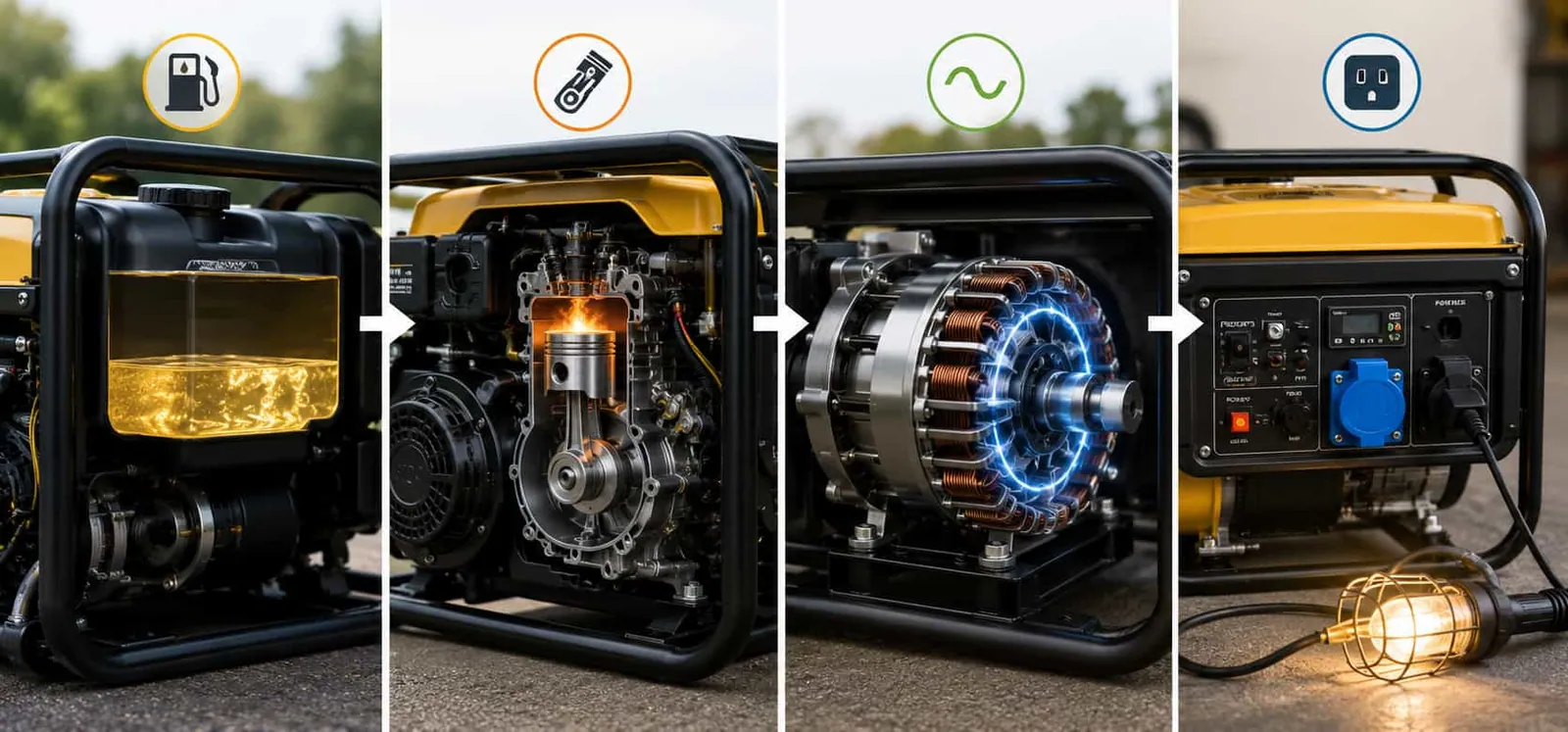
| Electric generator | Produces electricity by burning fuel | Construction sites, long emergencies, higher loads |
The key difference: a portable power station stores energy; an electric generator produces it as long as it has fuel.
How a portable power station works step by step
1. It receives energy from the mains, a solar panel or the car
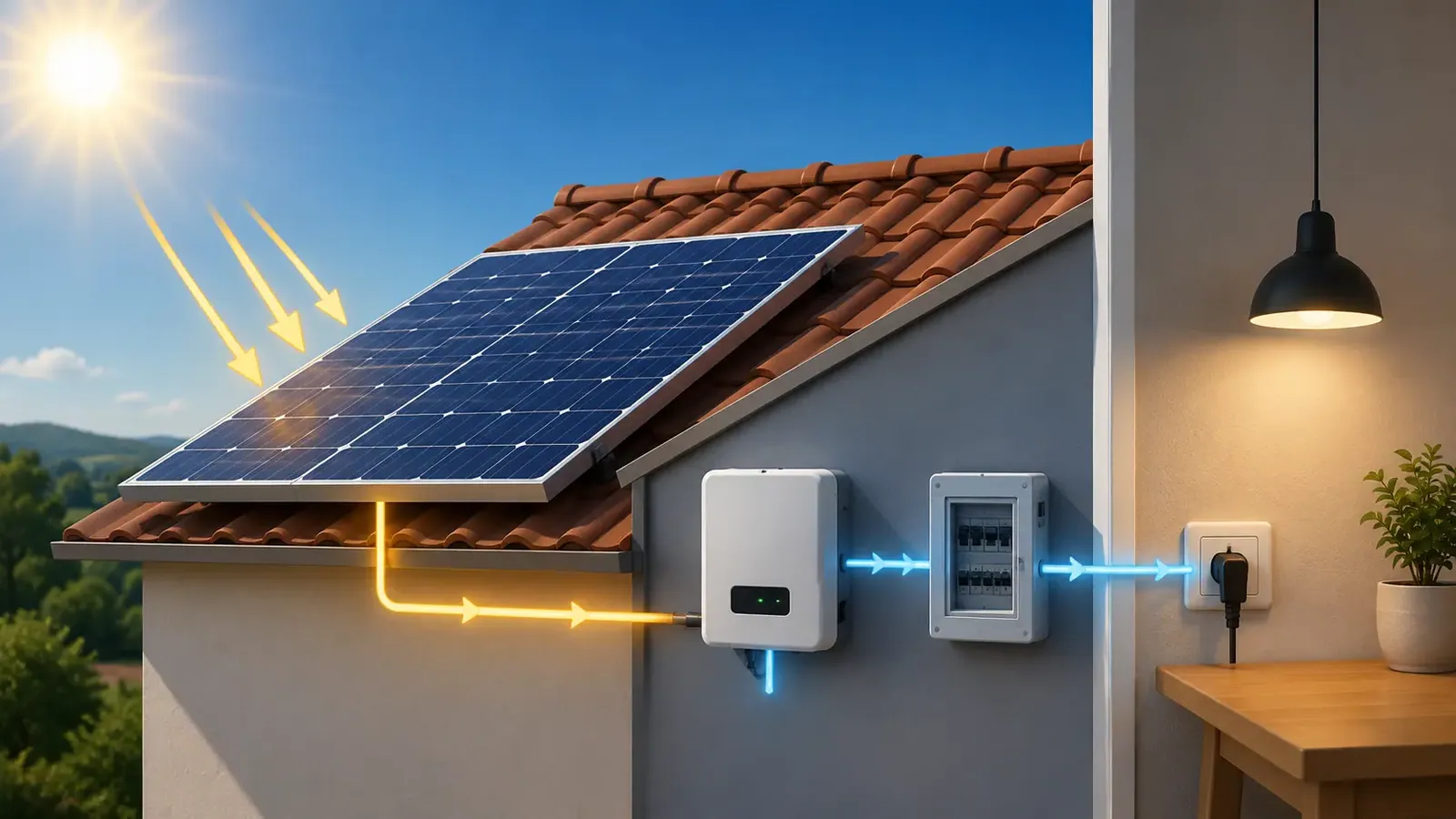
The power station can be charged from a wall outlet, with compatible solar panels, from the car socket or, on some models, by combining sources. Mains charging is usually the fastest; solar depends on panel power and irradiance; car charging is useful on trips, although slower.
2. It stores energy in an internal battery
The energy is stored in the battery (lithium-ion or LiFePO4) as chemical energy. Its capacity is measured in Wh (watt-hours): the more Wh, the more energy it stores.
3. The BMS protects and manages the battery
The BMS (battery management system) monitors charging, discharging, temperature, voltage and current, and protects against overcharge, over-discharge and short circuit. In short, it keeps the battery working within safe limits and extends its life.
4. The inverter converts the energy for AC sockets
The battery stores energy as direct current, but many devices use 230V alternating current. The internal inverter converts that direct current into alternating current, which is why a power station can have AC sockets like those at home. A pure sine wave inverter provides a more stable output, suitable for sensitive equipment.
5. The AC, DC and USB outputs power the devices
| Output | What it is for |
|---|---|
| AC / 230V socket | Laptops, lights, small appliances, chargers |
| USB-A | Phones, tablets, accessories |
| USB-C | Compatible laptops, phones, fast charging |
| DC / 12V car socket | Portable coolers, car accessories, inflators |
Each output has a maximum power, so before connecting a device you should check how many W it consumes.
What components it contains
Inside it combines several elements: the battery (lithium with good energy density or LiFePO4, more stable and with more cycles), the BMS that protects it, the internal inverter (the big difference compared to a power bank), the solar charge controller that regulates the input from the panels, and the ports and outputs, which determine what you can connect. If you are interested in battery technologies, see the guide to the best batteries for solar panels.
How a portable power station recharges
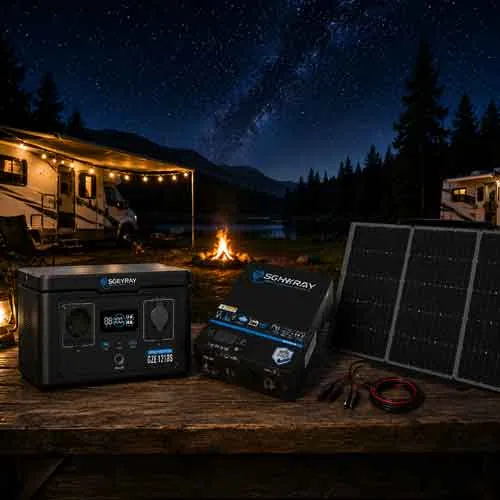
It can be recharged in several ways, which makes it useful both on and off the grid: from a wall outlet (the fastest, ideal for keeping it ready for power cuts), with compatible solar panels (perfect for camping, campers or country properties, with a portable solar panel) and from the car (useful on trips and camper routes, although slower).
W, Wh and runtime: how to know how long it lasts
W (watts) indicate power: how much energy a device needs to operate at a given moment. If a device consumes more W than the power station can deliver, you should not connect it. Wh (watt-hours) indicate capacity: how much energy the battery stores. Approximate formula: runtime = power station Wh / device W.
| Power station | Device | Consumption | Theoretical runtime |
|---|---|---|---|
| 600 Wh | Router | 15 W | ~40 h |
| 600 Wh | Laptop | 60 W | ~10 h |
| 600 Wh | LED light | 10 W | ~60 h |
| 600 Wh | Portable cooler | 50 W | ~12 h |
These are theoretical values: in practice you should subtract a margin for inverter losses, temperature and output type.
What devices it can power
It suits low and medium loads well: phones, tablets, laptops, routers, LED lights, cameras, drones, fans, portable coolers and low-power tools (watch out for the starting surge of some devices). You should not connect equipment that exceeds its maximum power: electric heaters, ovens, hair dryers, induction hobs, large air conditioners or very powerful tools are usually problematic on small power stations. Before connecting, check the device's W and the power station's maximum power.
The power station stands out for convenience, silence and no direct emissions (it can be used indoors with normal ventilation). For many consecutive hours or high loads, a generator or generator set is more suitable. They are often combined: power station + panel for everyday use, generator for intensive backup.
Common mistakes and basic care
To extend its life and use it safely: do not overload the power station by connecting devices that exceed its maximum power (it will shut off or trigger protections); always check the maximum power in W and the capacity in Wh before buying or using; and do not store it discharged for a long time (follow the manufacturer's instructions on charge level and storage). Also avoid extreme heat, humidity and impacts.
Genergy portable power stations
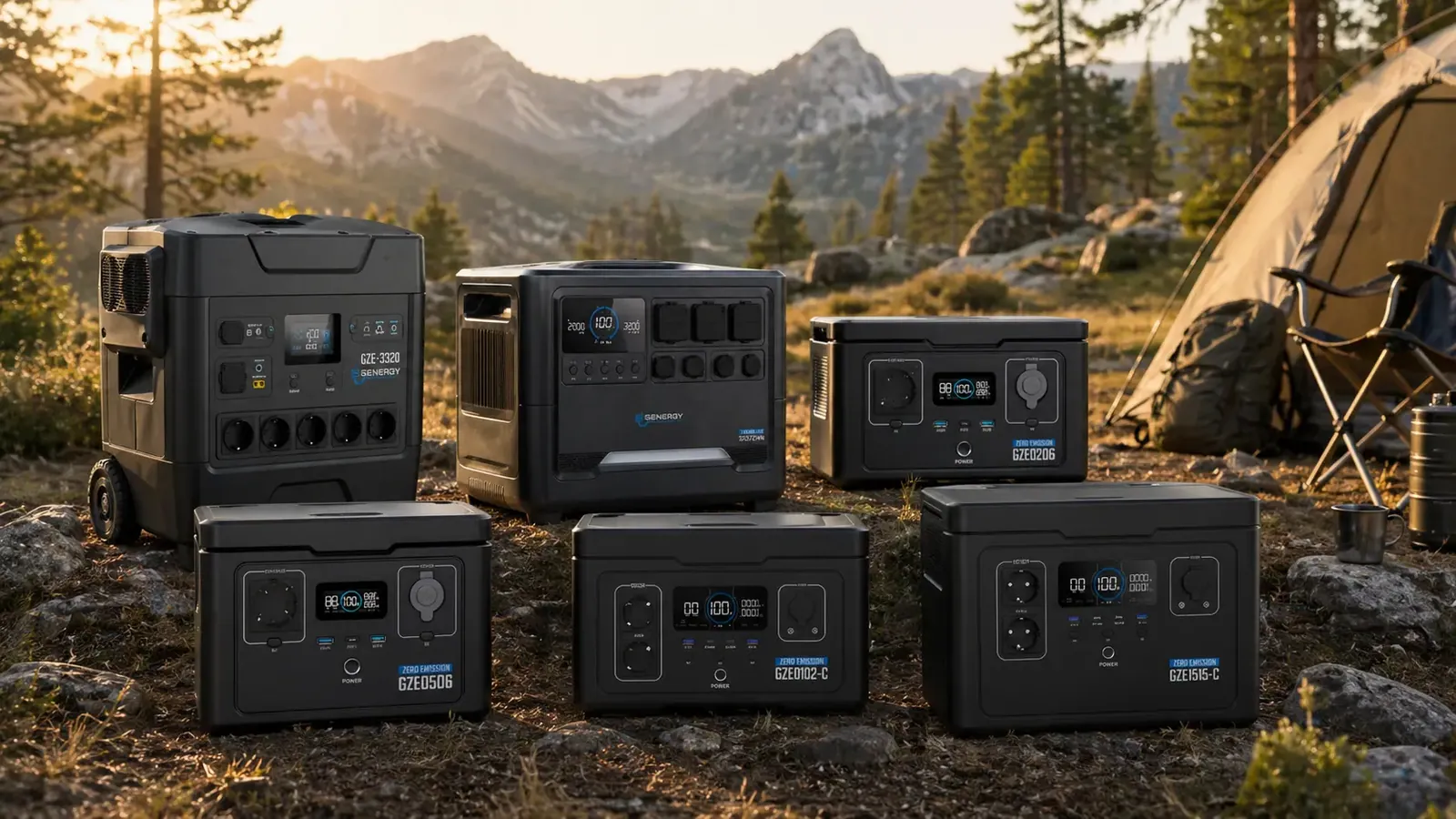
All Zero Emission power stations use a LiFePO4 battery (~4000 cycles), run silently and recharge from the mains, solar panel or car. Filter by capacity:
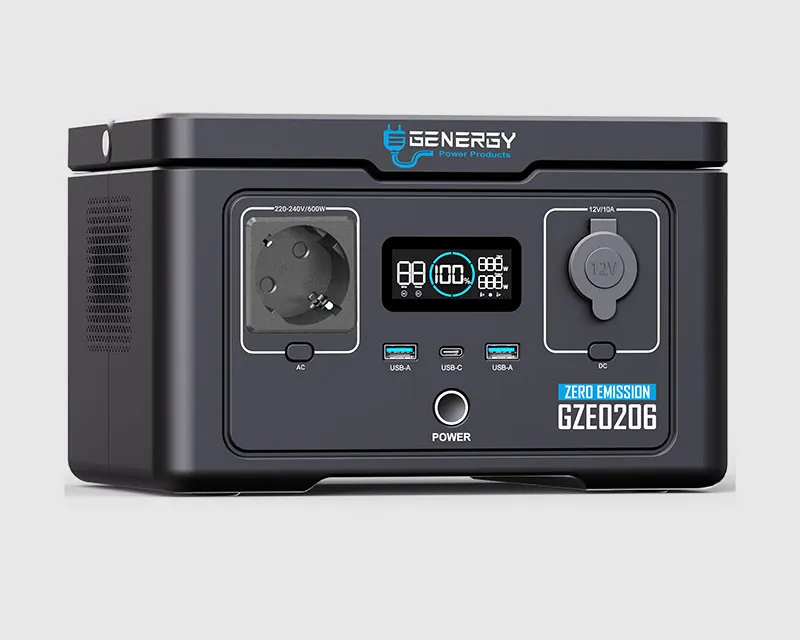
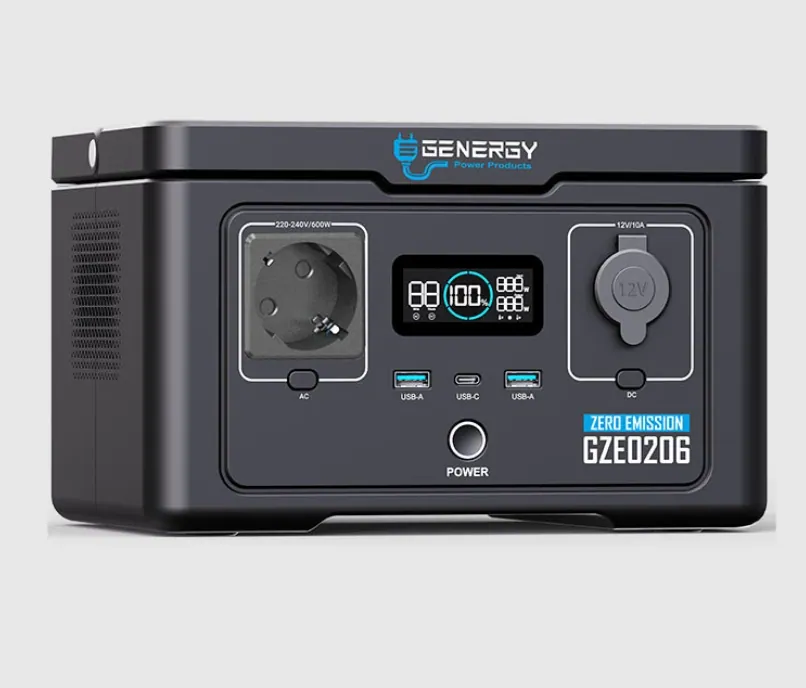
Power station GZE-0206
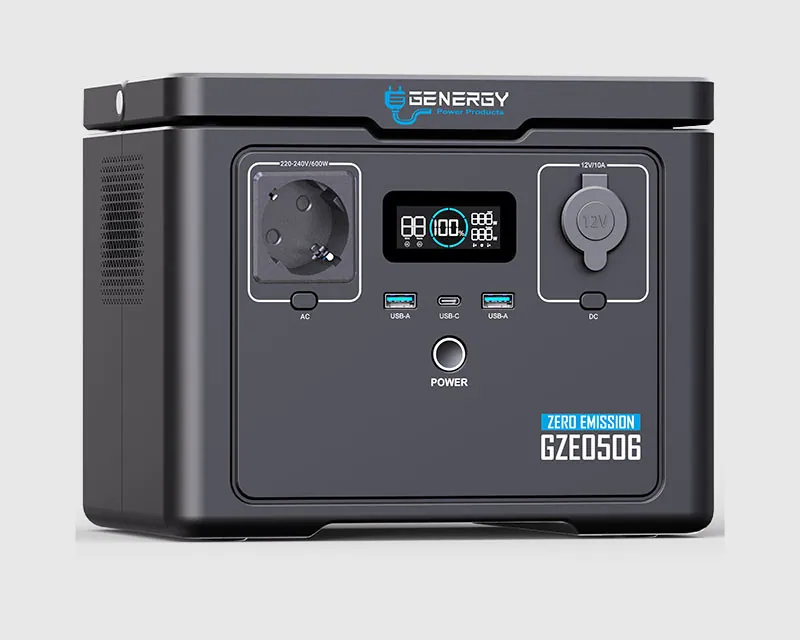
Power station GZE-0506
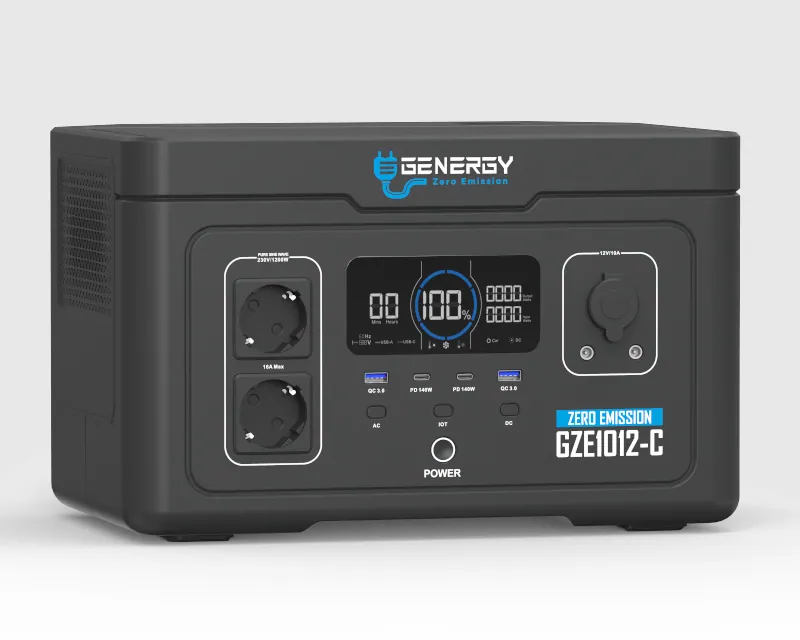
Power station GZE-1012
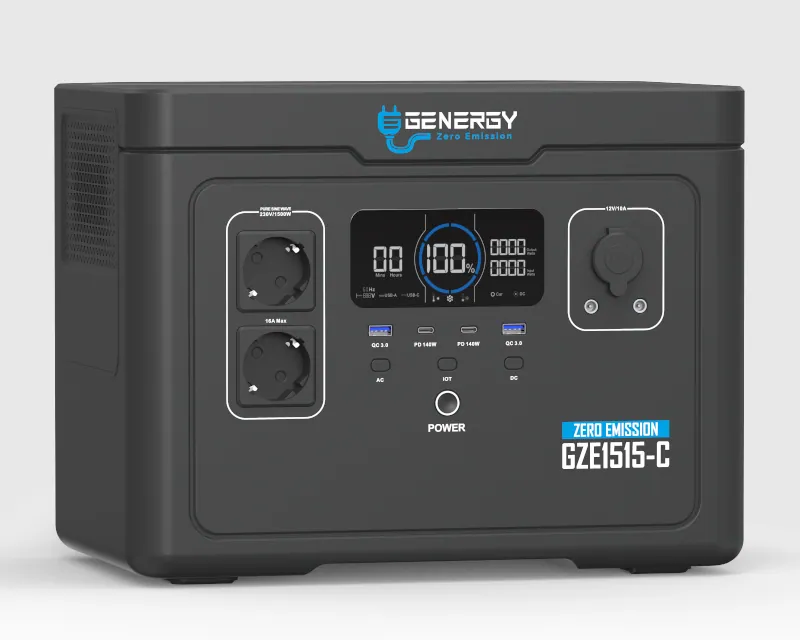
Power station GZE-1515
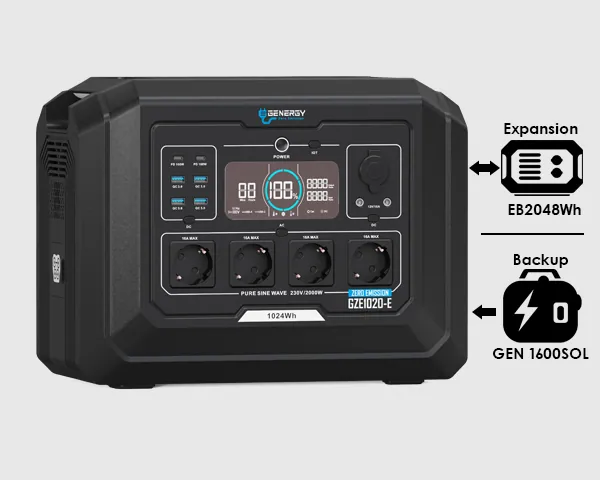
Power station GZE-1020-E
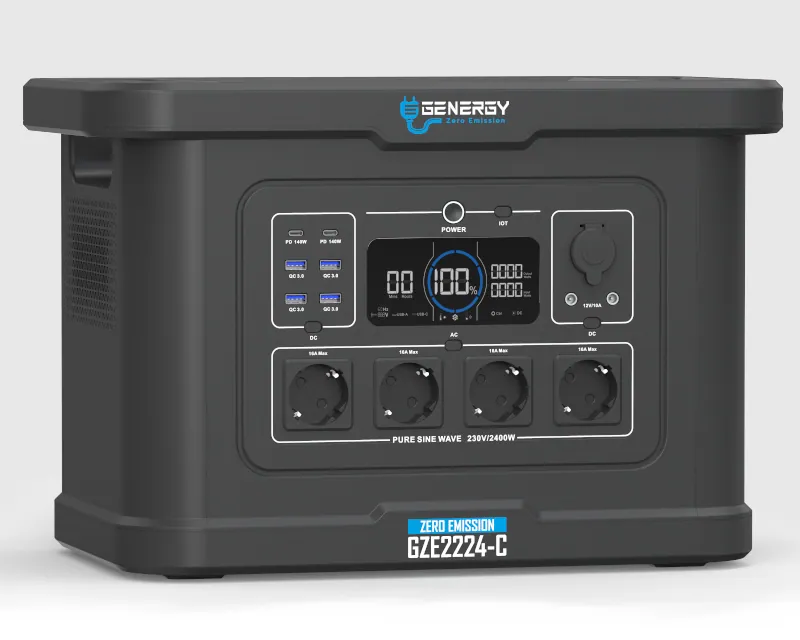
Power station GZE-2224
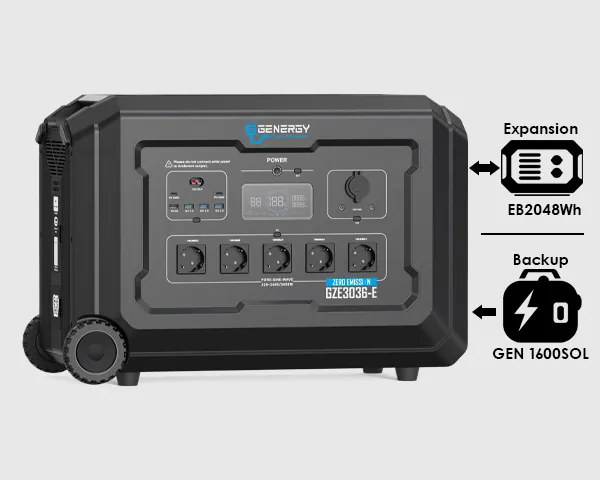
Power station GZE-3036
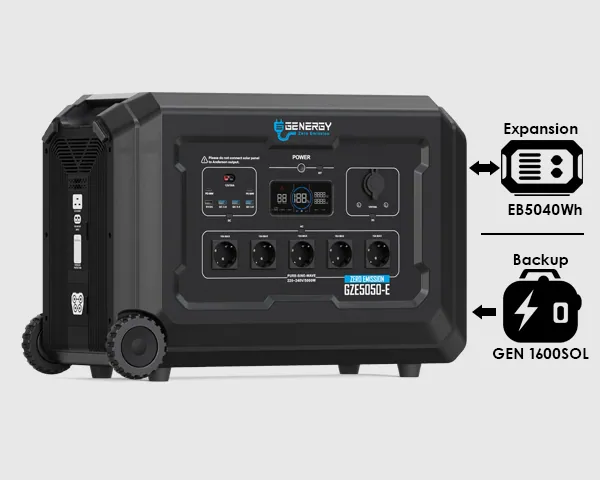
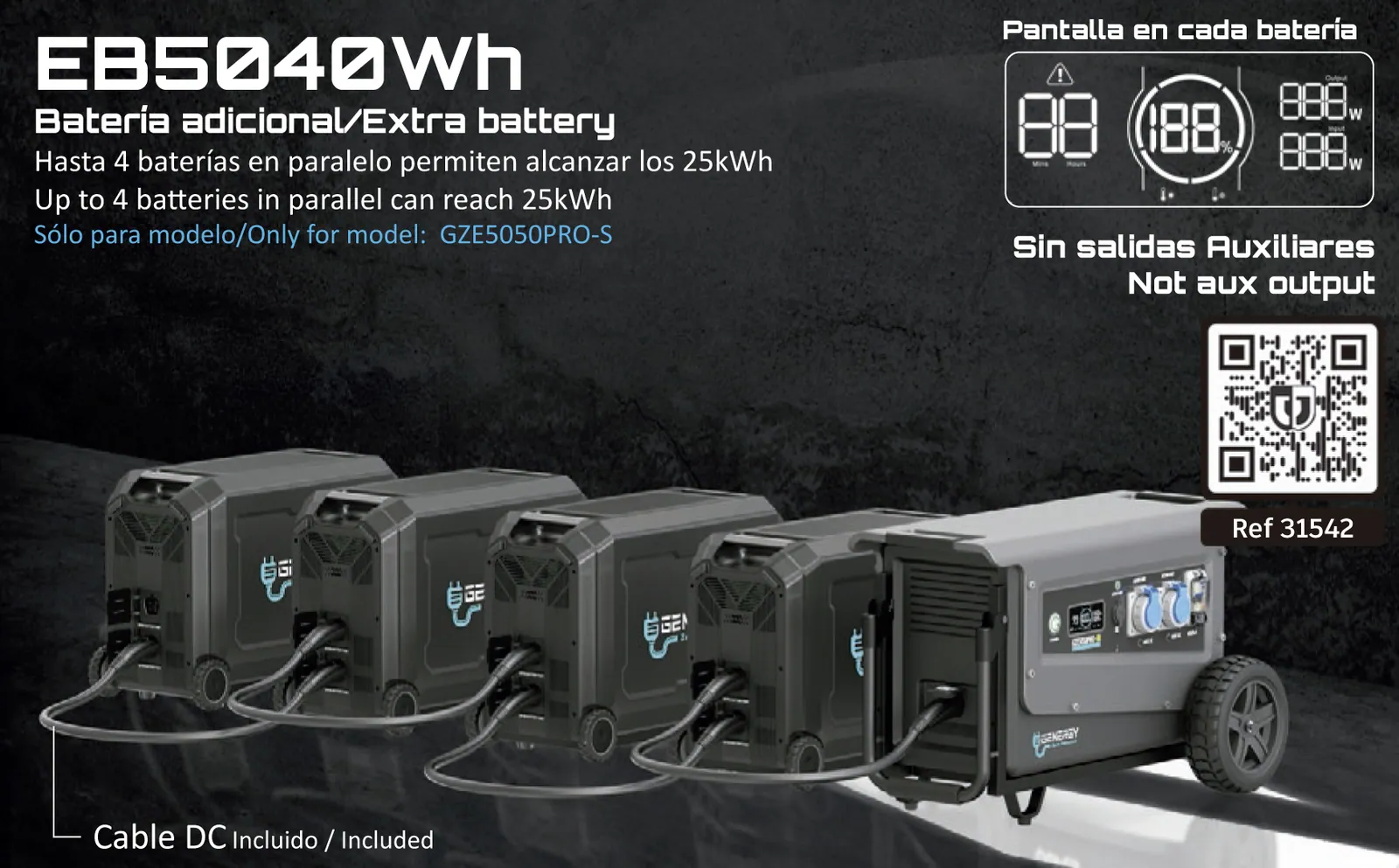
Power station GZE-5050
👉 See the full range: Portable power stations · Portable solar panels · Scalable systems · Questions? talk to a technician.
Which power station do you need for your case?
Tell us which devices you are going to connect and for how long, and we will tell you which Genergy power station fits without falling short or overpaying. We are manufacturers. No obligation.
Talk to a Genergy technicianConclusion
A portable power station works like a large-capacity rechargeable battery: it receives energy from the mains, solar panels or the car, stores it in a lithium or LiFePO4 battery, protects it with a BMS and delivers it to your devices through AC, DC, USB or USB-C outputs. In one sentence: it stores energy when you have it available and lets you use it later when you need it. Its advantage is convenience (silent, transportable, rechargeable, no direct emissions); its limit is runtime (depends on Wh) and maximum power (depends on W). Before choosing, look at capacity, power, battery type, outputs, recharging and real-world use.
Related categories
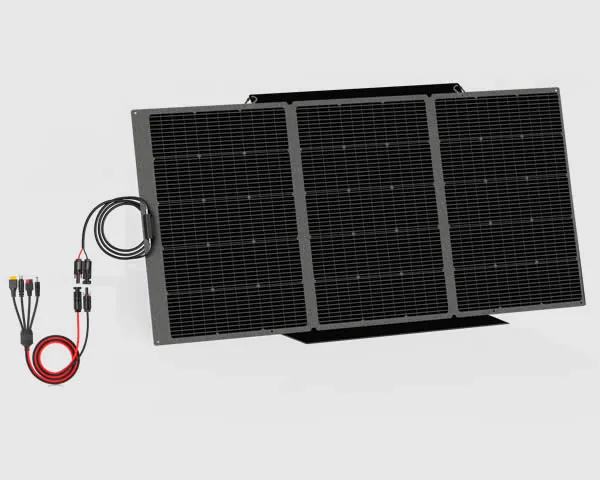
Related topics
Frequently asked questions about how a portable power station works
Can it be charged while in use?
Some models allow simultaneous charging and discharging (UPS mode), but it depends on the device's design. You should check the manufacturer's instructions before using it this way regularly.
How long does it take to charge?
It depends on the capacity, the charger power and the charging method. Wall outlet charging is usually the fastest; car charging is slower; and solar depends on the sun and the power of the panels.
Is it suitable for a refrigerator?
It can work for a portable or small refrigerator if its starting power and consumption are within the power station's limits. You need to check the device's W and the power station's capacity in Wh.
Does it make noise?
Very little. It may turn on internal fans when charging or working at a certain power level, but it is much quieter than a gasoline generator.
How long does the battery last?
It depends on the chemistry (LiFePO4 batteries last longer, ~4000 cycles), charge cycles, temperature, use and maintenance. With correct use, they offer many years of service.
Is a portable power station the same as a solar generator?
Not exactly. The portable power station is the battery with outputs. "Portable solar generator" usually refers to the set or solution that may include the power station plus solar panels to recharge it with solar energy.
Can it power an entire house?
Normally not, except for very large models or systems designed for it. For an entire house you usually need a higher-capacity installation, suitable batteries and a specific electrical design.
Can I use it indoors?
Yes, because it does not burn fuel while operating. Even so, you should keep it ventilated and away from heat, humidity or places where it could be damaged.