Which inverter generator to choose for a motorhome or camper: complete guide and comparison
By the Genergy technical team · Spanish manufacturer of inverter generators (15+ years) · updated July 2026 · 6 min read.
Table of contents
- Why an inverter generator for a camper
- How much power your motorhome needs
- Comparison of Genergy inverter models
- Which generator to choose for your vehicle
- Real consumption and runtime
- Noise level
- Inverter vs conventional
- Generator as a backup for the solar system
- Generators for motorhomes and campers
- Conclusion
- Frequently asked questions
If you have a motorhome or camper with solar panels, you know they don't always generate enough power: in winter, on cloudy days or under heavy use, you need a reliable backup source. That is where the portable inverter motorhome generator or camper generator comes in: it lets you charge the system's batteries, power appliances, support the solar installation and guarantee full autonomy, with no fixed installation and maximum flexibility.
Why choose an inverter generator for a motorhome or camper
Inverter generators are designed precisely for this use. Their key technical advantages:
- Stable power, safe for sensitive electronics.
- Lower consumption thanks to the automatic ECO mode.
- Quiet operation, important at campsites and stopover areas.
- Ideal as a backup for the solar system.
- Portable and easy to transport.
They produce clean power, suitable for battery chargers, computers, TVs and camper appliances.
How much power a motorhome needs
It depends on the level of consumption you want to cover:
| Use | Recommended power |
|---|---|
| Charging batteries | 1,000–2,000 W |
| Standard camper | 2,000–3,000 W |
| Mid-size motorhome | 3,000–4,000 W |
| Full-size motorhome | 4,000–5,500 W |
| Full heavy use | 6,000–7,500 W |
Comparison of Genergy inverter generators for campers and motorhomes
| Model | Power | Weight | Noise | Remote start | Solar compatible | Recommended use |
|---|---|---|---|---|---|---|
| Ibiza 1100W | 1,100 W | 12–15 kg | 59–62 dB | No | Yes | Basic battery charging |
| Palma 1700W | 1,700 W | 17–20 kg | 62–64 dB | No | Yes | Basic camper |
| Lanzarote RC 2000W | 2,000 W | 21–24 kg | 62–65 dB | Yes | Yes | Standard camper |
| Menorca RC 2900W | 2,900 W | 25–30 kg | 64–68 dB | Yes | Yes | Advanced camper |
| Madeira 4000W | 4,000 W | 59 kg | 66–73 dB | No | Yes | Full-size motorhome |
| Elba RC 5500W | 5,500 W | 94 kg | 67–74 dB | Yes | Yes | Heavy-use motorhome |
| Tenerife RC 7500W | 7,500 W | 96 kg | 68–74 dB | Yes | Yes | Premium motorhome |
| Creta SOL Silent 7500W | 7,500 W | 96 kg | 68–74 dB | Yes | Yes (automatic backup) | Complete solar system |
Approximate weights, noise levels and power ratings depending on model and version. All are inverter models with ECO mode and compatible with solar backup.
Which generator to choose for your camper or motorhome
Standard camper (the most balanced option)
To charge batteries, power appliances and support the solar panels, a 2,000–3,000 W inverter (such as the Menorca RC 2900W) is the sweet spot between power, weight and portability.
Full-size motorhome
For greater autonomy and several devices at once, step up to 4,000 W (such as the Madeira 4000W): continuous use without falling short.
Heavy-use motorhome
For heavy use and complete systems, a 5,500 W unit (such as the Elba RC 5500W) provides plenty of headroom.
Solar system with automatic backup
If you want full integration with the solar installation and automatic start when the battery runs low, the most advanced option is a SOL model with automatic backup (such as the Creta SOL Silent 7500W).
Real consumption and runtime
| Power | Average consumption |
|---|---|
| 2,000 W | 0.8–1.5 L/h |
| 3,000 W | 1–2 L/h |
| 4,000 W | 1–2.5 L/h |
| 5,500 W | 1.5–3 L/h |
| 7,500 W | 2–3.5 L/h |
ECO mode automatically reduces consumption when demand is low, which is key to extending runtime on the road.
Noise level of a motorhome generator
As a reference for Genergy inverters: 59 dB is very quiet, 65 dB is quiet and 74 dB is the standard inverter level. They are considerably quieter than a conventional generator, which matters a lot at campsites, overnight stopover areas and quiet places.
Inverter generator vs conventional generator
For campers and motorhomes, the inverter is the recommended choice: stable power, safe for electronics, lower consumption, lower noise and higher efficiency. A conventional generator may be fine for rugged loads where waveform quality matters less, but it is not ideal near electronic equipment.
Generator as a backup for the solar system
The most common use in a camper is as support for the solar system: charging the batteries when there is no sun, maintaining autonomy and ensuring continuous operation, especially in winter or on cloudy days. A model with automatic start kicks in on its own when the battery drops below a set level, without you having to do anything.
Don't size by maximum power alone: in a camper, weight and noise are as important as watts. A light, quiet inverter well matched to your real consumption is more practical than a large one you can barely move.
Inverter generators for motorhomes and campers
Filter by your vehicle and use to see the model that fits best:
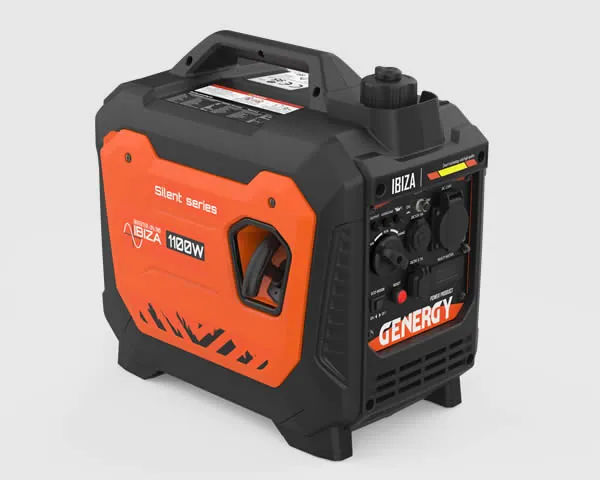
Ibiza 1100W Generator
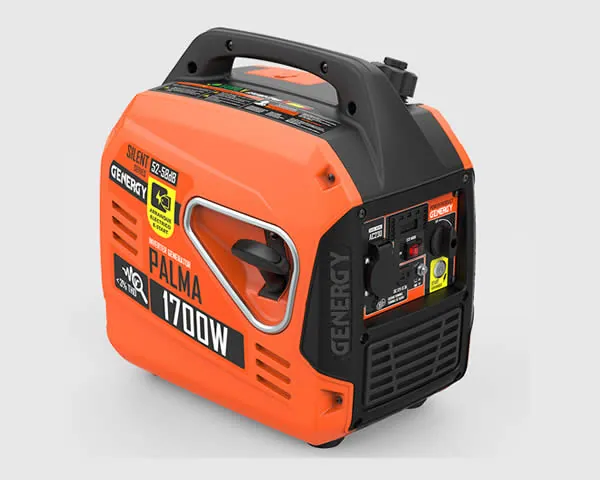
Palma 1700W Generator
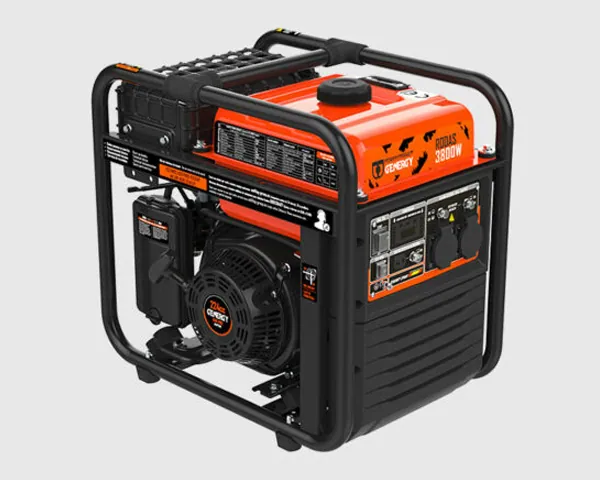
Generador Rodas 3800W
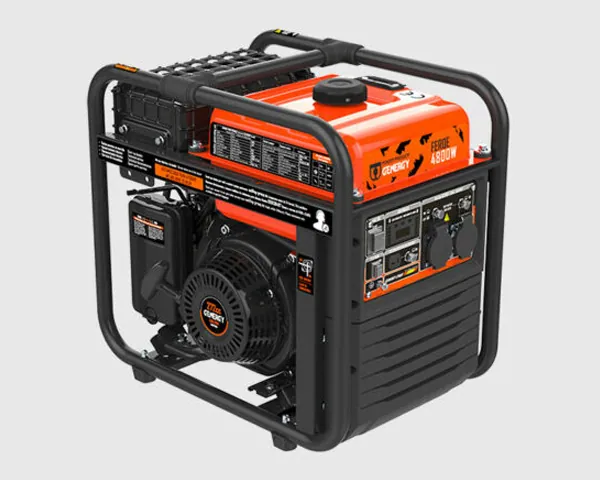
Generador Feroe 4600W
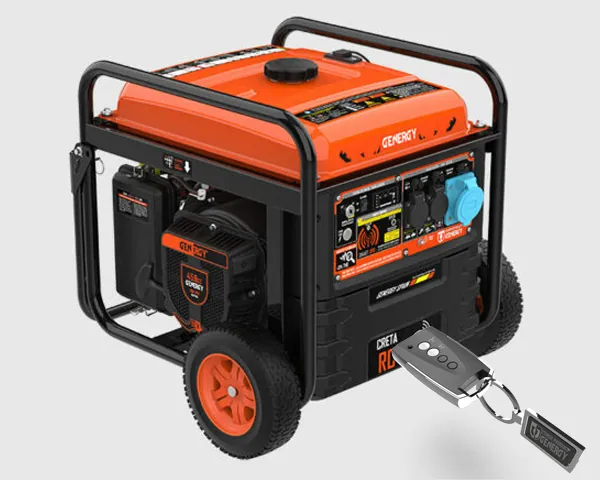
Creta RC 7500W Generator
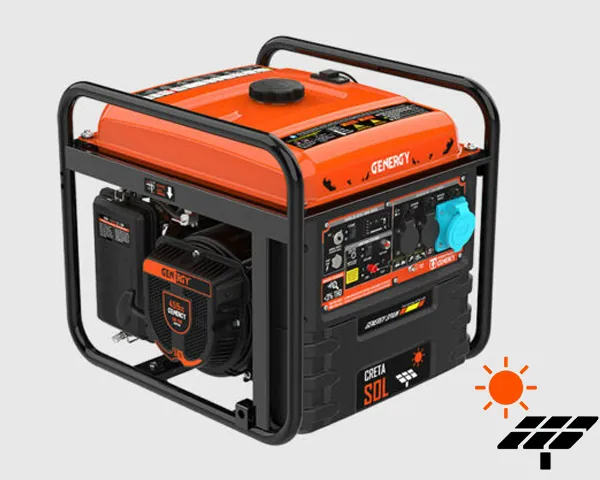
Creta SOL 7500W Generator
👉 See the full range: Motorhome/camper generators · Inverter · Soundproof · Portable camping. Any questions? Talk to a technician.
Which generator suits your camper?
Tell us what vehicle you have and what you want to power (batteries, appliances, solar backup) and we will recommend the inverter with the best balance of power, weight and noise. No obligation.
Talk to a Genergy technicianConclusion
A portable inverter generator is the best solution for energy autonomy in motorhomes and campers: it supports the solar system, charges the batteries and powers your equipment safely and quietly. Choose the power according to your use and prioritize weight and noise, which matter as much on the road as watts. The Genergy inverter range covers everything from basic battery charging to the premium motorhome with automatic solar backup.
Related categories
Related topics
Frequently asked questions
What generator do I need for a motorhome?
It depends on consumption: 1,000–2,000 W is enough to charge batteries; a standard camper needs 2,000–3,000 W; a mid-size motorhome, 3,000–4,000 W; and a full-size one, 4,000–5,500 W. For a camper, the most balanced choice is usually an inverter of around 2,900 W because of its ratio of power, weight and noise.
What generator power does a camper need?
A standard camper is well covered by a 2,000–3,000 W inverter, enough to charge batteries, power appliances and support the solar panels. If you only want to keep the batteries topped up, 1,000–2,000 W is enough and you save on weight.
What is the quietest generator for a motorhome?
Inverter models are the quietest: in the Genergy range, the smaller models run at around 59–62 dB, very discreet for campsites and overnight stopover areas. The lower the power and the better the insulation, the quieter the unit.
Can a generator be used with solar panels in a camper?
Yes, it is its most common use: the generator acts as a backup for the solar system and charges the batteries when there is not enough sun. Models with automatic start (SOL type) switch on by themselves when the battery runs low and shut off once it has recovered.
Can the generator be used while traveling?
It must not be used while driving or inside a closed vehicle: a combustion generator produces dangerous exhaust gases. It should be used with the vehicle stationary, outdoors and in a ventilated area, respecting safety distances.
How much fuel does a motorhome generator consume?
It depends on the power and the load. As a guide, a 2,000 W inverter consumes 0.8–1.5 L/h; a 3,000 W one, 1–2 L/h; and a 4,000 W one, 1–2.5 L/h. ECO mode reduces consumption when demand is low.
Inverter or conventional generator for a camper?
Inverter, without a doubt. It offers stable power (safe for the camper's electronics), less noise, lower consumption and higher efficiency. A conventional generator is only worthwhile for rugged loads where waveform quality matters little.
What is the lightest generator for a camper?
The lowest-power models are the lightest: a 1,100 W inverter weighs around 12–15 kg, easy to carry and store. It is ideal if your goal is to charge batteries and power small loads with minimum weight.
Are inverter generators safe for electronics?
Yes. Inverter generators produce stable, clean-waveform power, suitable for chargers, computers, TVs and sensitive camper appliances, without the spikes that can damage equipment when using a conventional generator.
Which motorhome generator has solar backup and automatic start?
For full integration with the solar installation, choose a SOL model with automatic backup (such as the Creta SOL Silent 7500W): it starts on its own when the battery runs low, recharges the system and shuts down once the charge is restored, ensuring continuous autonomy without intervention.