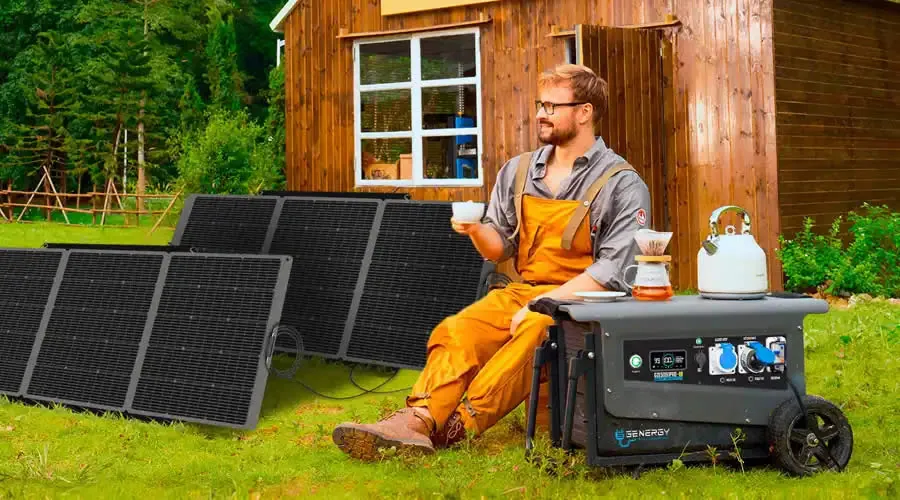
How to connect a generator to a solar inverter: practical guide for hybrid and off-grid systems
By the Genergy technical team · Spanish manufacturer of generators, inverters and photovoltaic systems (15+ years) · updated July 2026 · 9 min read.
Table of contents
- Quick answer: where and how to connect it
- When it makes sense to use it as backup
- What you need before connecting it
- How to connect it step by step
- What power the generator needs
- Common mistakes to avoid
- Can you automate the start-up?
- Genergy inverters and generators
- Conclusion
- Frequently asked questions
Connecting a generator to a solar inverter is a very useful solution when an installation needs additional backup: lack of photovoltaic production, several cloudy days, a high one-off load or excessive battery discharge. The key idea to make clear from the start: the generator is not simply connected to the system "any which way"; it must be done in a way that is compatible with the inverter and with a correct configuration.
In practical terms, the usual way to do it in a hybrid or off-grid system is to connect the generator's alternating current output to the inverter's AC-In input port. That is the important point: it is not connected to just any output, nor directly to any part of the system without control, because the off-grid inverter must be able to manage that input, use it to power loads and, if applicable, charge batteries.
This is the detail that prevents the most mistakes: the inverter is in charge. The generator should not act as a "loose" source, but as a support controlled by equipment designed for it. And the physical connection is not enough: you also have to configure the inverter to limit the input current according to the generator's real capacity, because if the inverter tries to draw more than the generator can deliver, faults, drops or unstable operation appear.
Quick answer: where and how to connect a generator to a solar inverter
The short answer: if you have a compatible hybrid or off-grid solar system, the generator is connected from its AC output to the inverter's AC-In input. The inverter is then configured to accept that source, limit the input current and decide how to distribute it between loads and batteries.
That brief explanation needs three important clarifications:
| Note | Why it matters |
|---|---|
| Not all inverters accept a generator | Some models only work with panels and batteries. Only those with an AC input (hybrid or inverter/charger) accept mains or a generator. Confirm compatibility before thinking about wiring. |
| The quality of the generator's output matters | If it delivers unstable current, out-of-range frequency or a poor-quality waveform, some inverters reject it or run erratically. |
| The internal charger must be adapted | The inverter's charger settings must be adjusted to the capacity of the generator set, not left at factory defaults. |
Compatibility, AC-In connection, input current adjustment and sizing verification. If any one of those four pieces fails, the installation will not behave as you expect.
When it makes sense to use a generator as backup in a solar installation
A generator should not be seen as an improvised patch, but as a useful support source in specific contexts. In off-grid systems it is common to have one to cover times when solar production is not enough or when the batteries drop lower than expected.
Lack of solar production and cloudy days
One of the most common scenarios is a spell of bad weather or a period of low irradiation. The panels may not be able to sustain the loads and recharge the batteries at the same time. There the generator acts as backup and prevents the system from running out of usable energy.
Load peaks and battery support
It also makes sense when there are high one-off loads. Sometimes the installation works well under normal conditions, but certain appliances or times of day push demand up. If the batteries are also low, the generator helps sustain both the instantaneous load and the recovery of the battery bank. It is best to think of it as strategic help, not as the foundation of the installation: if the system depends on it too often, the real problem usually lies in the solar sizing, the batteries or the consumption pattern.
What you need before connecting a generator to the inverter
Before making any connection, it is advisable to check three things: the type of inverter, the generator's compatibility and the power required.
Hybrid inverter or inverter/charger with AC-In input
The first thing is to confirm that the inverter has an AC-In input (or equivalent function) to accept an external AC source. That is what allows the unit to recognize the generator's energy, manage it and, in many cases, use its internal charger to charge batteries. If the inverter does not have that function, integrating a generator ends in ill-advised workarounds or an unstable installation. This point is settled before anything else.
Compatible generator with stable frequency
The generator must deliver a signal compatible with the inverter. It is not enough that it "gives current": the frequency must be stable, the voltage correct and the waveform quality adequate. Some inverters are quite sensitive to unclean AC inputs, which is why inverter generators —with a stable waveform— fit this role especially well. The generator should not be chosen on price or rated power alone.
Sufficient power for loads and battery charging
Here lies one of the keys to the system. The generator must be able to power the loads active at that moment and, in addition, support the power the inverter devotes to recharging batteries. If it is too tight, the system becomes overloaded or runs poorly. The rule: size the generator for direct consumption + battery charging, not just one of the two.
How to connect a generator to a solar inverter step by step
Each manufacturer has its own particularities, but the general logic is fairly similar.
1. Connecting the generator to the AC-In input
The basic step is to bring the generator's alternating current output to the inverter's AC-In input. This is the correct route for the unit to interpret the generator as a valid external source. Do not improvise connections outside this scheme or bypass inverter functions, because the inverter is the equipment that must coordinate loads, transfer and charging.
2. Configuring the inverter's input current
Once the connection is made, it is time to configure the inverter. This point is as important as the wiring: the inverter must know how much current it can draw from the generator without overloading it. If that limit is not set, the system may demand more than the generator set can sustain. It is one of the most common mistakes: everything is connected correctly, but a factory or excessively high setting is left in place and problems follow.
3. Adjusting priorities: loads, batteries and backup
Many inverters let you define priorities: whether loads are powered first, whether the battery is charged afterwards, or whether the generator comes in only under certain conditions. Setting this logic properly helps the system work in an orderly way rather than chaotically.
4. Checks before starting up
Before accepting the connection as good, check that the inverter correctly detects the AC input, that frequency and voltage are within range, that the input current is limited, that the generator supports the real load without failing and that battery charging does not cause excessive demand.
How to calculate what power the generator needs
Choosing the right power is not just a matter of looking at a number on the technical data sheet: you have to consider the real use of the system.
Direct consumption of the home or loads
First, estimate which loads may be active while the generator is running. A occasional support for light loads is not the same as having appliances, water pumps, tools or several devices working at once.
Margin for battery charging
Then add the portion of power the inverter will devote to charging batteries. This point is often forgotten, but it is essential: a generator that seems sufficient for the house can fall short as soon as the solar inverter adds the battery bank's charging load.
Why a tightly sized generator usually causes problems
A generator that is too tight works under strain, with more noise, poorer stability and a higher risk of drops when loads change. Rather than the absolute minimum, it is more sensible to leave a reasonable margin: if the generator only just covers the expected load, it will probably fall short in a real situation.
Common mistakes when connecting a generator to a solar inverter
Using an inverter without a suitable AC input
The most basic mistake. Not all inverters are designed to work with a generator. If the unit has no AC input or does not support that function, forcing the integration does not usually end well.
Not limiting the input current
A critical point worth repeating: if the inverter draws too much current from the generator, the system can fail even if the wiring is done correctly. The input limit must be adjusted to the real capacity of the generator set.
Ignoring frequency, waveform quality or automation
Some electric generators do not deliver a signal stable enough for certain inverters. Automation is also underestimated: some people want automatic start on low battery, but not all equipment allows it in the same way or with the same accessories.
Can the generator's start-up be automated?
Yes, in many cases, but it depends on the inverter, the generator and the type of automation available.
Start on low battery
In more complete systems, the inverter can detect a drop in battery state of charge and order the generator to start if that function is supported. It is especially useful in off-grid installations where manual supervision is not always available.
Dry contact, ATS and real limits
Automation usually involves elements such as a dry contact, relays or transfer systems (ATS). Be cautious: just because an installation can be automated does not mean all generators or inverters do it equally well. Check the real capabilities of the equipment before taking it for granted.
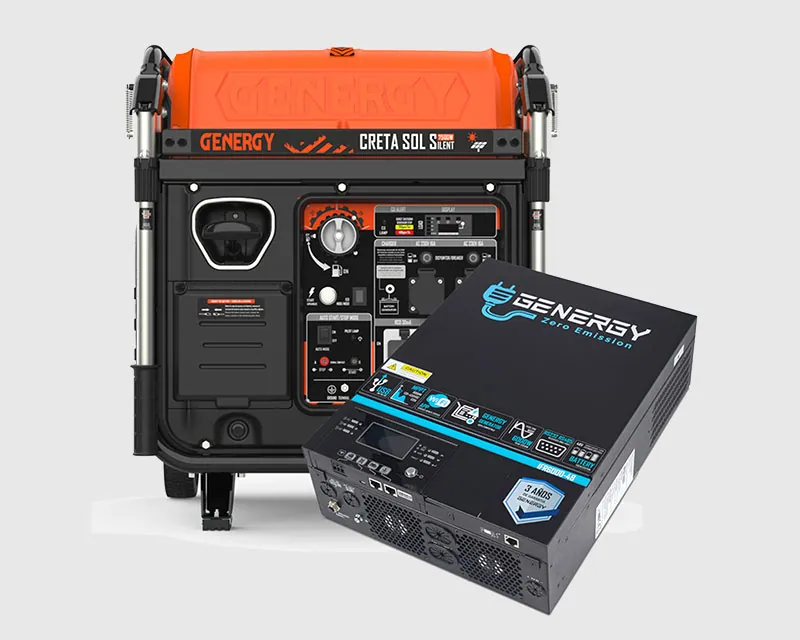
Genergy inverters and generators for hybrid systems
For the connection to work you need the two right pieces: an off-grid inverter with AC input and a stable-waveform inverter generator. Filter according to what you are looking for:
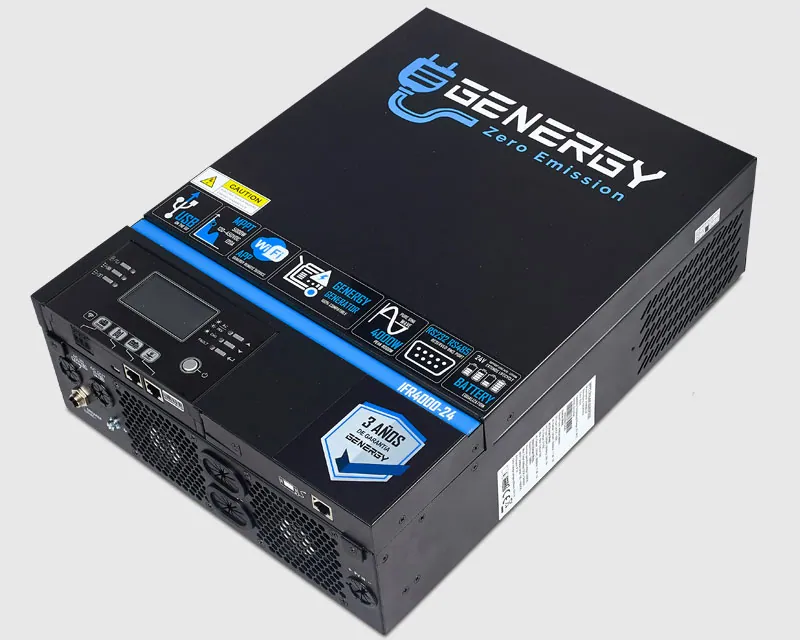
Inversor IFR4000 24V
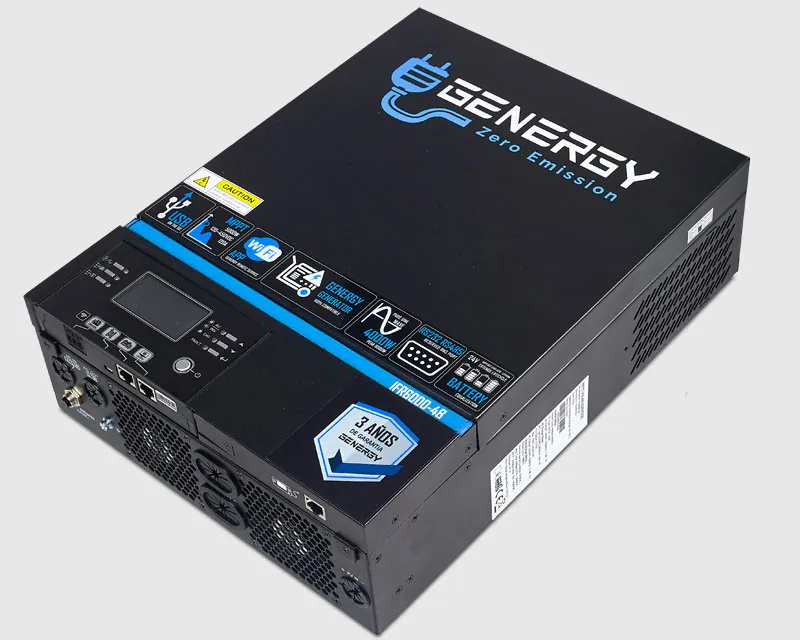
Inversor IFR6000 48V
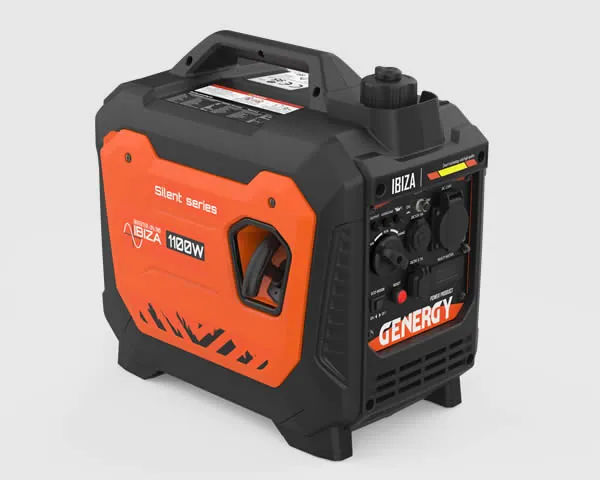
Ibiza 1100W Generator

Palma 1700W Generator
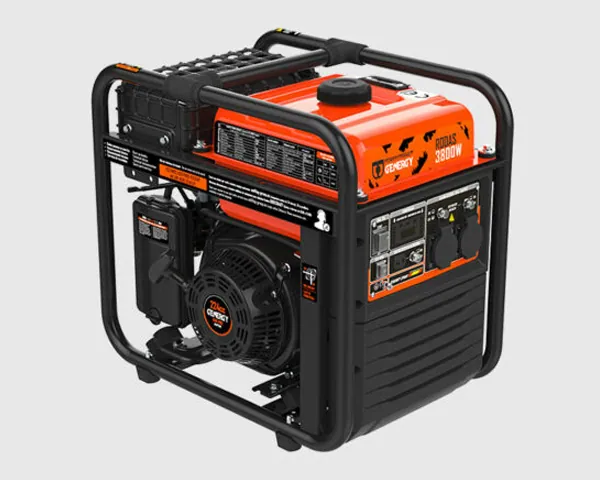
Generador Rodas 3800W
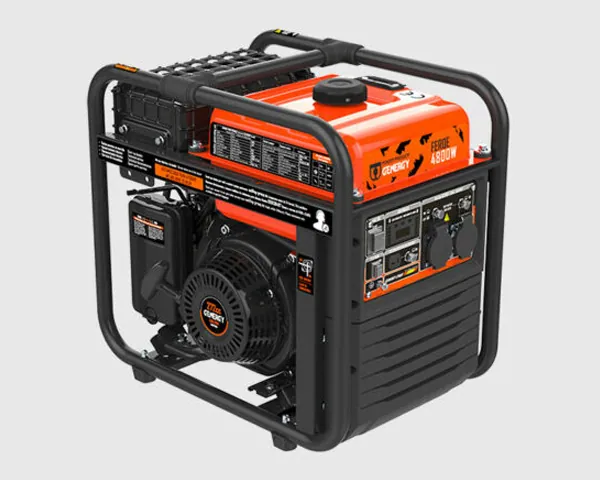
Generador Feroe 4600W
👉 See the full range: Off-grid inverters · Inverter + backup generator packs · Inverter generators · Questions? talk to a technician.
Building a hybrid system and not sure which generator fits?
We manufacture off-grid inverters and generators. Tell us your inverter, your loads and your battery bank, and we will help you choose compatible, correctly sized equipment. No obligation.
Talk to a Genergy technicianConclusion
The answer to how to connect a generator to a solar inverter is not "just plug it in", but to integrate it in a compatible and controlled way. In a hybrid or off-grid system, the usual approach is to connect the generator's AC output to the inverter's AC-In input, configure the unit to limit the input current and make sure the generator has enough power to supply loads and charge batteries. The three points that matter most: use an inverter designed for it, set the AC input correctly and don't fall short on power. With those three pieces in place, the system works far more stably.
Related categories
Related topics
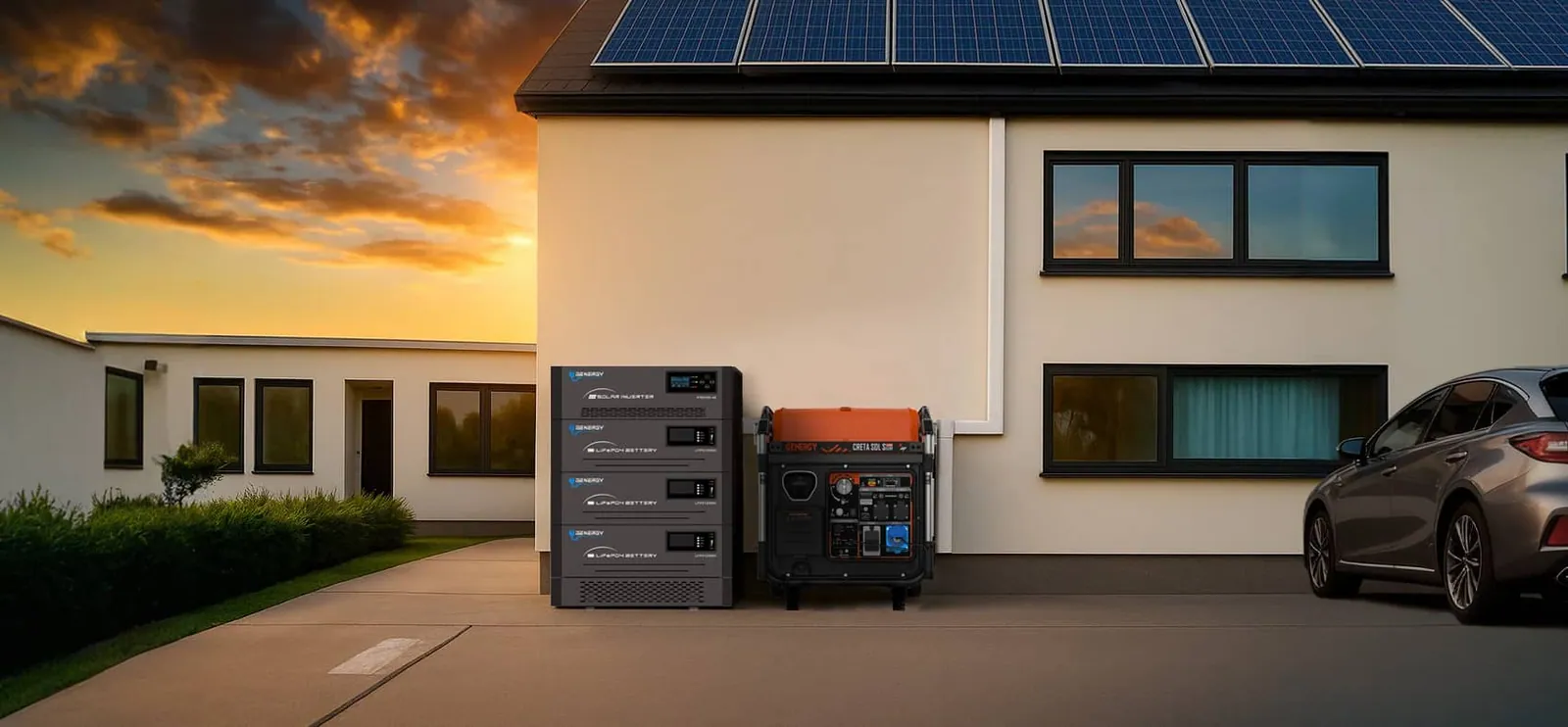

Frequently asked questions about connecting a generator to a solar inverter
Where exactly is the generator connected to the inverter?
The usual approach is to connect the generator's alternating current output to the inverter's AC-In input. It is the correct route for the unit to recognize the generator as an external source and manage it in an orderly way.
Do all solar inverters accept a generator?
No. Only some models, normally hybrid inverters or inverter/chargers with an AC input, are designed for it. Those that only work with panels and batteries do not accept a generator. Confirm compatibility before planning the wiring.
Can solar batteries be charged with a generator?
Yes, if the inverter includes an AC charger and is configured to use that input correctly. The generator enters through the AC-In, the inverter manages it and directs part of that energy to recharging the battery bank while keeping the loads running.
Does a regular gasoline generator work, or do I need an inverter generator?
Many inverters are sensitive to signal quality, so an inverter generator —with a stable waveform and constant frequency— is the safest option. A conventional generator may work if it delivers a clean, stable signal, but you should check the inverter's requirements.
Why doesn't the inverter charge when I connect the generator?
The most common causes: the inverter has no AC input or it is not enabled, the input current is misconfigured, or the generator's signal (frequency, voltage, waveform) falls outside the range the inverter accepts. Check compatibility, configuration and output stability.
How do I know what power the generator needs?
It is calculated by adding the direct consumption while it runs plus the power the inverter devotes to charging batteries. A generator that only covers the house's consumption can fall short once the battery bank's charging is added. Leave a margin.
What happens if the generator's frequency is unstable?
Some inverters reject the AC input or run erratically if the signal is not stable enough. That is why constant frequency and waveform quality are as important as rated power.
What is the inverter's AC-In input?
It is the port through which the inverter accepts an external source of alternating current, whether the electrical grid or a generator. Through it the unit powers loads and, if configured to do so, uses its internal charger to recover batteries.
Can the generator be started automatically?
In many systems, yes, but it depends on compatibility between the inverter, the generator and the available automation (dry contact, relays, ATS). The inverter can order the start-up when it detects low battery if both pieces of equipment support it. Not all do it the same way, so it should be verified.
Can I connect it to inverters from other brands?
The general logic (generator AC output to the inverter's AC-In input) is common to most hybrid inverters with an AC input. Port names and configuration menus vary by manufacturer, so you should always follow the manual of the specific inverter.
Can the generator and solar panels work at the same time?
In a hybrid inverter, yes: the unit manages solar energy, batteries and the generator input at the same time, distributing according to the configured priorities. The generator acts as support when the sun and batteries are not enough, not as a permanent replacement for the solar installation.