How to choose an electric generator for home: complete guide and 2026 comparison
By the Genergy technical team · Spanish manufacturer of generators and generator sets (+15 years) · updated July 2026 · 8 min read.
Table of contents
- What generator do I need for a home (power)
- Which appliances it can run and how many watts
- Types of generators for the home
- Backup generator for solar panels
- Genergy generator comparison by home
- Which generator for each type of home
- Real fuel consumption of a home generator
- Noise level
- Inverter vs conventional
- What to consider before buying
- Genergy generators for the home
- Conclusion
- Frequently asked questions
An electric generator for the home is an increasingly common solution: as backup during power outages, in off-grid homes with no mains connection, or as support for a solar installation. The most common mistake is buying one without enough power to handle the home, or one that is too large and burns more fuel than necessary. In this guide you will see which generator to buy for a home, how much power to choose and which type is the most suitable in each case.
What electric generator do I need for a home
The power you need depends mainly on the number of appliances you want to run at the same time and on the size of the home. As a general guide:
| Type of home | Recommended power |
|---|---|
| Small home / basic backup | 2,000–3,000 W |
| Medium-sized home | 4.000–6.000 W |
| Large home / high consumption | 7.000–10.000 W |
A 5.000–7.000 W generator is usually enough for most homes, allowing you to run essential appliances (fridge, lighting, television, microwave and small appliances). If you want to run higher-consumption equipment, such as air conditioning or water pumps, it is worth stepping up in power.
Which appliances a home generator can run
To calculate the power correctly, it helps to know the approximate consumption of each appliance:
| Appliance | Approximate power |
|---|---|
| Fridge | 150–300 W |
| Television | 100–200 W |
| Microwave | 800–1.200 W |
| Washing machine | 500–1.000 W |
| Water pump | 700–1.500 W |
| Air conditioning | 1,000–2,000 W |
For example, a 3.000–4.000 W generator can run a fridge, lighting, a television and small appliances. If you also want to use a water pump or air conditioning, step up to 5.000–7.000 W.
Many appliances with a motor (fridge, water pump, air conditioning) draw considerably more power when starting than when running. Always leave a power margin above the sum of your loads so the generator does not fall short during those surges.
Types of electric generators for the home
Gasoline generators
The most common for home use: lower initial cost, simple maintenance and ideal for occasional use. A good option for power outage backup or one-off use. See the range of gasoline generators.
Diesel generators
Designed for more intensive use: higher efficiency in prolonged use, longer-lasting engines and better performance under heavy loads. Common in off-grid homes or installations that need many hours of operation. See diesel generator sets.
Quiet inverter generators
They produce a more stable current with less noise. Their advantages: safe power for electronics, lower consumption thanks to ECO mode and quieter operation. They are the best option if you are looking for a quiet generator for your home or if you are going to power sensitive electronic equipment. See inverter generators.
Electric generator for a home with solar panels
More and more homes combine a generator with solar. In these cases the generator acts as backup when solar production is not enough: it charges the batteries, keeps the supply going on cloudy days and guarantees autonomy. Photovoltaic backup generators are designed specifically to work alongside solar systems, with automatic start when the battery drops below a set level.
Comparison of Genergy generators for the home
Some examples of suitable generators by type of home (real powers and models from the catalog):
| Model | Power | Type | Recommended use | Noise |
|---|---|---|---|---|
| Veleta-S | 2.800 W | Gasoline | Small home / basic emergencies | Medium |
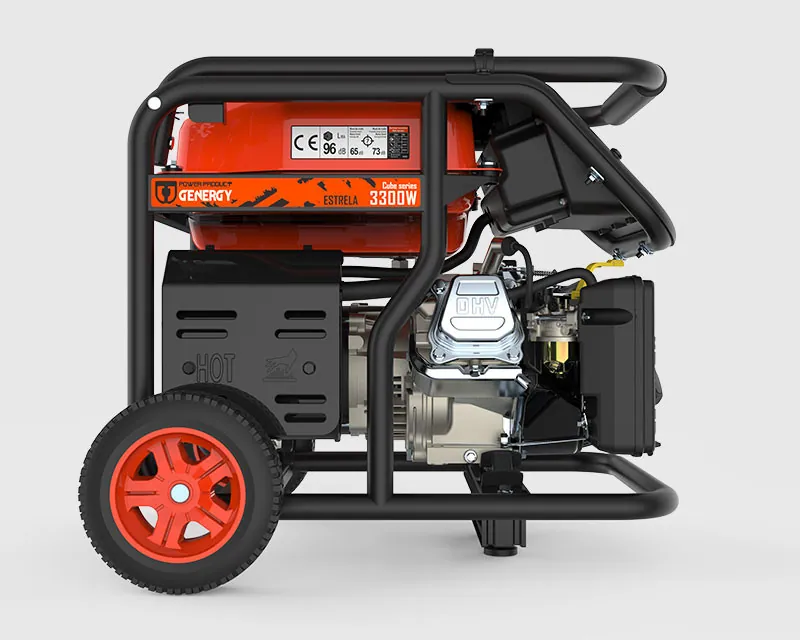
| Estrela | 3.300 W | Gasoline | Basic backup | Medium |
| Rodas Inverter | 3.800 W | Inverter | Sensitive electronics / quiet | Low |
| Panticosa | 4,000 W | Gasoline | Medium-sized home | Medium |
| Moncayo SOL | 4.500 W | Solar backup | Home with solar panels | Medium |
| Formigal | 7.000 W | Gasoline | Medium/large home | Medium |
| Mulhacén SOL | 7.000 W | Solar backup | Home with solar · automatic start | Medium |
What generator do I need for each type of home
Small home
For basic loads and use during power outages, a 2.800–3.300 W generator (such as the Veleta-S or the Estrela) can run essential low-consumption appliances.
Medium-sized home
For full household use, a 4.000–7.000 W generator (Panticosa or Formigal) provides enough power for several appliances at the same time.
Home with solar panels
To back up a photovoltaic system and charge batteries, a solar backup generator such as the Moncayo SOL 4500W or the Mulhacén SOL 7000W keeps the supply going when there is no sun.
High-consumption home or sensitive electronics
If you have high consumption or delicate electronic equipment, prioritize an inverter for its stable current, or step up in power with automatic start for continuous backup.
Real fuel consumption of a home generator
Consumption depends on the power of the unit and the connected load. As an approximate guide:
| Power | Average consumption |
|---|---|
| 3,000 W | 0.8–1.5 L/h |
| 5.000 W | 1–2 L/h |
| 7.000 W | 1.5–3 L/h |
Automatic ECO mode (common on inverter models) reduces consumption when demand is low. For details, see how much a generator set consumes per hour.
Noise level of a home generator
Noise depends on the type of generator. As a reference for Genergy inverter models: 59 dB is very quiet, 65 dB quiet and 74 dB standard level. Inverter models are considerably quieter than conventional ones, which is key if you are going to use it near homes or neighbors.
Inverter generator vs conventional generator
Inverter generators offer stable current (safe for electronics), lower consumption, lower noise and higher efficiency. That is why they are the most recommended for home use, especially if you are going to connect televisions, computers or equipment with sensitive electronics. A conventional generator may be enough for tools or robust loads where waveform quality matters less.
What to consider before buying a generator for your home
- Real power: add up your loads and include a margin for starting surges.
- Fuel: gasoline (occasional use, cheaper) or diesel (intensive use, more efficient over many hours).
- Waveform type: inverter (low THD) if you connect sensitive electronics.
- Noise (dB): important if neighbors are nearby; choose an inverter or quiet model.
- Start: manual, electric or automatic (ATS) if you need it to kick in on its own when the power goes out.
- Autonomy: tank size and consumption according to the hours you need to cover.
- Safe use: always outdoors or in a ventilated area; never in enclosed indoor spaces.
Genergy generators for the home
Filter by type of home or use to see which generator fits best:
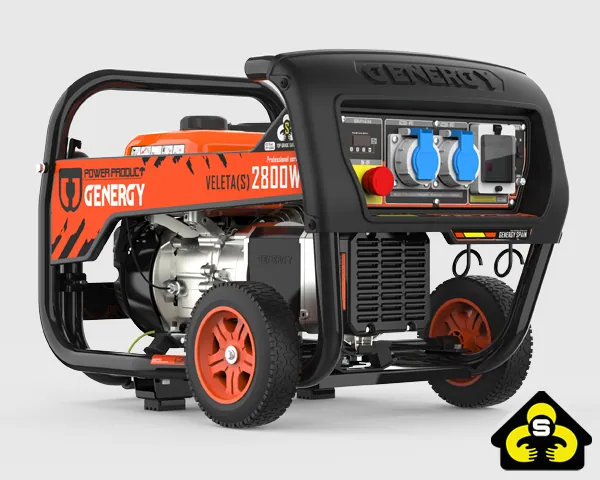
Veleta-S 2800W Generator
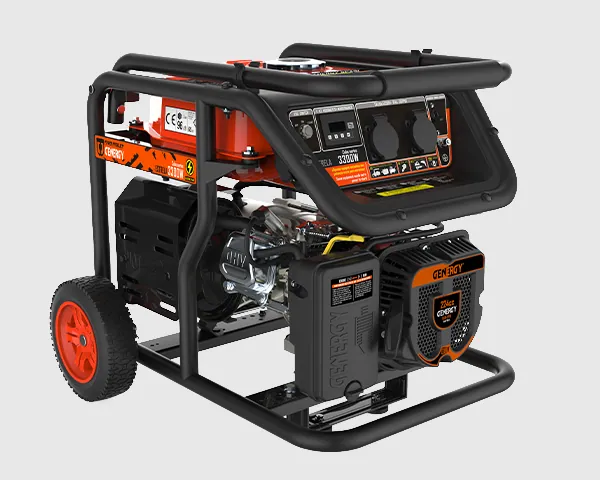
Generador Estrela 3300W
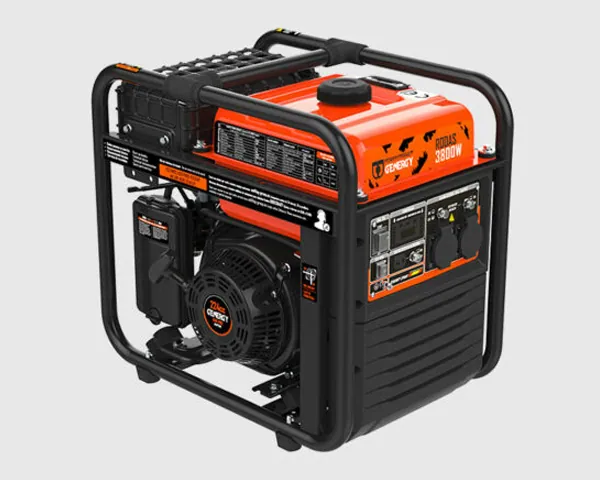
Rodas Inverter 3800W Generator
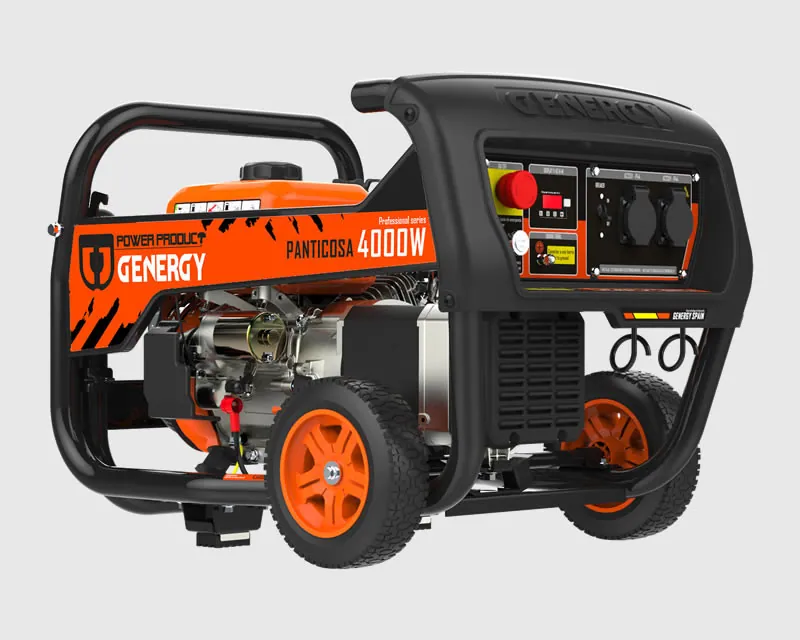
Panticosa 4000W Generator
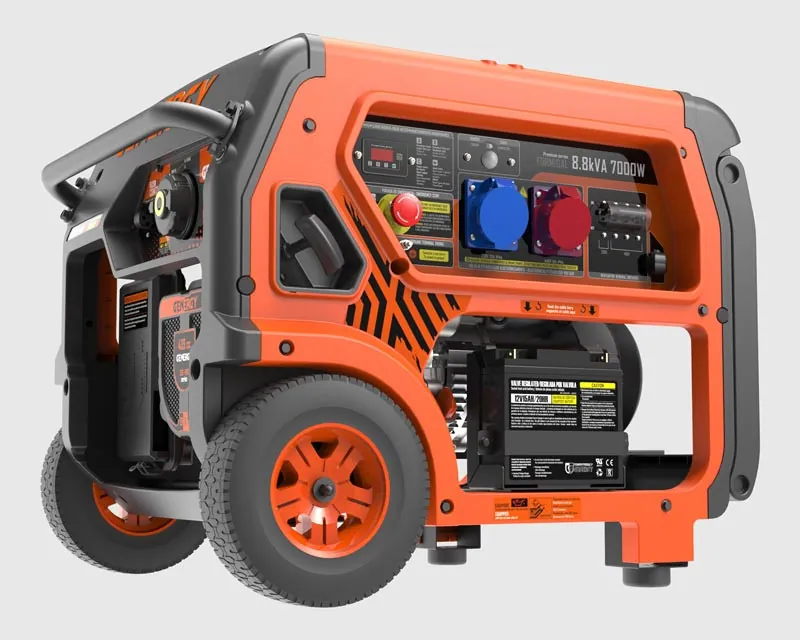
Formigal 7000W Generator
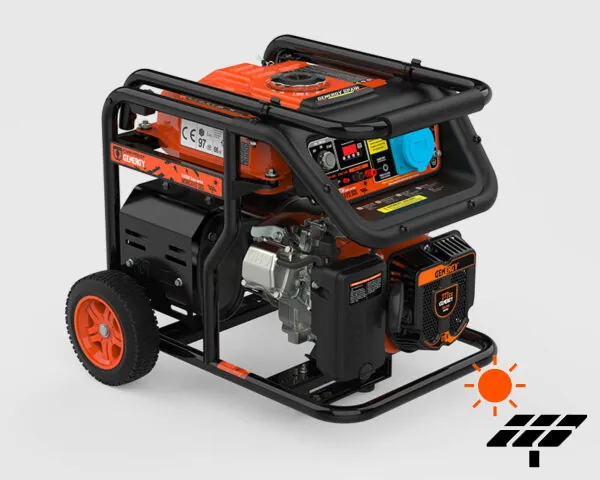
Moncayo SOL 4500W Generator
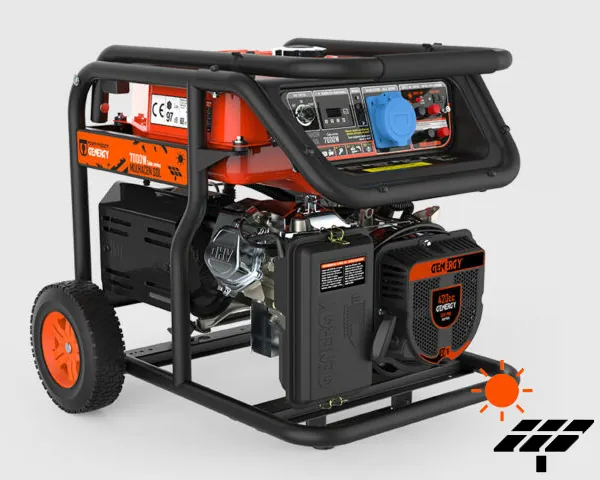
Mulhacén SOL 7000W Generator
👉 See the full range: Generators for the home · Inverter · Quiet · Photovoltaic backup. Questions? Talk to a technician.
Not sure what power you need?
Tell us what you want to run in your home and we will help you calculate the power and choose the right generator —gasoline, inverter or solar backup—, with no obligation.
Talk to a Genergy technicianConclusion
A home electric generator is an effective solution to guarantee supply during power outages, run essential appliances or support a solar installation. The key is to match the power and type correctly: for most homes, a 3.000–7.000 W gasoline inverter with ECO mode covers the essentials with little noise; for solar backup, a photovoltaic generator with automatic start. Calculate your loads, leave a margin for surges and choose according to your home.
Related categories
Related topics
Frequently asked questions
What electric generator does a home need?
For most homes, a generator of between 5.000 and 7.000 W is recommended, depending on consumption. For basic loads (fridge, lights, router, television), a 3.000–4.000 W one may be enough. Add up the power of what you want to run and add a margin for starting surges.
How many watts does a generator need for a home?
It depends on the appliances you connect at the same time. A small home with just the essentials may need 2.000–3.000 W; a medium-sized home, 4.000–6.000 W; and a large or high-consumption home, 7.000–10.000 W. Remember that motors such as those in fridges or pumps need more power on startup.
What generator is needed for a fridge?
A fridge uses about 150–300 W when running, but it can draw double or triple that when the compressor starts. A 2.000–3.000 W generator easily covers a fridge along with lights and small appliances; if you also want to run other appliances, step up in power.
What type of generator do I need for a home?
For home use, a gasoline inverter generator is the most recommended thanks to its stable current, low noise and lower consumption. Diesel suits intensive use or off-grid homes, and a photovoltaic backup generator is the best option if you have solar panels.
What should I consider when buying an electric generator?
The real power (with a margin for surges), the fuel (gasoline or diesel), the waveform type (inverter if you use sensitive electronics), the noise level in dB, the type of start (manual, electric or automatic) and the autonomy. And always use it outdoors or in a ventilated area.
Which generator is the quietest?
Inverter generators are the quietest and the most suitable for residential areas. In the Genergy range, inverter models run at around 59–65 dB, well below a conventional generator. If noise is a factor, choose an inverter or quiet model.
How much fuel does a home generator consume?
It depends on the power and the load. As a rough guide, a 3.000 W generator consumes 0,8–1,5 L/h; a 5.000 W one, 1–2 L/h; and a 7.000 W one, 1,5–3 L/h. ECO mode reduces consumption when demand is low.
Can a generator be used with solar panels?
Yes. Many generators are used as backup for a solar installation: they charge the batteries and keep the supply going when production is not enough. Photovoltaic backup generators with automatic start are designed precisely for this, starting on their own when the battery drops below a set level.
Inverter or conventional generator for the home?
For the home, an inverter is usually better: it delivers stable current (safe for electronics), consumes less and makes less noise. A conventional generator can be enough for tools or robust loads where waveform quality matters less and cost takes priority.
What generator do I need for a country house or off-grid home?
In an off-grid home, a robust generator (often diesel) or a photovoltaic backup generator combined with batteries is advisable, to guarantee supply for several days. Size the power according to your loads and prioritize reliability and autonomy over price.
Which generator is best for a home?
For most homes, a gasoline inverter generator of 3,000–7,000 W with ECO mode and low THD offers the best balance: stable power for the fridge, lights, router and TV or PC, with low noise and optimized fuel consumption. For solar backup, a photovoltaic generator with automatic start.