How to choose a generator set: power, voltage and type of use
By the Genergy technical team · Spanish manufacturer of generators and generator sets (+15 years) · updated July 2026 · 8 min read.
Table of contents
Choosing the right generator set is not about looking first at brands, models or prices: it is about understanding what you really need. In most cases, this boils down to three key questions: how much power you need, whether your installation is single-phase or three-phase, and what kind of use you will give it. From there, it makes sense to decide on fuel, starting system, noise, portability or voltage quality.
The most common mistake is starting with the equipment instead of the calculation. Many people look for a "good" generator set without having added up the loads, without thinking about starting surges and without leaving a safety margin. The result is usually the same: buying or renting a unit that falls short, that works under strain or that does not fit the real installation. (If you are still unsure between a portable generator and a generator set, it is worth first looking at the difference between a generator and a generator set.)
Quick answer: what to check before choosing a generator set
To choose a generator set you need to review power, voltage, fuel and type of use. First, calculate which equipment will run at the same time and how much it consumes. Then assess whether any of it has a demanding start (motors, compressors or pumps), because that changes the power you need quite a lot. Next, check whether your loads work in single-phase or three-phase. And finally, decide whether you need a portable unit for occasional use or a more robust one for many hours of operation.
From there, secondary but important factors come into play in certain cases: type of starting system, noise level, whether it will be used indoors or outdoors, whether you need AVR regulation or inverter technology, and whether it will power sensitive equipment.
If you want to understand what a generator set is and how it works (parts, types, uses), we have a dedicated guide: what a generator set is and what it is used for. This article focuses on how to choose and size one.
Calculate the power you need
Power is the most important criterion. If you get this wrong, nothing else matters: an undersized generator set falls short, works at its limit or cannot handle the starting of some equipment.
Add up the loads of the equipment that will run at the same time
Make a list of the equipment that will be used simultaneously. It is not about adding up everything in the installation, but what can actually run at the same time. Powering a few lights, a refrigerator and some basic equipment is not the same as running tools, water pumps, motor-driven compressors or machinery. Work with the real power of each piece of equipment (in W or kW): with imprecise data it is easy to end up with an insufficient unit.
Take starting surges into account
Decisive and often forgotten. Some equipment, especially anything with a motor, does not consume only its rated power: on starting, it demands considerably more for a few seconds. It is not enough to add up consumption under steady operation; that extra demand must be considered. A generator set that looks sufficient on paper can fail precisely at the moment of starting. This is where those who buy "just enough" go most wrong: it is not that power is lacking overall, it is that there is no margin to absorb the surge.
Add a safety margin
Once loads and surges have been added up, leave an additional margin. A reasonable range is usually between 15% and 30%, depending on the type of load, the demand and the importance of the supply. That margin prevents the unit from always working at its limit and absorbs variations or expanded use. A generator set should not be chosen to fit "to the millimeter".
Total power = (sum of simultaneous loads) + (starting surges) + (15-30% margin). If you skip the starting surge or the margin, the unit will fall short at the worst possible moment.
Choose between a single-phase or three-phase generator set
As important as power. Choosing wrong here can mean the unit does not fit the installation or the machinery you want to power.
When a single-phase unit is suitable
A single-phase generator set is usually the right option for typical 220-230 V equipment and loads: domestic use, small businesses, light tools or simple applications. If your entire demand works at that voltage, a single-phase unit will normally be sufficient and more practical.
When you need a three-phase unit
Three-phase makes sense for 380-400 V equipment or machinery that requires that type of supply: industrial environments, construction sites, workshops or installations with powerful motors. The difference is not a minor detail. Another classic mistake is looking only at power without first checking what voltage the real installation requires.
Gasoline or diesel: which fuel suits you best
Fuel has a big influence on use, performance and the logic of the purchase.
When to choose gasoline
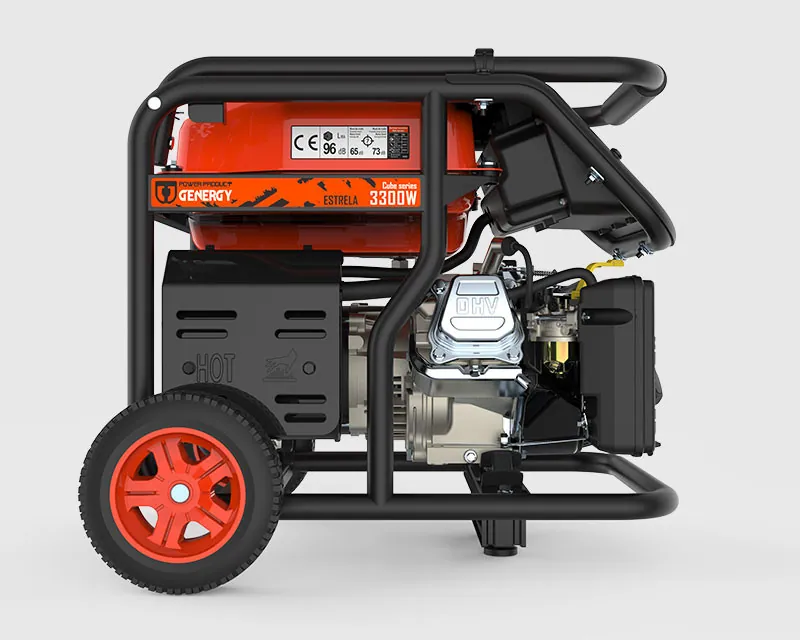
Gasoline is better suited to small, portable units designed for light or occasional use. It makes sense when you are looking for something manageable, for a few hours of work or occasional use: domestic settings, small jobs or situations where mobility matters more than prolonged autonomy.
When to choose diesel
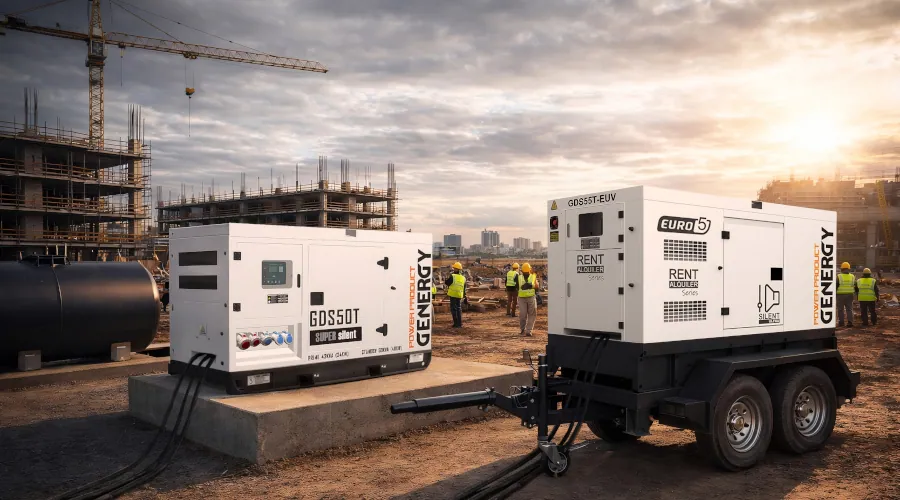
Diesel is the most logical option when more power, more robustness or continuous use is needed. It is the typical fuel in higher-capacity generator sets, professional applications, serious backup or long-duration work. Quick rule: gasoline for light and portable use; diesel for high power, greater continuity and demanding work.
Other key factors for choosing well
Type of starting system
Manual starting is not the same as electric or automatic starting. For occasional use, manual may be enough. But if the unit is going to work as backup or where response speed matters, an electric or automatic system makes much more sense.
AVR regulation or inverter technology
If you are going to power sensitive electronic equipment, pay attention to the quality of the output voltage. An AVR regulator helps stabilize the voltage, and inverter technology is especially interesting when the priority is clean, stable current. It is not always essential, but in certain contexts it makes an enormous difference.
Noise, cooling and location
Noise level matters more than it seems, especially if the generator set will be used near people or homes. The cooling system and the installation site also count: indoors, outdoors, prolonged use, ventilated space. For noise-sensitive environments there are soundproof generator sets.
Portable or stationary
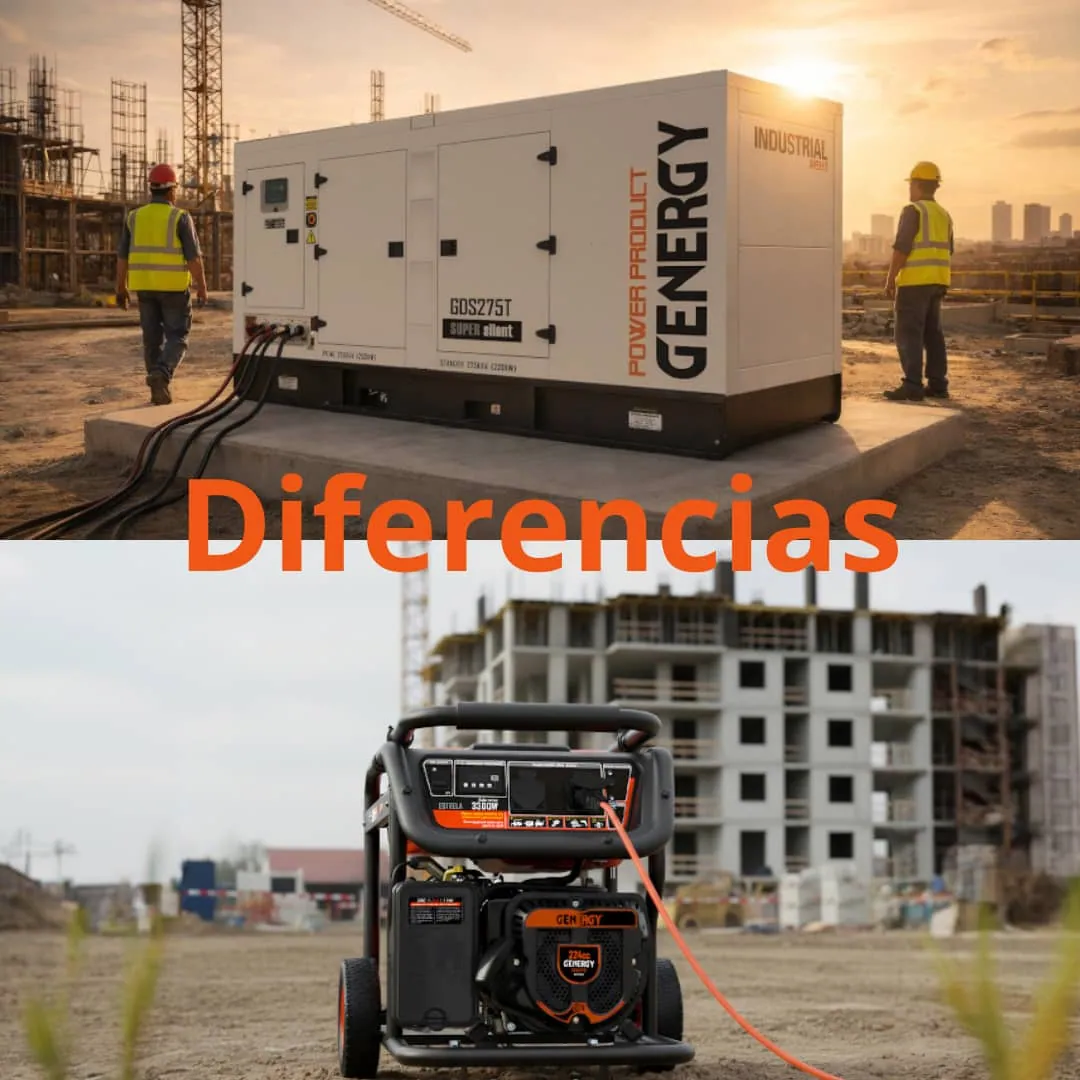
Do you need to move it, or will it stay fixed? Portable units make sense for mobile jobs or occasional use. Stationary ones fit better when the generator set is part of a stable installation or a permanent backup system.
Common mistakes when choosing a generator set
Several recur and are worth avoiding: falling short on power by not counting the starting of certain equipment; choosing single-phase or three-phase without checking the real installation; buying a gasoline model for a need that calls for a more robust diesel; and looking only at price while leaving noise, voltage quality, type of starting system or autonomy in the background. The best antidote is to follow a clear order: power → voltage → fuel → context of use.
Which generator set to choose based on use
| Use | Typical unit profile |
|---|---|
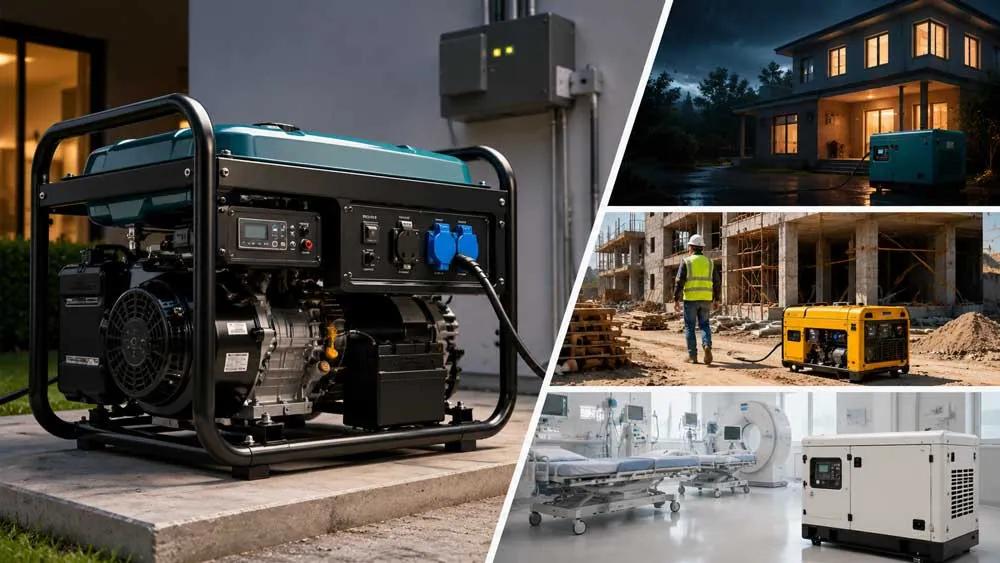
| Home or occasional use | Compact, normally single-phase and, in many cases, gasoline. For basic loads or one-off use. |
| Construction site or professional use | More serious calculation: robustness, starting, real available power and, often, diesel carry weight. |
| Continuous backup or critical loads | A choice with much more margin: reliability, autonomy, automatic starting and capacity for prolonged use without working under strain. |
Genergy generator sets
The diesel range with electronic regulation covers from 10 to 27 kVA in single-phase and three-phase. Filter by type of current:
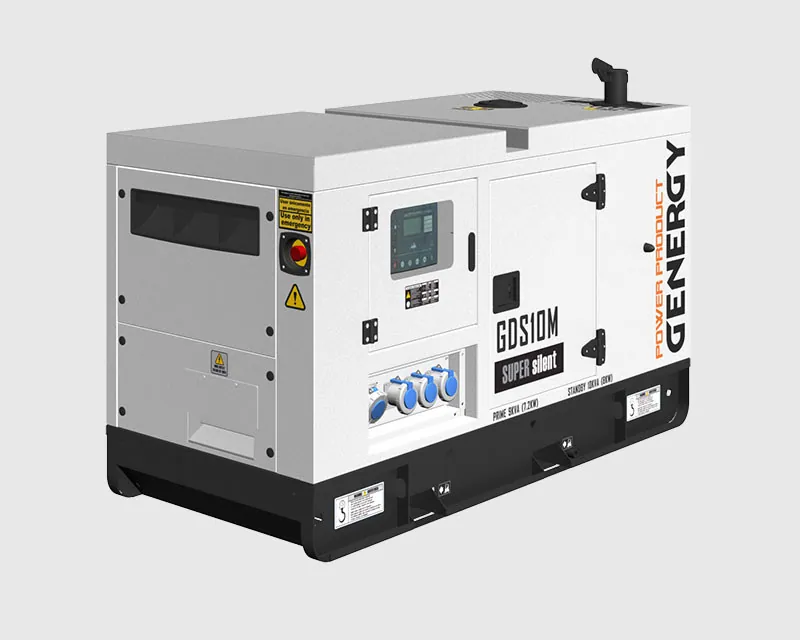
Grupo electrógeno GDS10M
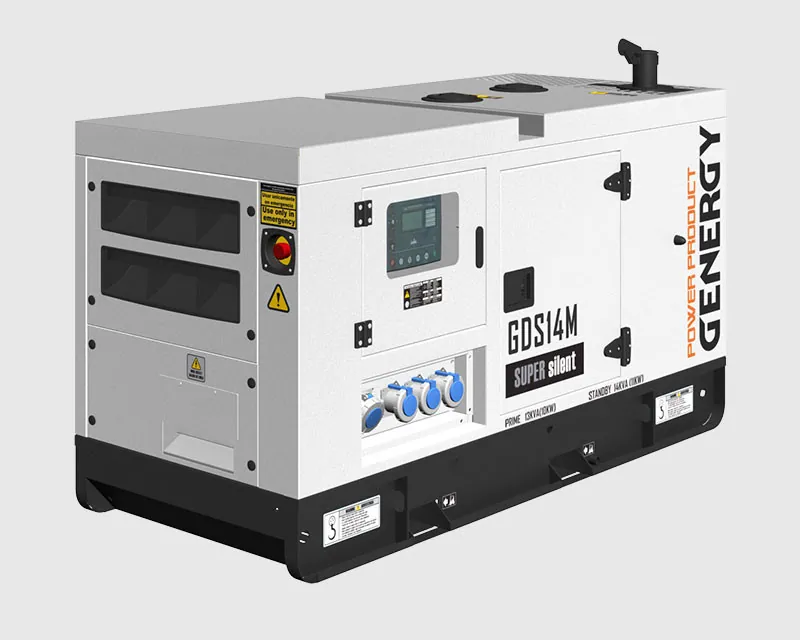
Grupo electrógeno GDS14M
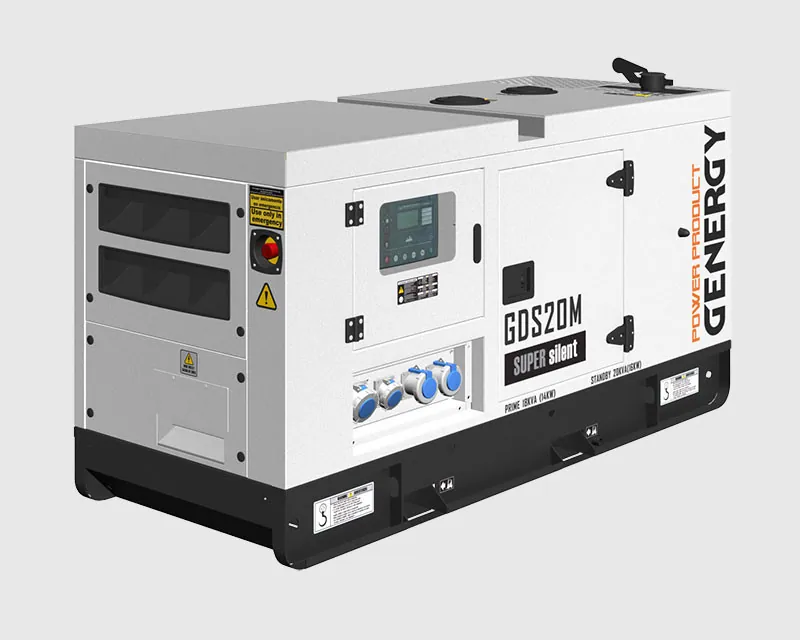
Grupo electrógeno GDS20M
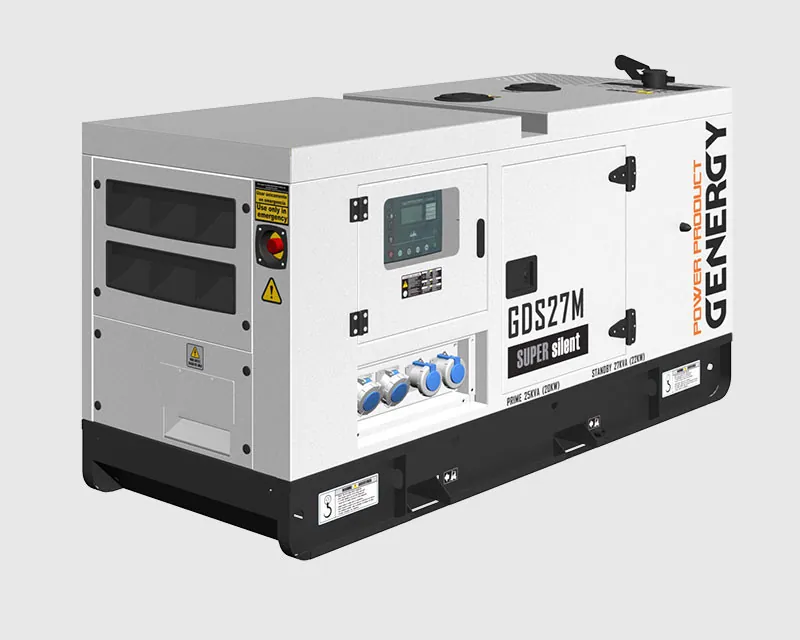
GDS27M Generator Set
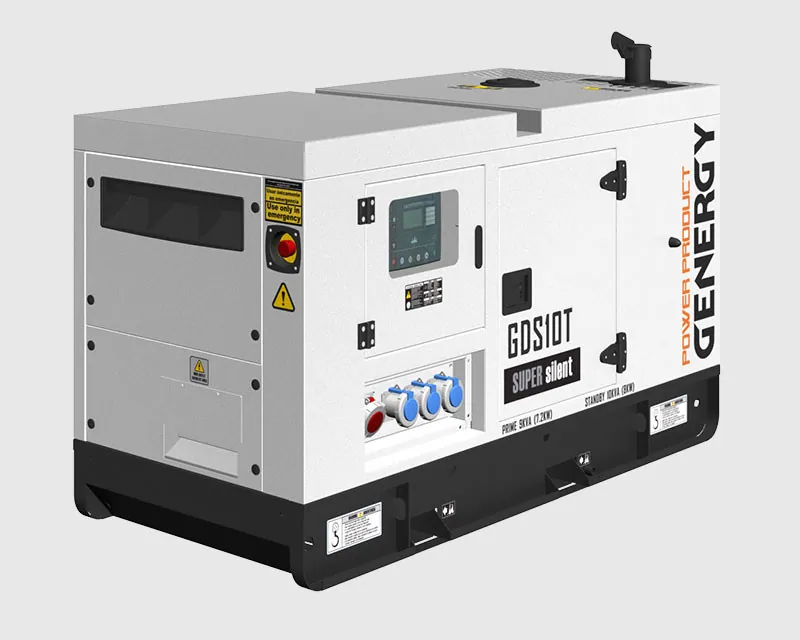
Grupo electrógeno GDS10T
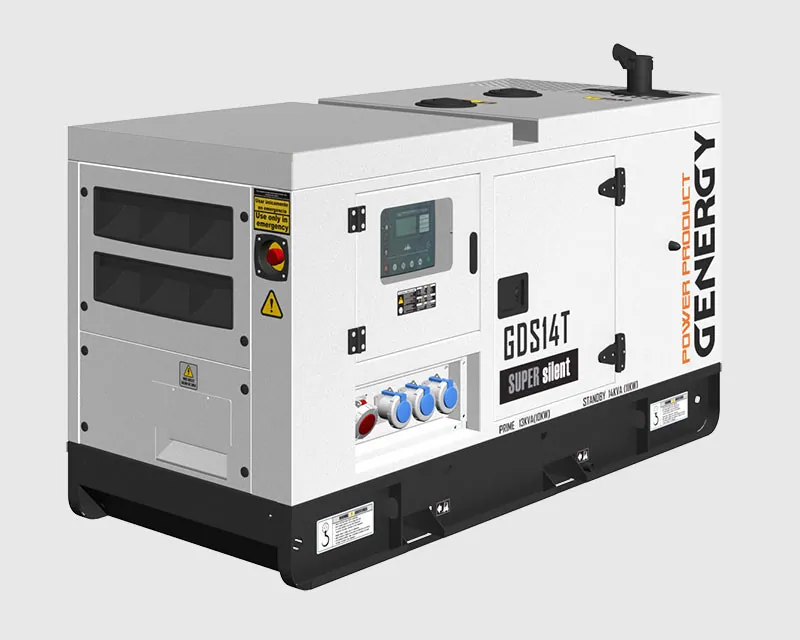
GDS14T generator set
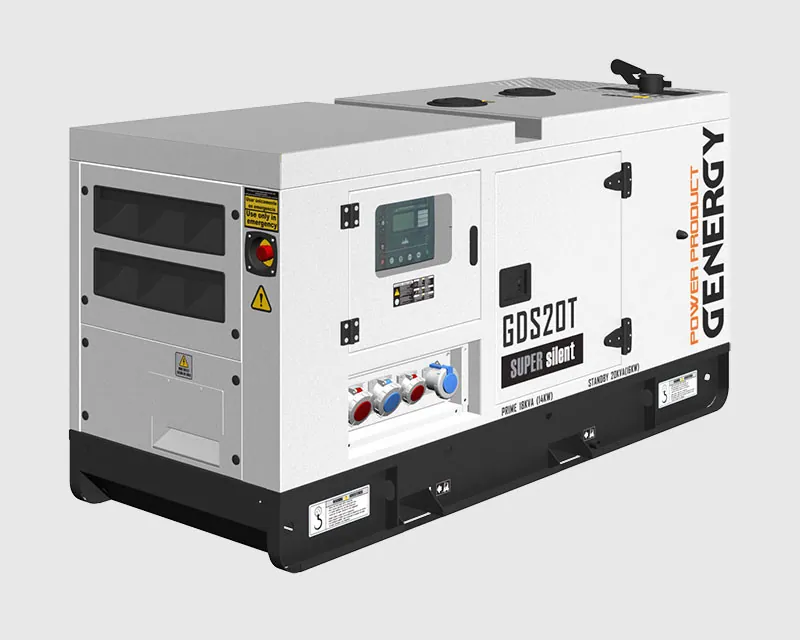
GDS20T generator set
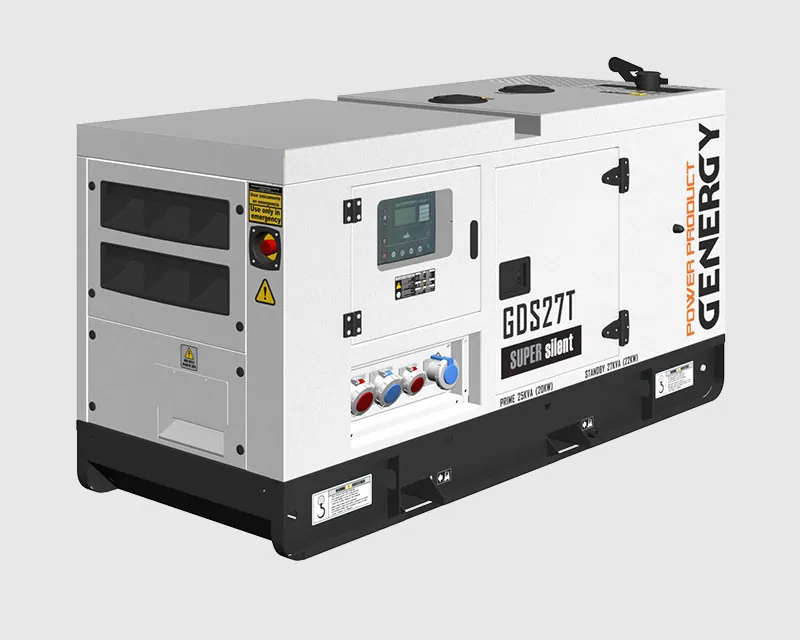
GDS27T generator set
👉 See the full range: Generator sets · Diesel 1500 rpm · Three-phase · Soundproof · Questions? Talk to a technician.
Not sure what power or type you need?
Tell us what equipment you will connect, whether your installation is single-phase or three-phase and what use you will give it, and we will help you size the right generator set. We are manufacturers. No obligation.
Talk to a Genergy technicianConclusion
To choose a generator set, start with the essentials: calculate the real power, define whether you need single-phase or three-phase and choose the fuel according to use. Then add a 15 to 30% margin and review starting, noise, voltage regulation and portability. The key is not to choose by intuition: a good generator set is not the biggest or the most expensive, but the one that truly fits the installation, the use and the level of demand you will have.
Related categories
Related topics
Frequently asked questions about how to choose a generator set
How do I calculate the power of a generator set?
By adding up the loads of the equipment that will run at the same time, also taking into account the starting surges of motors, pumps or compressors, and leaving a safety margin. With those three elements you avoid falling short at the critical moment.
What safety margin should I leave?
As a general guideline, it is usually reasonable to add between 15% and 30% on top of the total calculated power, depending on the type of load and the importance of the supply. That way the unit does not always work at its limit and absorbs variations or expanded use.
How do I size a generator set step by step?
Add up the power of the simultaneous loads, add the starting surges, apply the 15-30% margin and check the voltage (single-phase or three-phase). The result is the minimum power the unit must deliver. Then adjust for fuel, starting system and context.
How do I know which generator set to buy?
Follow the order power → voltage → fuel → context of use. First calculate how much power you really need; then decide single-phase or three-phase, gasoline or diesel, and finally starting system, noise and portability. Choosing in that order avoids most mistakes.
What is the difference between single-phase and three-phase?
Single-phase is used for 220-230 V equipment (home, small businesses, light tools) and three-phase for installations or machinery at 380-400 V (industry, construction sites, powerful motors). You need to check the voltage your installation requires before deciding.
Gasoline or diesel generator set?
Gasoline is better suited to light, occasional or portable use. Diesel is better for high power, intensive use or continuous work, thanks to its robustness and autonomy. The choice depends mainly on how many hours and with what level of demand you will use it.
What generator set do I need for a concrete mixer or other machinery?
Motor-driven machinery (concrete mixers, pumps, compressors) has a starting surge that can multiply its rated consumption for a few seconds. The generator set must be sized counting that surge, not just the nameplate power, and with a margin left. If in doubt, check the starting power in the equipment's technical data sheet or ask a technician.
What happens if I choose a generator set that is too small?
It may fall short on starting, work under strain, fail with certain loads or have a shorter service life due to excessive demand. It almost always ends up costing more in the medium term than leaving the right margin from the start.
Is a generator set very noisy?
It depends on the unit. It can be a problem if it is placed near people, homes or noise-sensitive areas. For those cases there are soundproof generator sets, with enclosures and silencers that considerably reduce the noise level.
What is AVR regulation or inverter technology?
AVR stabilizes the output voltage, useful for a more constant supply. Inverter technology delivers especially clean and stable current, recommended for sensitive electronic equipment. Both improve power quality compared with basic mechanical regulation.
Which generator set should I choose for home?
For domestic use or basic loads, a compact unit usually fits, normally single-phase and, in many cases, gasoline if use is occasional. If you are looking for serious backup during outages or many hours of use, a diesel with automatic starting is more suitable. The decisive thing is to calculate the power correctly, including starting surges.